




Kalantarov House: Painted Parade Interiors of the Mansion
🏚️ Historic mansion · ⏱ 30–60 minutes · 📍 17 Ivane Machabeli Street
🗝️ What to know before you visit
| 📍 Address | 17 Ivane Machabeli St, Tbilisi |
| 🏗️ Built | 1908. Architect — Lazar Sarkisyan |
| 🎨 Style | Neo-Moorish: Spanish, Portuguese and Berber motifs |
| 🚪 Entrances | Two: from Machabeli St (open) and from Asatiani St (code-locked gate) |
| 🔄 Restoration | 2014: facade, first entrance hall, courtyard |
| 🚇 Getting there | Rustaveli metro, 5 min walk |
| 💰 Entry | Free. It's a residential building — enter respectfully |
🧭 Who this article is for
The Kalantarov Mansion is the kind of place that doesn't make it into standard guidebooks, but people remember it long after they leave. It's not a museum with opening hours and tickets — it's a living residential building with painted ceilings, marble staircases and several stories that can't be verified but are worth hearing. This article is for anyone who wants to know what to look for, how to get into the second entrance hall and what legends have followed this house for over a hundred years.
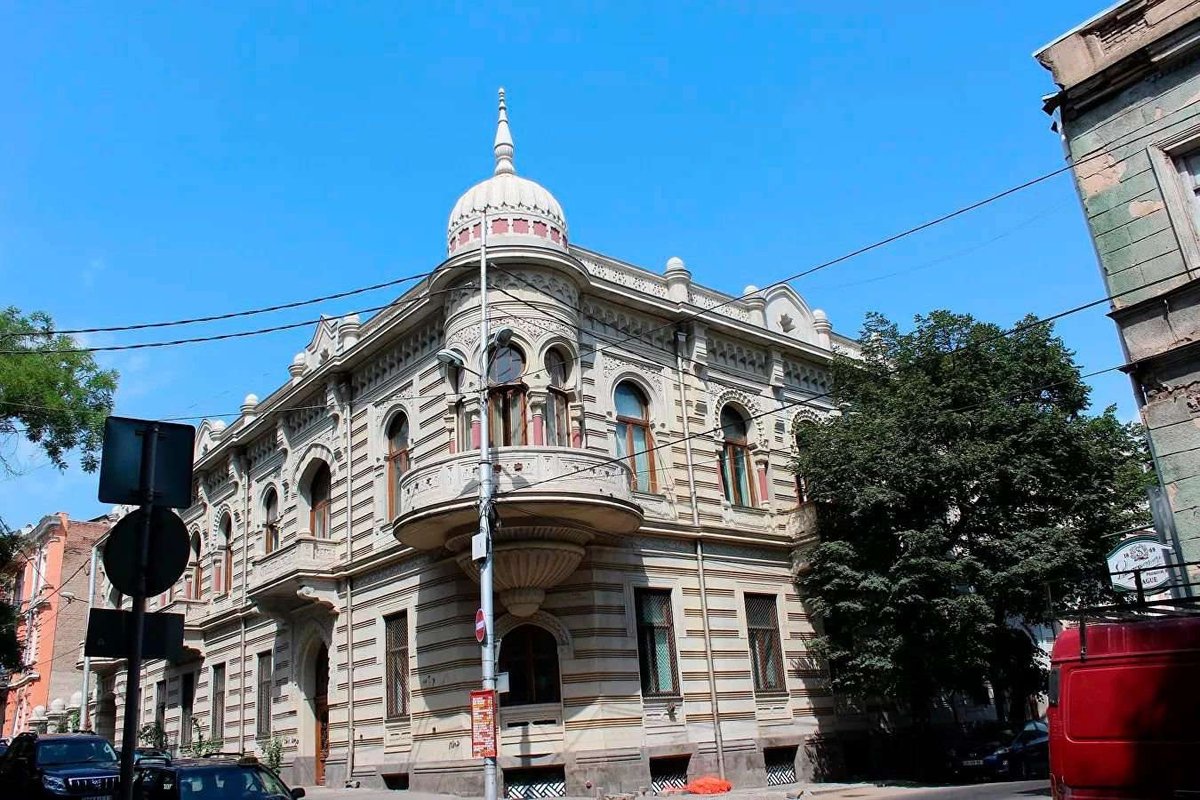
🏰 The house someone asked to build like a theatre
In 1908 a mansion appeared on Machabeli Street that Tbilisi residents immediately started comparing to the Opera and Ballet Theatre. The resemblance was no accident. According to the legend, merchant Nikolai Kalantarov was in love with an opera singer. She agreed to marry him on one condition: the house had to be as beautiful and ornate as the theatre. He kept his word. They married a few years later, and the house became one of the most talked-about in the city.
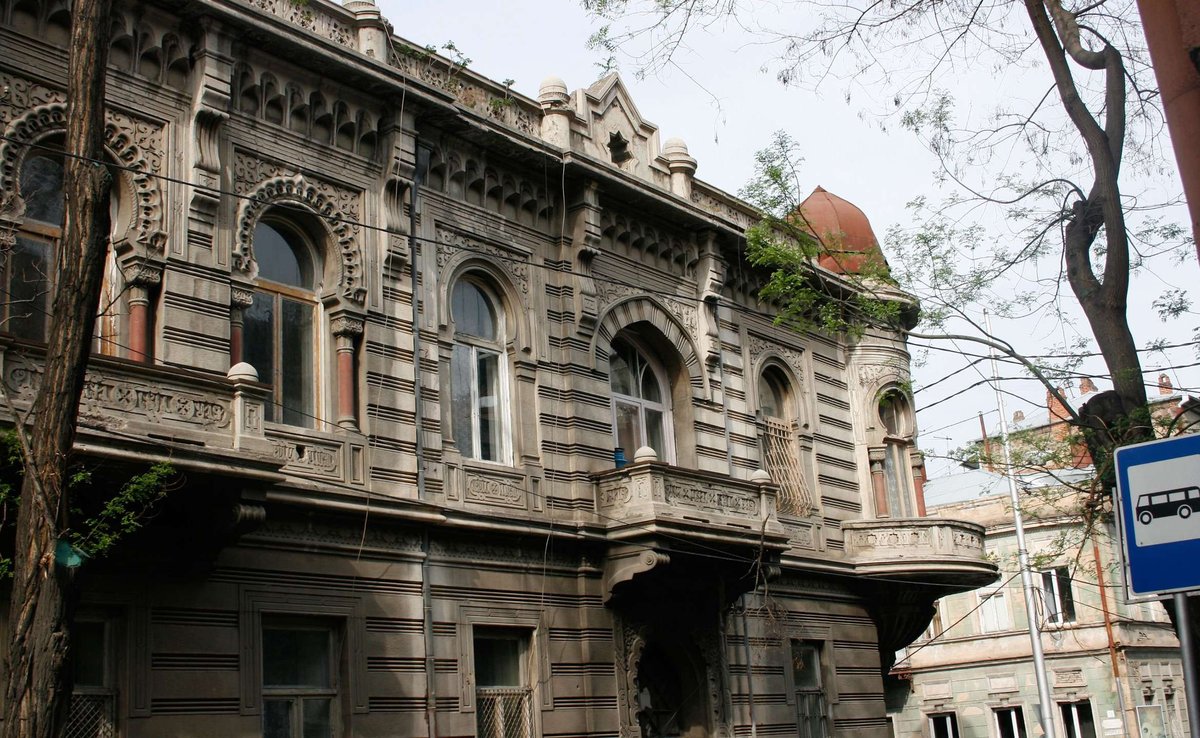
The designer was Armenian architect Lazar Sarkisyan, working in the neo-Moorish style — a blend of Spanish, Portuguese and Berber motifs that was fashionable in Tbilisi at the turn of the twentieth century. The exterior has barely changed since.
After the Kalantarov family emigrated, the mansion became communal housing. Decades passed, and everything built with such care was divided among dozens of families. Restoration began in 2014: the facade was returned to its original appearance, the first entrance hall was repaired and the courtyard was laid out. People still live here today — and that's an important part of what makes it feel the way it does.
🚪 What to see: two entrance halls
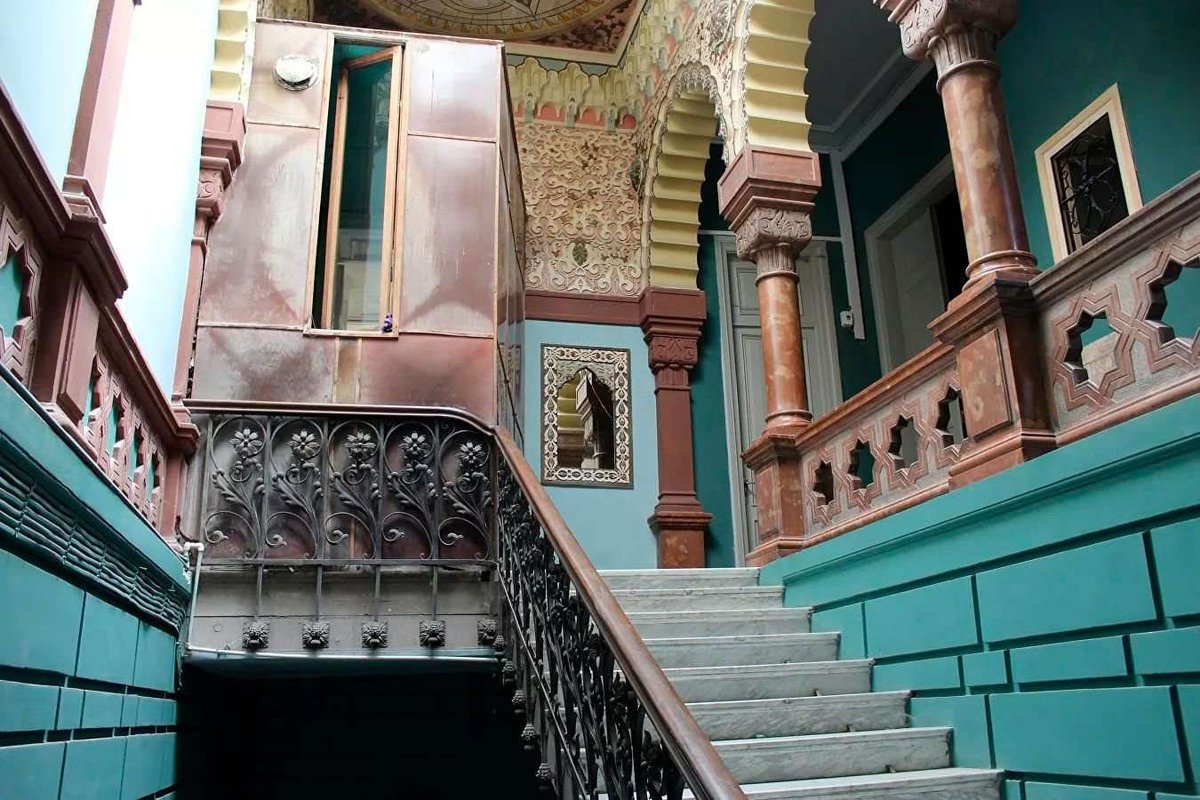
First entrance hall — from Machabeli Street
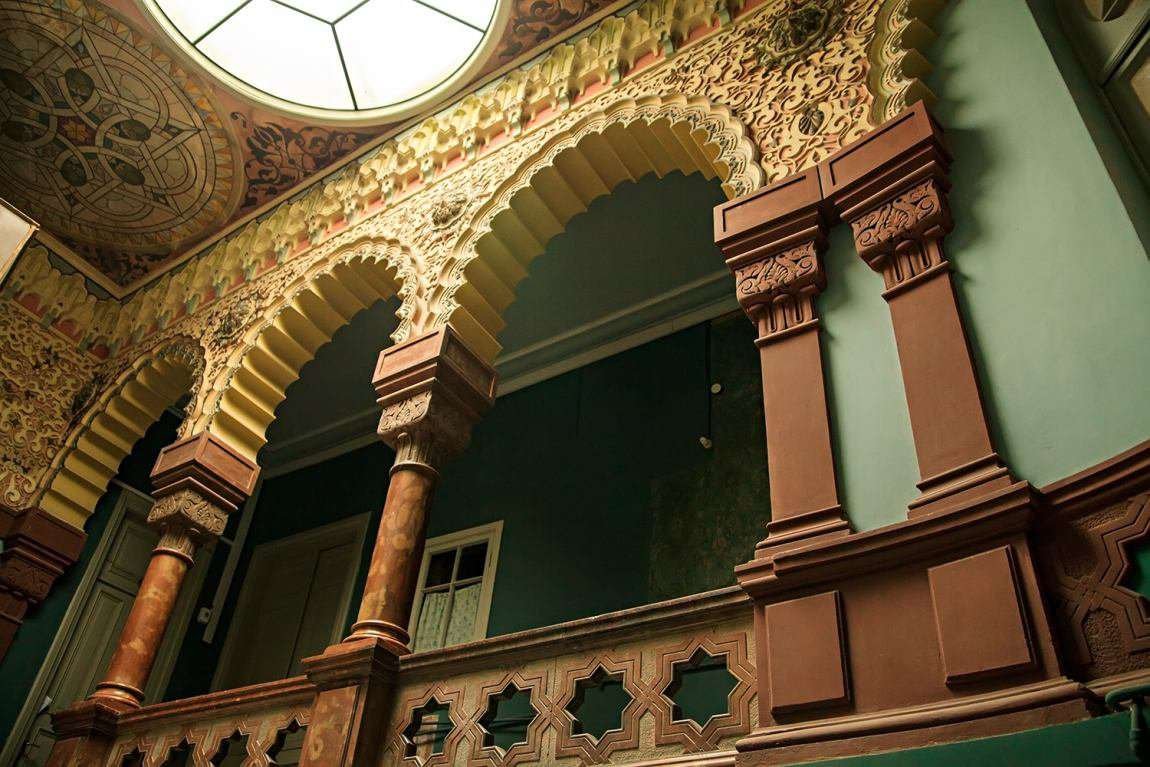
Carved arched doors open directly from the street. Behind them is a marble staircase, under which stands a massive antique stove. Beyond are U-shaped arches and long galleries finished in carved wood.
Eastern ornament is everywhere — in the plasterwork, on the walls, on the ceiling. The painted ceiling and an early twentieth-century mirror are in good condition; the patterns haven't lost their colour. The narrow natural-wood window frames with antique latches catch the eye on their own.
Alla Albertovna lives on the ground floor, close to the entrance. She meets tourists, talks about the history of the house and points out details that are easy to miss. Say hello — she's usually nearby.
Second entrance hall — from Asatiani Street
The entrance is behind wrought-iron gates with a code lock. If you find a resident nearby, ask them to let you in — they almost always do.
Inside is a garden with two cypress trees. The story goes that Kalantarov planted a tree after each child was born. There were six in total. When the neighbouring building was being reinforced, four were cut down. The two that remain still grow in the courtyard.
Nearby are a former pool, now turned into a small garden bed, and a little vineyard. Small ponds in courtyards used to be common in Tbilisi homes — a way to cool down in the heat.
An artist lives in the second entrance hall. She receives guests in her studio and offers tea. Her apartment has a spiral staircase running along a fully glazed bay window.
🌿 Three legends that live in the house
Niko Pirosmani and the Kalantarov family. A creative club named after Niko Pirosmani operates on the ground floor of the mansion — that's not a coincidence. According to one version, the future painter was orphaned early and the Kalantarov family took him in. He had his own room and was treated warmly. When the adult Pirosmani fell into poverty, he never asked Kalantarov for help. Their connection ended for good when the family left. Guides tell this story — but there is no documentary evidence for it.
Lavrentiy Beria and his niece. It is said that the Soviet official was a regular visitor to the mansion: his niece Tatiana lived here. Her family was later struck by tragedy — her husband and son were killed in a car accident. Residents of the building pass this story down by word of mouth.
The mysterious heir. Some years ago, a man arrived at the house claiming to be the son of Mikhail Kalantarov. No one could verify it — information about the merchant's descendants is contradictory. Whether he ever returned is unknown.
Don't stop at the first entrance hall. Try to get into the second one too — through Asatiani Street. Wait for a resident and politely ask them to open the gate. It almost always works. The cypress trees, the vineyard and the glazed bay window give you a completely different sense of the house. And bring something for the artist — tea in her studio is a story in itself.
🗺️ How to fit the mansion into your route
1️⃣ Start from Rustaveli Avenue and walk to Machabeli Street — it runs parallel, about 3 minutes on foot.
2️⃣ Enter the first entrance hall from Machabeli, 17. Say hello to Alla Albertovna if she's around.
3️⃣ Take your time looking at the ceilings, arches, the stove under the staircase and the wooden galleries. No need to rush.
4️⃣ Come back out and walk around the building — the second entrance is visible from Asatiani Street. Wait for a resident or try the intercom.
5️⃣ If you get into the courtyard, look into the artist's studio, find the cypress trees and the former pool.
6️⃣ Nearby are Shardeni Street, the Gabriadze Theatre and other stops along the Old Town route.
💬 What visitors say
"The Kalantarov Mansion is a genuine architectural gem — especially the first entrance hall with its carved arches and painted ceilings. No wonder the house is wrapped in legends."
"We were walking the streets with my husband and stumbled across this incredible building. I said: a building this beautiful can't possibly be residential. We argued, looked it up — it is. Remarkable."
"The mansion is impressive from every angle — from above, at eye level, from inside. The entrance halls are simply superb."
Most people who've been here say the same thing: you expect a pretty facade, and you end up in a house you don't want to leave.
Have you been to the Kalantarov Mansion? Did you manage to get into the second entrance hall? Do you believe the Pirosmani legend — or is it a good story that isn't quite true? Tell us what stayed with you most. We read every comment ❤️
🏁 Is it worth going
The Kalantarov Mansion is not a box to tick on a route — it's a place people come back to. The house is alive: real people live here, cypresses grow in the courtyard, an artist works in her studio. The legends about Pirosmani and Beria are unverified — which is exactly what makes them interesting. The painted ceilings and plasterwork are verified. You can see them with your own eyes.
ℹ️ The mansion is a residential building. Please be respectful of the residents. The artist's studio and Alla Albertovna's informal tours depend on whether they are home — there is no number to call in advance. Everything happens by chance encounter.
🏛️ Nearby attractions



❓ Questions people ask most often
💬 The first entrance hall from Machabeli, 17 is open — just walk in. The second entrance from Asatiani Street is behind a code-locked gate: wait for a resident or try the intercom. Residents almost always let visitors through.
💬 No — it's a residential building. The unofficial guide is Alla Albertovna, who lives on the ground floor by the Machabeli entrance. She takes visitors around the house and tells the story of the mansion. It all depends on whether you find her at home.
💬 According to one version — yes: the Kalantarov family took him in after the death of his parents. He reportedly had his own room. There is no documentary evidence. Guides tell this story as a legend, not as established fact.
💬 Beria himself didn't live here, but he was a regular visitor: his niece Tatiana lived in the mansion. Residents and guides pass this story on, but it too belongs to oral tradition rather than verified history.
💬 You can, if you get into the courtyard and she happens to be home. The artist lives in an apartment with a spiral staircase visible from outside and receives guests in her studio. She offers tea. But there's no number to call — everything depends on a chance meeting.
💬 No. After the mansion became communal housing, the family's original belongings didn't survive. What remains are the architectural elements: plasterwork, arches, painted ceilings, wooden galleries, the stove under the staircase and the marble staircase itself.
💬 Weekday mornings — residents are more likely to be around and tend to be more willing to chat. Weekends are fine too, but there are more tourists. In the evenings the first entrance hall may be locked.

38 comments
Log in to leave a comment