




🗺️ Likhauri: a guide to a Gurian village — fortress, museum and mountain river
🗺️ What to know about Likhauri before your trip
A small Guria village 5 km from Ozurgeti. People come here for the medieval fortress on the mountain, the Takaishvili House-Museum, and the mountain river. No tourist crowds, but bring sturdy shoes.
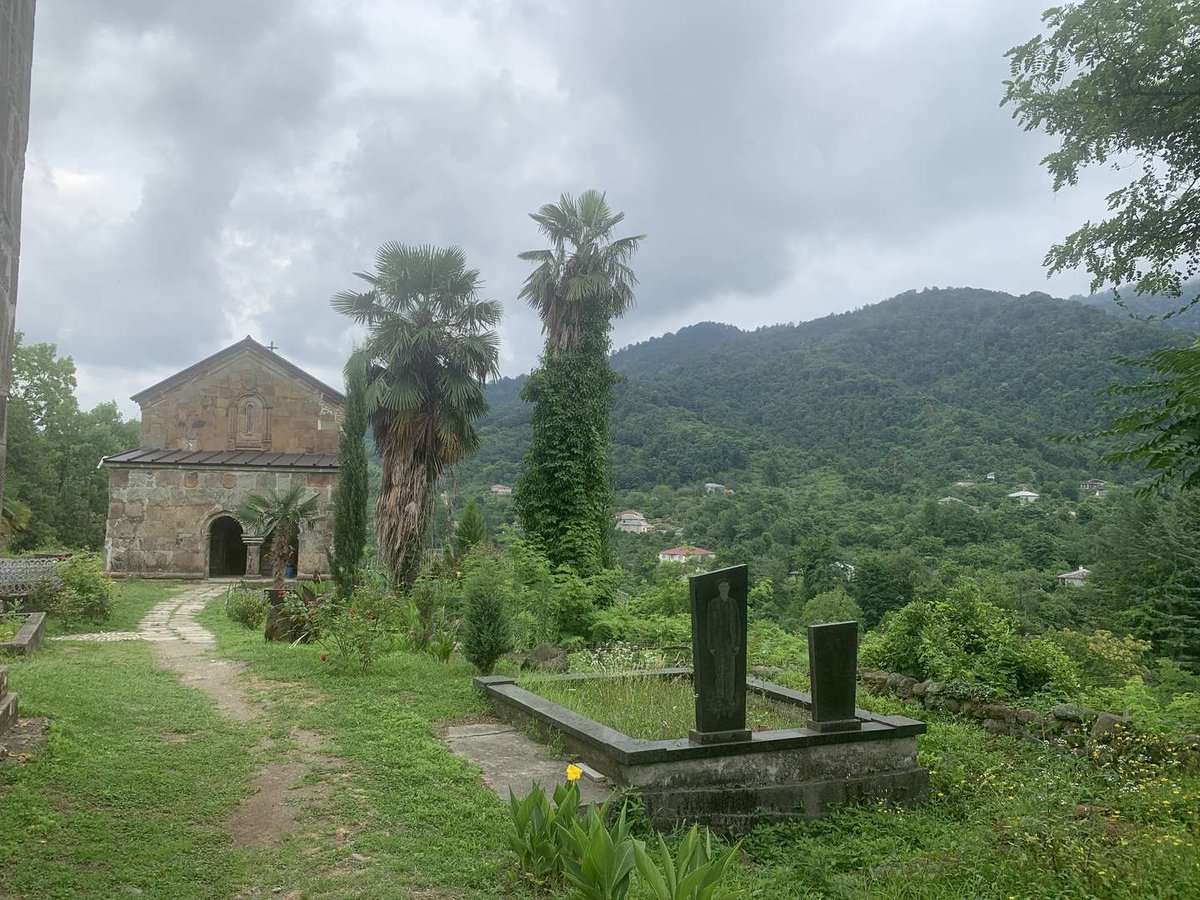
Most tourists drive straight past Likhauri on the way to Batumi or Ozurgeti. Five kilometres from the regional centre, a gorge carved by the Achistskhali River, 120 metres above sea level. At first glance it looks like any green Georgian village with cows by the road.
But Likhauri is older than it looks. In the early feudal period, this village was a political centre of the Principality of Guria. A stone medieval fortress stands on the hill above it — locals sometimes call it Queen Tamar's Fortress, though the name is imprecise and has simply stuck by analogy with other Gurian strongholds. In the village centre, the house where Ekvtime Takaishvili was born in 1863 is now a museum dedicated to the historian, archaeologist and Orthodox saint. Higher up the slope stands the Church of the Nativity of the Virgin Mary. And by the mountain river, as is typical in Guria, there is a café where you can sit and listen to the water after the climb.
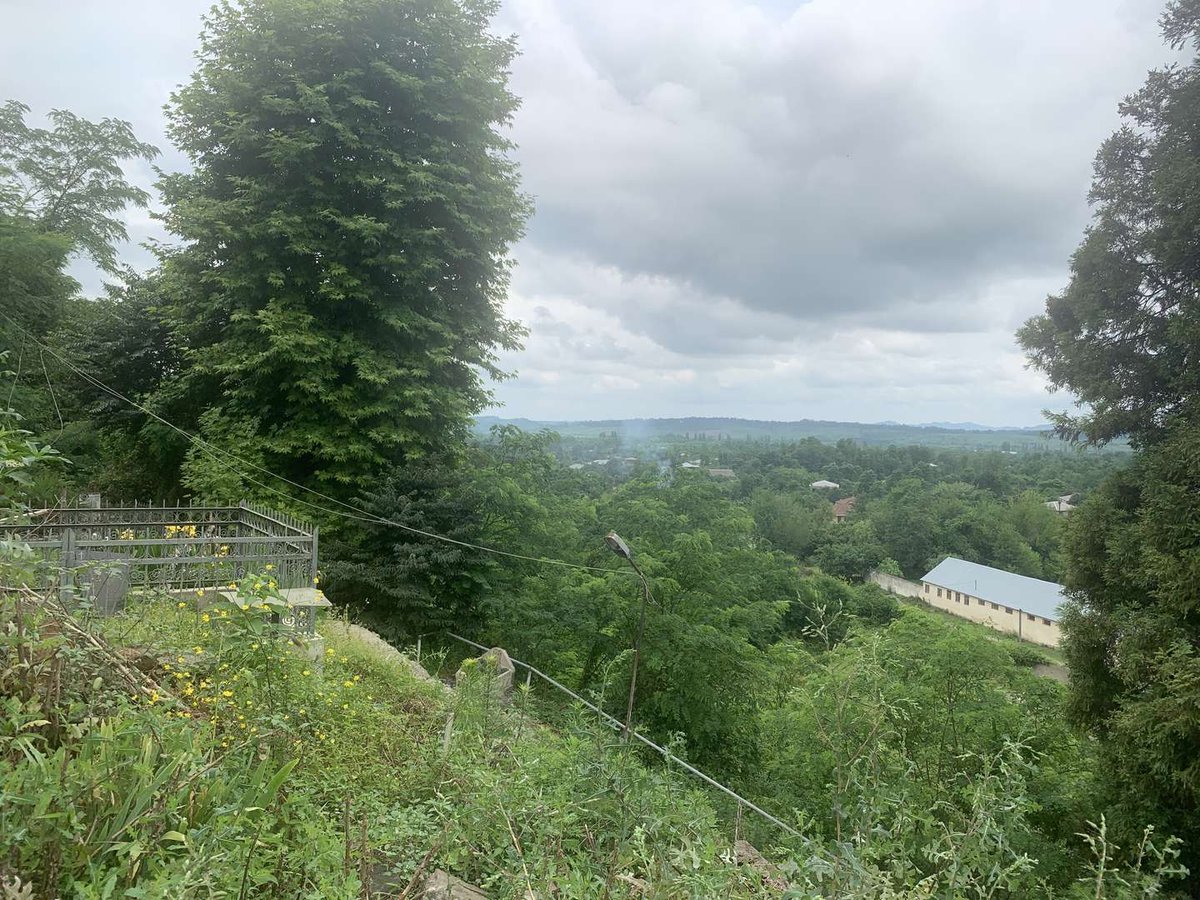
This is not a route with signposts and tour buses. People come independently, drawn to Georgia without polish: history in ruins, a modest local museum, a forest trail with no railings. If you have already been to Ozurgeti or plan to pass through Guria, Likhauri is worth half a day's stop.
🚗 Getting to Likhauri
How to get to Likhauri Fortress from Ozurgeti and Batumi
The base route on the map starts from Ozurgeti — the nearest city, 5 km away and about 10 minutes by car.
🏰 Likhauri Fortress: History and the Climb
Before you visit, open the Likhauri Fortress listing on Madloba — it has the precise map pin, photos and coordinates for navigation.
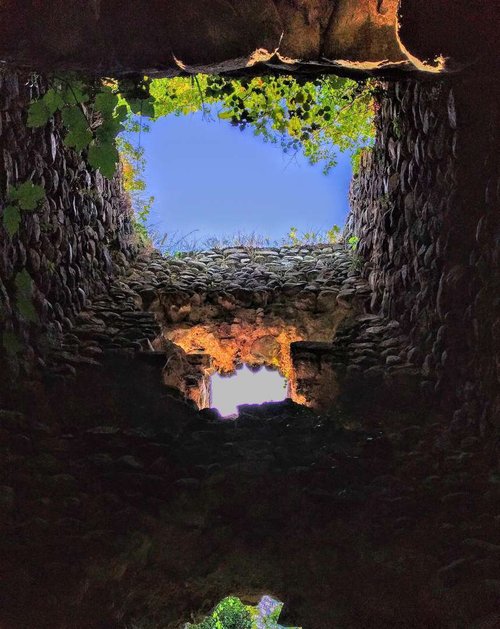
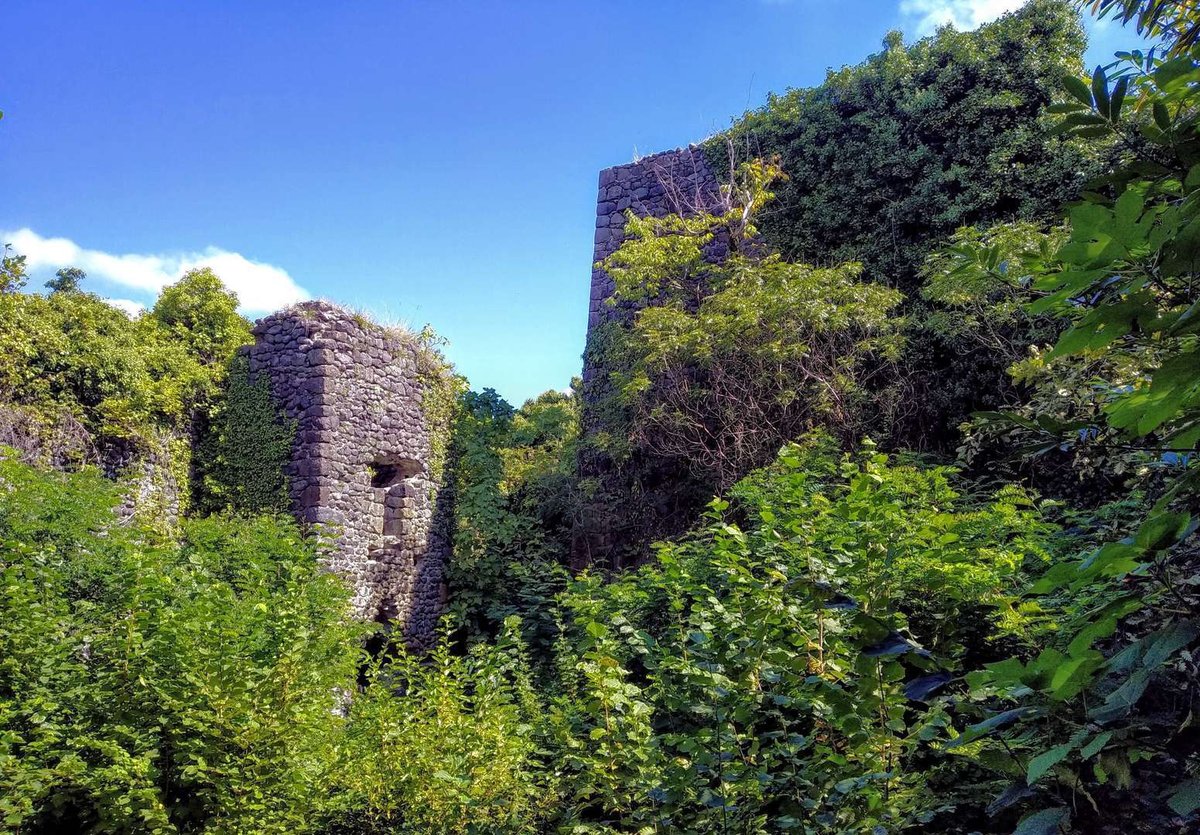
The fortress stands on a hill 2 kilometres from the centre of Likhauri. Locals sometimes call it Queen Tamar's Fortress, though the name is inaccurate and has simply attached itself by analogy with other Gurian fortifications. Construction is dated to the late medieval period, the 14th–16th centuries. The plan is rectangular, with three towers of different shapes and sizes. The northern tower has four storeys: the ground floor served as the main gate entrance, and the upper three floors were used for living and defence. The site also preserves a cistern and a well.
In 1774, during the Russo-Ottoman War, Ottoman forces captured Likhauri along with the fortresses of Askana and Bukistsikhe. They were retaken the same year by Mamia IV Gurieli with the support of Solomon I. One episode from that siege passed into local memory: Sopio Gurieli, inside the walls of Likhauri, refused to surrender the fortress, saying: "In one — all my possessions, in the other — my children." In the 19th century, the site sheltered outlaws. Researchers Frédéric Dubois de Montpéreux, Dimitri Bakradze and Tedo Sakhokia all described it in their writings.
The climb to the fortress takes 30–40 minutes in good weather. The trail goes through forested, shrubby terrain with no waymarkers or handrails. After rain it becomes slippery. Non-slip soles are not a recommendation — they are a requirement. From the top, the view opens over the Achistskhali River valley and the surrounding hills of Guria.
🏛️ Ekvtime Takaishvili House Museum
In the village centre, in the house where the scholar was born, is the museum. Before your visit, check the Guria Archaeological Museum-Reserve named after Ekvtime Takaishvili on Madloba — it has visitor reviews and the latest information.
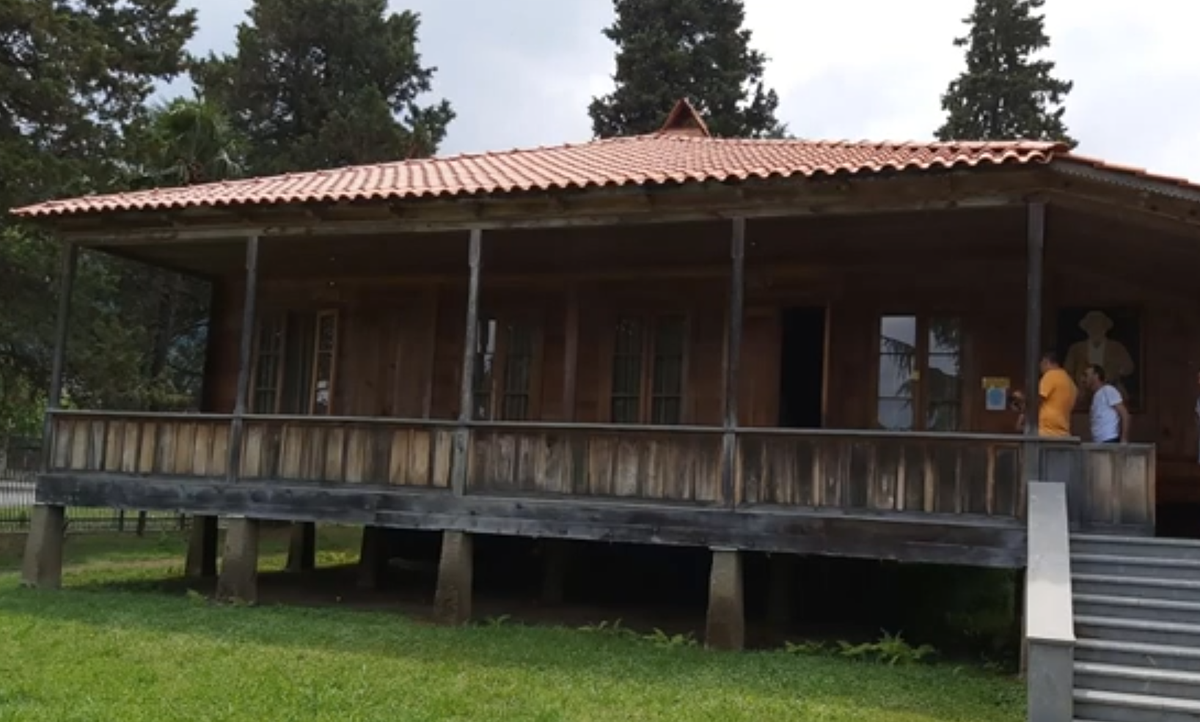
Ekvtime Takaishvili was born here on 3 January 1863, the son of a nobleman named Simon Takaishvili. He lost his parents young, graduated from Kutaisi Gymnasium with a silver medal, then studied history and philology at St. Petersburg University. Back in Georgia, he became one of the founders of the country's museum tradition: in 1889 he established the Exarchate Museum, gathering ancient manuscripts, frescoes and cultural artefacts from Georgian churches.
In 1921, when the Red Army entered Georgia, Takaishvili went into exile in France — taking 39 crates of Georgian national treasures with him. For nearly 25 years he lived in extreme poverty, refusing to sell a single piece. In 1931, his wife died of starvation. He himself came close to death several times, yet the collection remained intact. In 1945 he returned the treasures to his homeland and came back himself. He died in Tbilisi in 1953 under house arrest. In 2002 the Georgian Orthodox Church canonised him as Saint Ekvtime the Bearer of God.
The museum in Likhauri opened in 2010 and has four exhibition halls. Every year on 16 January, the village marks Ekvtimeoba — the feast day of the scholar.
No official opening hours are available in public sources: check with locals or the Ozurgeti municipal administration before your visit.
⛪ Church of the Nativity of the Virgin Mary
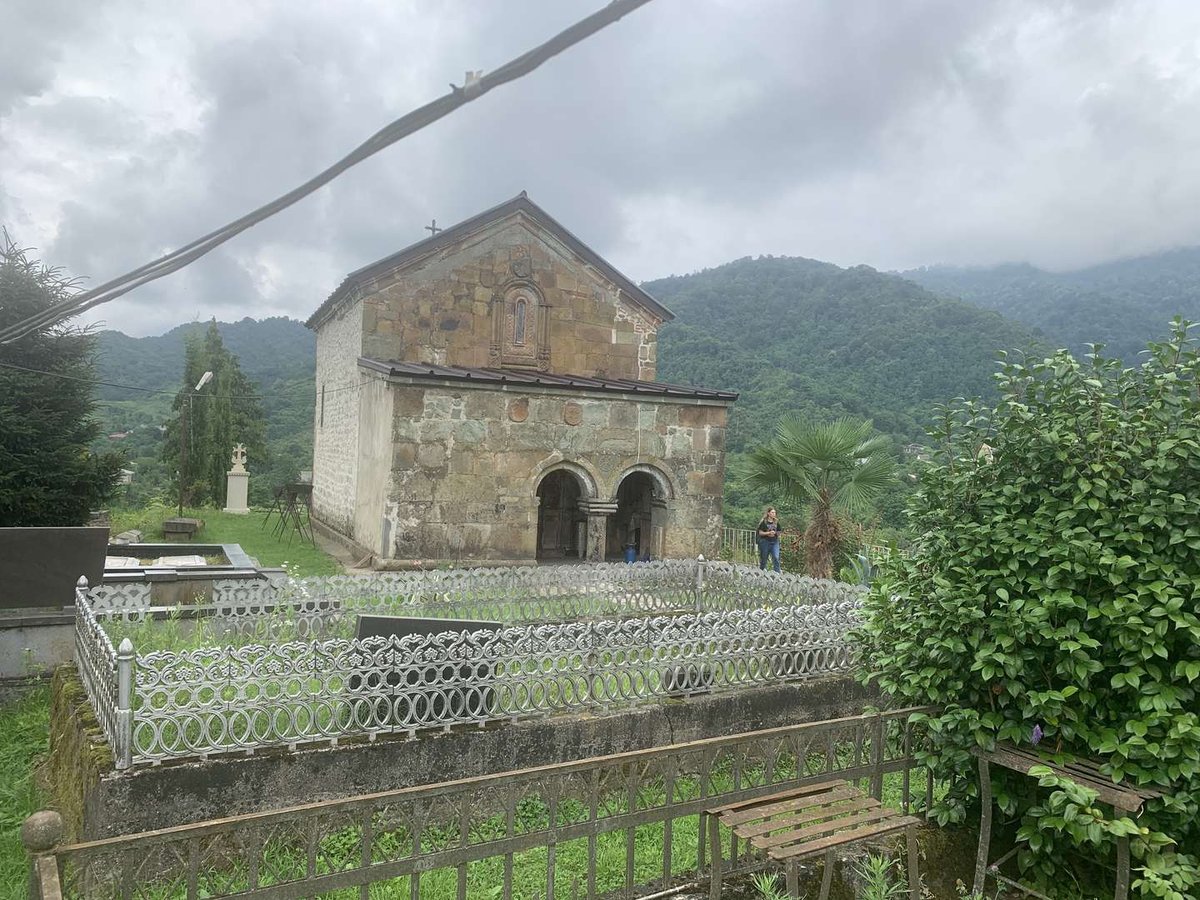
On the hill above the village centre, roughly 1.5 km from the museum, stands the Church of the Nativity of the Virgin Mary. Coordinates: 41.8730278, 42.0094084. The church is active, small, with a view over the valley. The path up is shorter and easier than the fortress trail — more open, less overgrown. Dress modestly if you plan to go inside: this is a working parish church, not a tourist attraction.
If you are combining the fortress and the church in one walk, it makes more sense to go to the fortress first, then come down to the church, and return to the village centre for the museum. The full walking route takes about 2.5–3 hours including stops.
🌊 Café by the River
A few minutes from the centre of Likhauri, on the bank of the Achistskhali River, a small café is open. After the climb to the fortress or the walk to the church, it is a good place to stop: fast-moving mountain water, shade, simple food. You can step into the river — the bottom is stony and the water stays cold even in summer. Better not to bring your phone to the water's edge: the bank is slippery.
House of Culture
The building is almost destroyed due to weather conditions. The repair was done a long time ago. The House of Culture provides services such as document printing and internet access. The director speaks Russian and is a very friendly person.
🗺️ What to See Near Likhauri
Likhauri works well as part of a wider route through Guria's sights. Several places are within an hour's drive.
Achi Church. In the neighbouring village of Achi, a few kilometres from Likhauri, stands the Achi Church — a small medieval structure set among green hills. Easy to stop at on the way.
Askana Castle. 15–20 km west, the Askana Castle is another medieval fortification mentioned alongside Likhauri: both were taken by Ottoman forces in 1774. There is also a resort near the castle — a separate article on Madloba covers it.
Shemokmedi Monastery. One of Guria's main monastic complexes — Shemokmedi Monastery sits on a hill and is visible from a distance. A detailed guide is available on the blog.
Ozurgeti. The nearest town, 5 km from Likhauri. The Ozurgeti Local History Museum gives a solid overview of Guria's past and pairs well with a visit to Likhauri.
Have you visited Likhauri? Leave a review on Madloba: tell us how long the fortress climb took, whether you found the museum open, and whether it is worth the trip without a car.
Information is current as of June 2026. Before your trip, check the museum's opening hours, weather conditions and trail accessibility.
❓ FAQ
In Ozurgeti Municipality, the region of Guria, 5 km north of Ozurgeti. The village sits in the Achistskhali River gorge at 120 metres above sea level.
By car, around 1.5 hours via Chaqvistavi and Ozurgeti. By public transport: take a bus or minibus to Ozurgeti, then a local minibus to Likhauri (about 15 minutes; minibuses leave from the central market when full).
A stone medieval fortress from the 14th–16th centuries on the hill above the village, 2 km from the centre. Rectangular in plan with three towers. The northern tower has four floors. In 1774 the fortress was taken by Ottoman troops and retaken the same year by the Gurian ruler Mamia IV Gurieli.
The forest trail has no waymarkers or handrails. After rain the ground becomes slippery. People with knee problems or without suitable footwear may find the climb uncomfortable. In dry weather, with proper shoes, it takes 30–40 minutes at a moderate pace.
The forest trail has no waymarkers or handrails. After rain the ground becomes slippery. People with knee problems or without suitable footwear may find the climb uncomfortable. In dry weather, with proper shoes, it takes 30–40 minutes at a moderate pace.
The house-museum opened in 2010 in the family home of Ekvtime Takaishvili — historian, archaeologist and Orthodox saint — who in 1921 took Georgia's national treasures into exile in France and preserved them until their return to the homeland. The museum has four exhibition halls. Every year on 16 January, the feast day of Ekvtime (Ekvtimeoba) is marked here.
The fortress, museum, church and riverside café together take half a day — 4 to 5 hours including the walks up. If you add the nearby village of Achi, allow a full day.
The Achi Church is in the neighbouring village of Achi. Askana Castle is 15–20 km to the west. The Shemokmedi Monastery complex sits on a hill in Guria. All three fit comfortably into a single day by car.
April through October, in dry weather. In winter, the trails to the fortress may be impassable after snow or heavy rain. Summer works well, but bring water and start the climb in the morning before the heat builds.
34 comments
Log in to leave a comment
Понравилось, что маршрут не перегружен, но при этом даёт разнообразие — от исторических объектов до отдыха у горной реки, где можно остановиться и просто насладиться природой. Отдельный плюс — советы по передвижению и нюансы, связанные с подъёмами и дорогами, это действительно помогает заранее оценить свои силы и спланировать поездку.
Как вам кажется, такие небольшие и менее известные направления вроде Лихаури могут заменить популярные туристические места или всё же лучше рассматривать их как дополнение к основному маршруту?