



Georgian Kinto: Who They Were and History of Tbilisi Street Performers
🌟 Kinto: the magicians of old Tbilisi who are not afraid to be themselves! 🎭
Tbilisi is not just a city, but a stage where street vendors become the main actors. Find out why the image of kinto has become a symbol of freedom and self-expression in the city's culture!
🌇 Do you know who was hiding behind the masks of rogues, merchants and singers on the old streets of Tbilisi?🎭
These mysterious characters, known as kintos, became true heroes of the city, personifying its spirit and culture. They didn’t just trade — they turned every street into a live performance, filled with music, humor, and colorful outfits. These iconic figures live on in Tbilisi, and their images can be found in paintings, music, and even in the modern LGBT rights movement, where kintos have become a symbol of Tbilisi Pride. 🏳️🌈
Today we dive into the world of these colorful characters, who were not just traders, but real street theater actors. We will reveal how their life and culture became an integral part of Tbilisi, Georgia and modern art. 🎶
🌇 Imagine the old streets of Tbilisi, where the air is filled with the aroma of fresh fish, fried fruits and oriental spices. These streets are full of life, here every merchant is not just a seller, but an actor creating a street performance. And at the center of these performances are the kintos, who capture the attention of the townspeople and tourists with their bright behavior and charisma.
Who are they, these legendary characters whose images have become symbols of Tbilisi? Why do their figures remain an important part of Georgian cultural identity and continue to inspire even today?
📌 What awaits you? 🔥
👉 You will learn:
- Who are the Kinto and why have they become not just a part of Tbilisi, but its soul? 🕺
- How to recognize these colorful characters by their appearance and manners? 🔍
- Little-known facts about the life of the Kinto that shock and inspire! 🤫
- Why did the image of the Kinto become a symbol of Tbilisi Pride and how is this related to the rights of the LGBT community? 🏳️🌈
- Where can you find traces of their culture in Tbilisi and what will this tell you about the city? 🌍
- What is the Kintouri dance and why is it important for this subculture? 💃
- Real reviews about the Kintouri and how is the Kinto perceived in modern culture? 🗣️
- What secrets do the images of the Kinto hide and how do they fit into modern Georgian folklore? 🔮
❗ What will you lose if you don’t continue reading?
You'll never know why the Kinto still live in the heart of Tbilisi, why they've become a symbol of freedom and self-expression, and how they've influenced contemporary art and cultural movements! Don't miss the chance to unravel one of the most vibrant and enigmatic chapters of Georgian history. 🚀

Tiflis Kinto
🧐 Who are they, these tricksters of old Tbilisi? 🕺
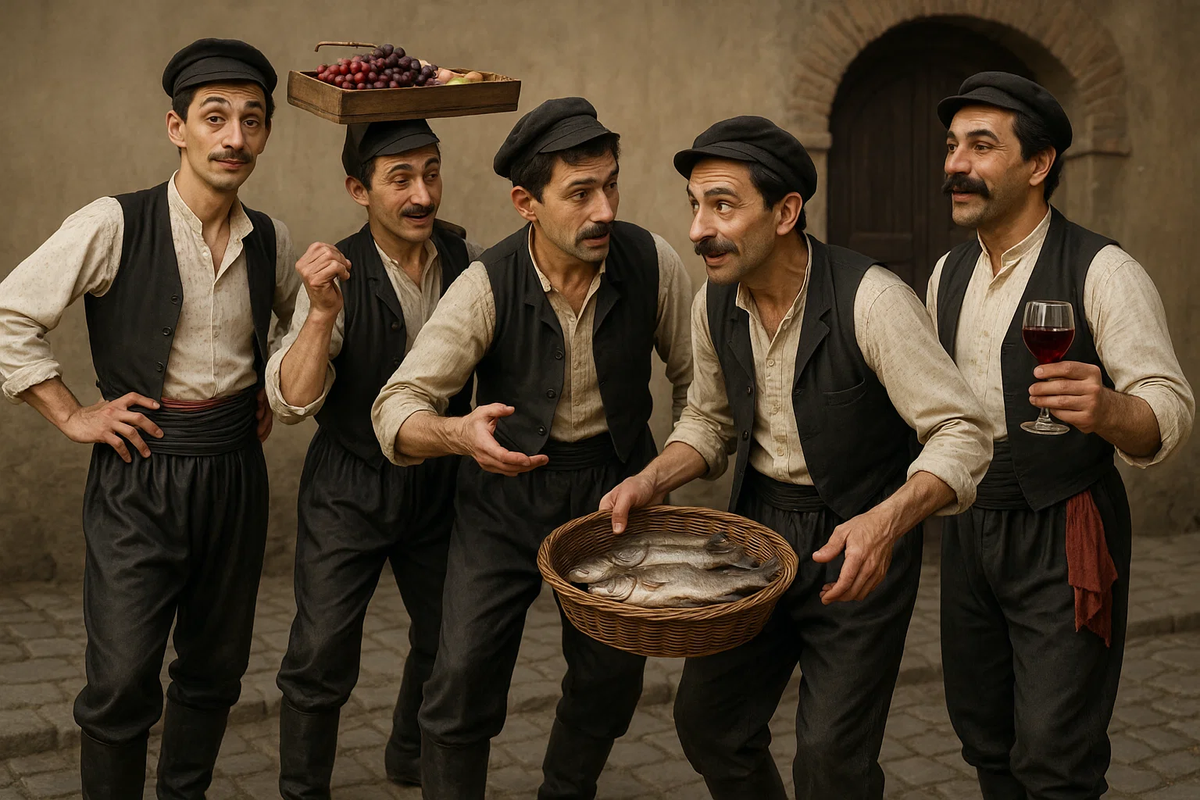
In the 19th century, the capital was filled with a bravura company of street vendors-artists, turning the sale of fish, fresh fruit and tart wine into a colorful show. Their songs, witty remarks and noisy mini-performances gathered entire crowds around, turning an ordinary bazaar into an open-air stage. The charismatic barkers personified the city, where the shop and the theater merged into one. 🌆
As philologist Joseph Grishashvili explained, the word "kinto" itself originally meant "carrying weights on the neck" - a hint at a tray with goods. Over time, the name acquired a broader meaning: eloquence, impudence, recklessness and a desire to live at someone else's expense. In folklore, these revelers were described as cozy fat organ grinders, or as puny, sneaky wits, and the nickname gradually became a synonym for "mocker" or "fraudster".
🗨️ "They were the soul of the city. No one saw them as just salespeople - they were artists who brought joy every day," recalls local historian Alexey Shishkin.
🔍 Interesting fact:
The goods served only as a pretext for the performance. Instead of boringly shouting out prices, lively wits staged mini-concerts: they composed couplets on the fly, acted out skits, and even juggled goods with gusto. 🎭 Thus, the streets of Tbilisi were filled with laughter and music, and everyone who fell under their spell took home not only a purchase, but also a vivid memory of the festive city.
👗 What street performers looked like and what they wore
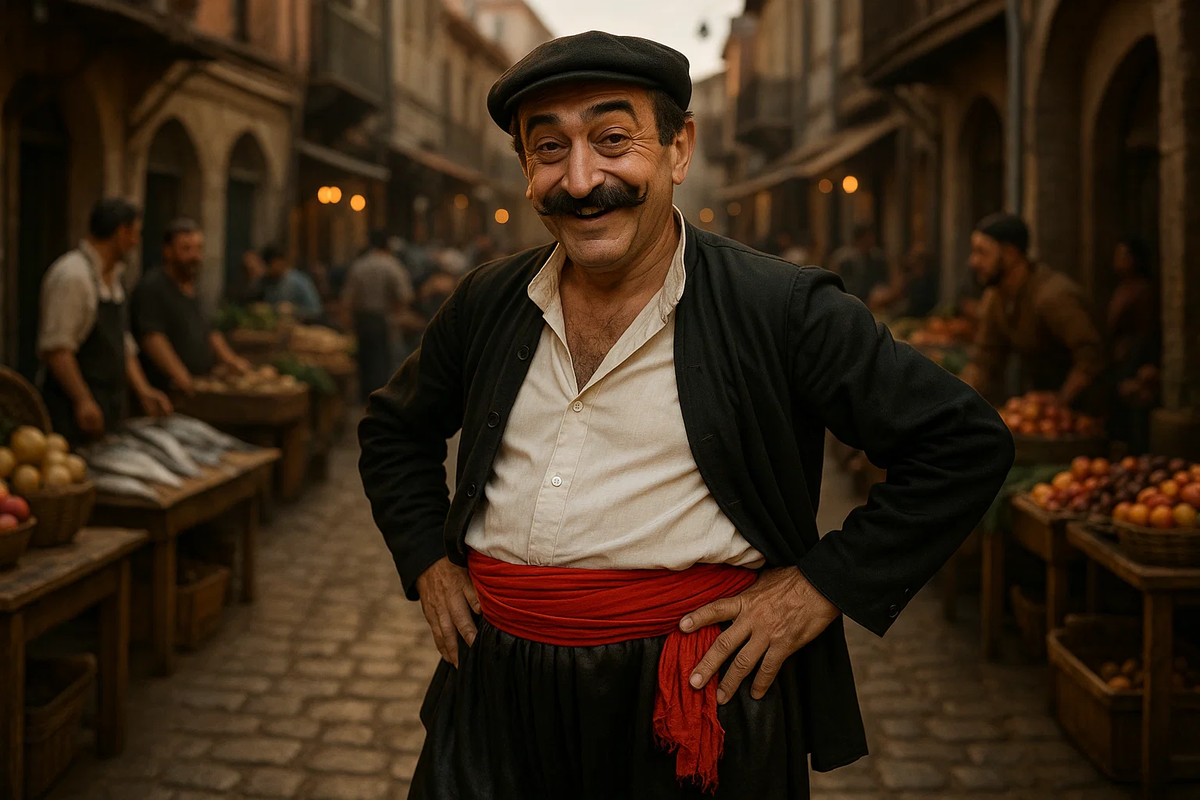
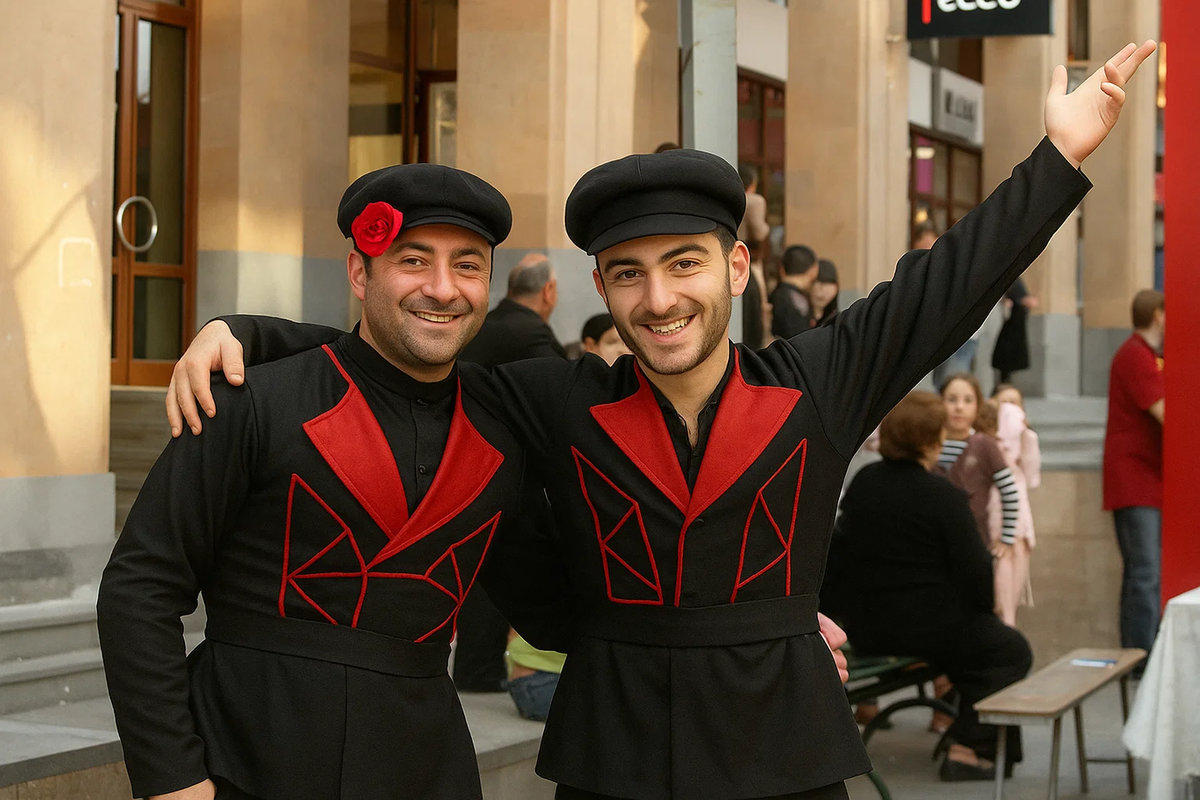
At the beginning of the 20th century, artists depicted these tricksters in wide satin trousers, with a flat cap on their heads and the inevitable red scarf tucked into their belt. Researchers note a noticeable Iranian influence: the loose cut of the "balls" and the bright palette migrated to the streets of Tbilisi along with the trade caravans.
Philologist Joseph Grishashvili adds details to the picture: “A cotton shirt with white polka dots and a high, almost never buttoned collar; spacious satin trousers tucked into socks; accordion boots; a cap; a narrow composite belt at the waist and a long watch chain hanging from the breast pocket.”
✨ Main elements of the image
Bloomers
Light and comfortable, tucked into socks: a symbol of freedom and independence.
Shirt
With a high collar, often unbuttoned - an unspoken challenge to strict morals.
Red scarf
Hidden behind the belt - a bright accent and a practical accessory.
Cap
A nod to Persian fashion and a sign of belonging to a street brotherhood.
Accordion boots
Stable shoes for dancing and jumping on the cobblestones of Tbilisi.
Watch chain
It sparkled cleverly in the sun, like modern neon signs.
🗨️ “They combined grace and audacity, creating images that are impossible to forget,” recalled Joseph Grishashvili.
🌟 Such an eccentric ensemble immediately distinguished the street artist from the crowd. Persian fabrics, Caucasian patterns and the European manner of wearing watches formed an amazing "cocktail" of fashion. It is not surprising that painters loved to paint them - every fold of the trousers and the gleam of metal told the viewer about the seething, multilingual life of Tiflis. The picture was complemented by the invariable aroma of spicy tobacco and wine stalls, without which it is difficult to imagine a true hero of the Tbilisi streets.

💃 Kintouri dance is more than just steps
Kintouri became the quintessence of the Kinto spirit: not just a demonstration of dexterity, but a real rite of freedom, artistry and competitive excitement. Each element of the movements reflects the desire to break the boundaries and impress the audience. 🎭
Kinto skillfully combined dance with acrobatics, organizing bright performances on the streets to live music - the accordion, hurdy-gurdy or violin set the rhythm and created a festive atmosphere. 🎶
🎯 This is interesting:
In early Tiflis posters, kintouri often appeared as a separate competition: artists competed for the right to get the best seats at a city festival and generous tips from passers-by.
Today, kintouri can be seen at the Tbilisoba festival, as well as in modern street performances and street art festivals. Choreographers often include elements of this dance in national ballet productions and wedding shows, maintaining the connection between centuries-old traditions and the 21st century audience. 🎉
🗨️ “The Kintouri dance was not just entertainment. It was a challenge to society, a demonstration of freedom and courage to live by one’s own rules,” says Shorena Gabunia, a researcher of Georgian folklore.
🏳️🌈 Kinto and sexual freedom
The kinto subculture brought to old Tbilisi not only the noise and colors of street fairs, but also an openness about intimate topics that was rare for that time. Their songs contained frank hints about relationships between men - the most famous verse is attributed to Artur Zaika:
"So why do I need my dear ass if I won't expose it to my brother?" 🎶
🔍 What do the researchers say?
- Shorena Gabunia emphasizes that in traditional Georgian culture, the active lover did not lose courage, while the passive role caused mixed feelings, but did not drive the “kinto” into isolation.
- Anna Efimova, a historian of sexuality in the Caucasus, warns against excessive romanticization: in her opinion, the image of the "queer kinto" is often exaggerated by modern authors. 💬 "The kinto were a symbol of freedom. They were not ashamed to be who they were, and openly expressed it in their songs."
🍃 Why is this important?
For the kinto, breaking taboos was part of their everyday repertoire: they not only entertained, but also challenged social norms, emphasizing the right of everyone to live and love by their own rules. Their folklore helped listeners think about the flexibility of morality and the limits of what is permissible.
💡 Did you know?
According to some accounts, the kinto even offered intimate services to passersby - not out of need, but to prove their right to complete freedom of expression, turning the streets of Tiflis into a scene of independence and courage.
🎤 "We should not forget that these artists stood apart from traditional norms. Their attitude to sexuality and freedom of communication was much more open," notes the researcher of Georgian subcultures.
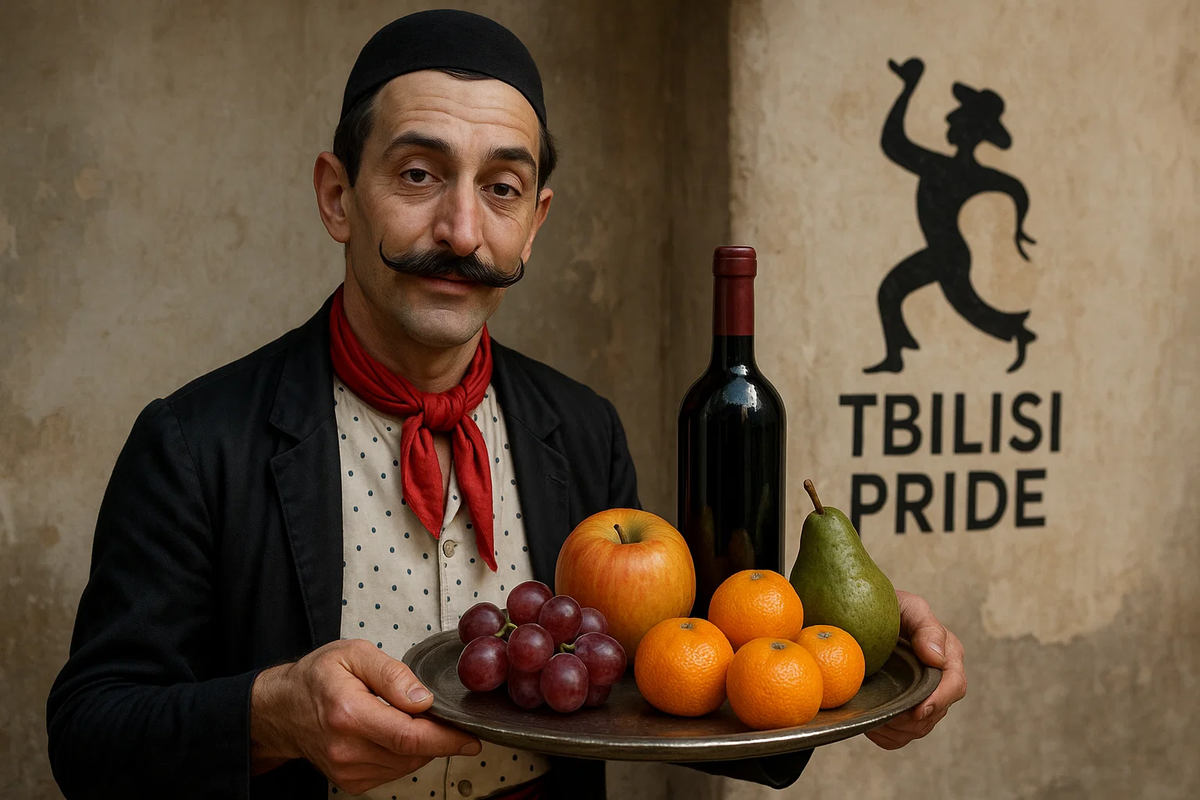
🏳️🌈 Why did the image of kinto become a symbol of Tbilisi Pride?
Tbilisi Pride is an annual festival founded in 2018 to support the rights of the LGBT+ community and combat discrimination in Georgia. The organizers chose the silhouette of a kinto as their emblem because this figure perfectly reflects the key values of the movement:
- 🕊️ Freedom - Kinto were never shy about their words and actions.
- 🤘 Defiance - They challenged convention and lived by their own rules.
- 🌈 Self-expression - Their bright costumes and sharp humor spoke louder than any statement.
- 🤝 Acceptance - Like Kinto, Pride members strive for a community without judgment.
✨ Interesting fact:
At one of the 2022 demonstrations, participants appeared in traditional harem pants and caps, emphasizing the connection between the century-old streets of Tbilisi and the modern movement for equality and human rights.
💬 “The silhouette of a kinto in our logo reminds us: freedom and originality are what we stand for,” — Tbilisi Pride organizers.
🎨 Kinto in art
The paintings with kinto are real masterpieces, in which every brushstroke conveys not only the appearance of street artists, but also the spirit of Tbilisi itself. 🎨🖌
- Niko Pirosmani painted them as folk heroes: vital, sincere, with a slight sadness in their eyes.
- Lado Gudiashvili exaggerated the forms: sometimes plump "organ grinders", sometimes thin agile, emphasizing the contrasts of the city bustle.
- Oskar Shmerling played with color and abstraction, placing kintos in unusual compositions, where they always remained the center of attention.

Lado Gudiashvili "Revelry Kinto"

Niko Pirosmani - Kinto revelry with an organ player
These paintings show them as vivid characters, with exaggerated features: they were depicted with grotesquely bloated figures or, conversely, with excessively thin bodies, which symbolized the exaggerated features of urban life.
🗨️ “Kinto live in every stroke of paint — they are not just figures, but the spirit of an entire era,” — Lado Gudiashvili.
🎨 “For Pirosmani, kinto are not just figures from the market. They are people who embody the spirit of freedom and the tireless energy of old Tbilisi,” — the art critic says, explaining why these paintings are so important.
😂 Humor and audacity
Kinto jokes were not just entertaining; they challenged conventions and could shock listeners. Their repertoire included playful couplets and provocative themes that other artists avoided.
Playful couplets
"You are like sugar to me... I only like sour wine."
Provocative topics
Bold jokes about sex, money and power that could make any listener shudder.
Risky humor
Wits and caricatures that demonstrated their fearlessness and characteristic audacity.
🗣️ Reviews and reactions of people
- 💬 Maria, 35 (Ukraine)
“The Kintouri dance with a jug on their head in Tbilisi amazed me! It’s not just a tradition, but a real street show, full of energy and enthusiasm.” - 💬 David, 28 (Tbilisi)
“This culture is close to me: the costumes, jokes and freedom of the Kinto spirit are part of our urban heritage, which I am proud of.” - 💬 Natalia, 40 (Russia)
“The Kinto’s crude humor is not always my style, but I can’t help but admire their artistry and ability to capture attention.” - 💬 Lika, 22 (Georgia)
“Kinto is not a museum exhibit, their spirit really lives on the streets: I often meet people in harem pants and hear old couplets.”

Photo portrait of a kinto by D. Ermakov
📍 Where to see the Kinto heritage today
The spirit of these street artists lives on in modern spaces in Tbilisi. Here are three places where you can feel the kinto atmosphere:
🏛️ National Museum of Georgia
In the halls of the museum, paintings by Pirosmani and Gudiashvili preserve vivid images of kinto.
🎉 Tbilisi Old Market
Traders in wide trousers and caps still resemble heroes of old paintings.
🎨 Street galleries and frescoes
Contemporary artists decorate the walls of Tbilisi with graffiti depicting kinto images and their lines.
💡 By the way: The Art-Gene festival often hosts master classes on making barrel organs and theatrical mini-performances, recreating the live atmosphere of kinto right on city stages.
🤔 What makes kinto so special?
- 🎭 Street art: each of their sales is a mini-performance.
- 💬 Wit and hyperbole: jokes that are remembered for a lifetime.
- 👗 Outfit as a brand: harem pants, scarves and a cap are their "calling card".
- 🎶 Musicality: barrel organs and songs made the bazaar look like a concert.
- 🌈 Courage: openness in topics that others kept silent about.
- 🕊️ Freedom of spirit: they lived by their own rules, and this was felt in every movement.
🧩 10 interesting facts
- 🪕 Kinto often made their own barrel organs and taught passersby to play them.
- 🎤 Their couplets were passed from mouth to mouth and became real folk hits.
- 🚶 On the streets of Tiflis, you could also meet "kinti" - female artists in the mirror image of their male colleagues.
- 💰 They not only collected tips, but sometimes gave small change to passersby to attract even more attention.
- 🤹♂️ In addition to songs and dances, kinto performed tricks with coins and rings, surprising the audience.
- 📜 The National Museum archives have preserved handwritten "albums of couplets" of the most famous kinto.
- 🎨 Their image inspired sculptors - in one of the courtyards of Tbilisi there is a bust of a famous kinto artist.
- 🏳️🌈 The queer cultural elements in their songs are considered to be among the first public manifestations of LGBT+ visibility in the region.
- 🗺️ There was a “kinto route” — a map of the places where they staged their most impressive street shows.
- 📚 The first academic work on kinto was written in the 1930s, but was kept in a “closed” archive for a long time until the 1990s.
📖 Glossary of terms
- 🕺 Sharovar — loose wide trousers, a symbol of street freedom.
- 👚 Chintz shirt — a light shirt with a high collar, always unbuttoned.
- 🧣 Scarf — a bright scarf on the belt, served both as decoration and as a towel when trading.
- 🎩 Kartuz — a flat cap of Persian style, a sign of street fraternity.
- 🥾 Accordion boots — comfortable shoes with soft folds for dancing on cobblestones.
- 🎶 Barrel organ is a mechanical musical instrument, a constant companion of the kinto.
- 🕰️ Chain is a long watch chain, the shine of which attracted attention.
- 💥 Queer is a modern term for openness in sexuality and gender.
- 🤸 Acrobatics are tricks and exercises that turned the dance into a truly spectacular show.
- 🗣️ Trickster is a "rogue", "mocker", a master of sly jokes and witticisms.
🗨️ Frequently Asked Questions (FAQ)
🕺 Who are the kintos?
They are street performers from 19th-century Tbilisi: traders, poets and musicians at the same time, who know how to turn each of their performances into a real show.
❓ Why did their image disappear?
After the revolution of the 1920s and the advent of Soviet power, street performances went into the shadows, and the kinto subculture gradually dissolved into the new social order.
👖 What did their costumes symbolize?
The trousers gave freedom of movement, the headscarf emphasized audacity and eccentricity, and the cap hinted at Eastern influences and belonging to a special brotherhood.
💃 What is the "kintouri" dance?
This is a dynamic street competition: balancing a jug of wine on the head, lifting a glass with the feet and acrobatic tricks demonstrating the dexterity and courage of the performers.
🎶 What made their music unique?
A live barrel organ, accordion and witty couplets with sometimes shocking lyrics turned the bazaar into a concert venue.
🏳️🌈 Why did the Kinto silhouette become a symbol of Tbilisi Pride?
Their spirit of freedom, independence and desire to be themselves perfectly reflect the values of equality and self-expression of this movement.
📍 Where can you meet their legacy today?
In the National Museum of Georgia, on street graffiti, during Tbilisoba and in the old market, where the echoes of their couplets still sound.
💥 Why were their songs considered provocative?
Kinto boldly went beyond the bounds of what was permitted, joking about sex, money and power - this broke taboos and caused violent reactions.
🐟🍇🍷 What goods did they sell and how?
They didn’t just sell fish, fruit, and wine, but turned it into a reason for a festive performance, enticing customers with poetic couplets.
🎥 Are there any films or plays about kinto?
Yes, modern directors and theaters from time to time stage plays and documentaries dedicated to the legends of old Tbilisi.
🗣️ What do you think of these street artists?
Have you met “kinto” in Tbilisi or at festivals? Share your impressions in the comments! 💬
🕵️ How is the word “kinto” used today?
In colloquial speech, “kinto” can mean a rogue or a “mocker,” but it is often used with warmth, recalling the spirit of the old city.
👩🎤 Were there women among the kinto?
Yes, there were "kinti" - female performers, often dressed in harem pants and participating in street performances on an equal basis with men.
📚 Are there any serious studies about kinto?
Scientists and local historians have published articles and dissertations, many materials are available in the archives of the National Museum and in the works of philologist Joseph Grishashvili.
🎪 What modern events are dedicated to kinto?
In addition to "Tbilisoba", their image comes to life at street art festivals, night excursions "Tiflis in Faces" and thematic exhibitions in galleries.
Thank you for reading to the end! Share the article with your friends and leave your memories of kinto below. Together we will preserve this bright page of Georgian culture! 🌟
Kinto are not just traders of old Tbilisi, but true guardians of the city's spirit: 🎭 artistry, 🕊️ freedom and daring humor have forever remained in its history. Their live shows, bright costumes and bold songs continue to inspire modern artists, musicians and activists.
👉 What do you think?
Share your impressions and stories in the comments! Your experience and opinions will help preserve the memory of these amazing street artists. 💬👇

19 comments
Log in to leave a comment
Особенно хочу посетить Национальный музей Грузии, чтобы увидеть полотна Пиросмани с кинто — слышала, они невероятно передают атмосферу старого Тифлиса 🖼️🇬🇪.
А вы уже встречали или слышали музыку кинто на улицах Тбилиси? Что больше всего впечатлило — их танцы, костюмы или острые куплеты? 🤔👇