




🍜Tbilisi Asian cuisine - TOP 8 (Thai, Wok, Chinese, and Japanese food)
If you're looking for Asian cuisine in Tbilisi, it's important to clarify: in the city, this search typically refers not to a single cuisine, but to several different formats. Some seek Thai tom yum and pad thai, others a Chinese wok and hot dishes, and still others Japanese rolls, ramen, and a relaxed dinner without accidentally mixing genres. This rating will help you choose not just a place "with an Asian menu," but a format tailored to a specific scenario: a quick lunch, an evening sit-down, ordering soups and noodles, a dinner with rolls, or an introduction to more sophisticated Pan-Asian cuisine. If you're looking for only one narrow genre, such as a sushi bar or a standalone Thai restaurant, it's best to also check out the adjacent subratings.
WHO IS THIS RATING SUITABLE FOR
- Those looking for Asian cuisine in Tbilisi beyond just a sushi bar.
- Lovers of Thai food: tom yum, curry, pad thai, and other vibrant hot dishes.
- Those who want to find a Chinese wok in Tbilisi with the right texture, not just noodles in sauce.
- Those who prefer a Japanese-style dinner: rolls, ramen, rice dishes, and neat presentation.
- Tourists and city residents who need a clear choice for lunch, dinner, or a quick order, without a random "everything at once" menu.
The best places according to the MADLOBA rating


4 more worthy options for your choice


Where to find Asian cuisine in Tbilisi: a rating map
The map is especially useful if you're choosing Asian cuisine not in the abstract, but for a specific daily itinerary. This rating takes into account not only the menu but also the visit's scenario: a quick lunch, an evening sit-down, ordering noodles and soups on the spot, or a relaxed dinner with rolls and hot dishes. Therefore, it's worth considering not only the restaurant descriptions but also the neighborhood, logistics, and general route through the city.
How to tell if you're looking at a strong Asian restaurant, not just a "do it all" menu
Quick clues:
- The establishment has a clear focus: Thai cuisine, Japanese cuisine, Chinese hot dishes, wok-first, or a comprehensive pan-Asian concept;
- The menu doesn't try to cover too many cuisines at once without a clear logical approach;
- Spiciness, sweetness, saltiness, and umami are balanced, not hidden under an excess of sauce;
- Noodles, rice, vegetables, and seafood retain their texture;
- Rolls, soups, and hot dishes feel like parts of a single cuisine, not a random selection of popular items.
In Tbilisi, the phrase "Asian cuisine" is often overused. It can cover everything from neat Thai or Japanese projects to simply urban establishments that combine rolls, noodles, tom yum, and wok on a single menu without a clear concept. For the reader, it's not the breadth of the menu itself that matters, but the establishment's underlying logic. If the menu relies solely on flashy names and heavy sauces, it's no longer a strong Asian format, but a compromised urban mix.
For Thai cuisine, a good test isn't just spiciness, but also a balance of sour, sweet, salty, and aromatic flavors. If a dish boils down to a single sharp note or simply a sweet sauce, the kitchen has simplified the initial logic. For Chinese and wok-style cuisine, speed, texture, and heat are key: noodles shouldn't turn into a mushy mass, vegetables shouldn't become a stew, and sauce shouldn't completely overwhelm the flavor of the dish.
The Japanese format is also easily discerned by its discipline. It's important to understand how the rice is cooked, how sparingly the sauces are used, how carefully the rolls are assembled, and whether the hot dishes have the same composure as the cold dishes. If the entire Japanese emphasis rests solely on overloaded rolls, while the other dishes seem secondary, you're looking at an adapted urban format rather than a truly coherent Japanese line.
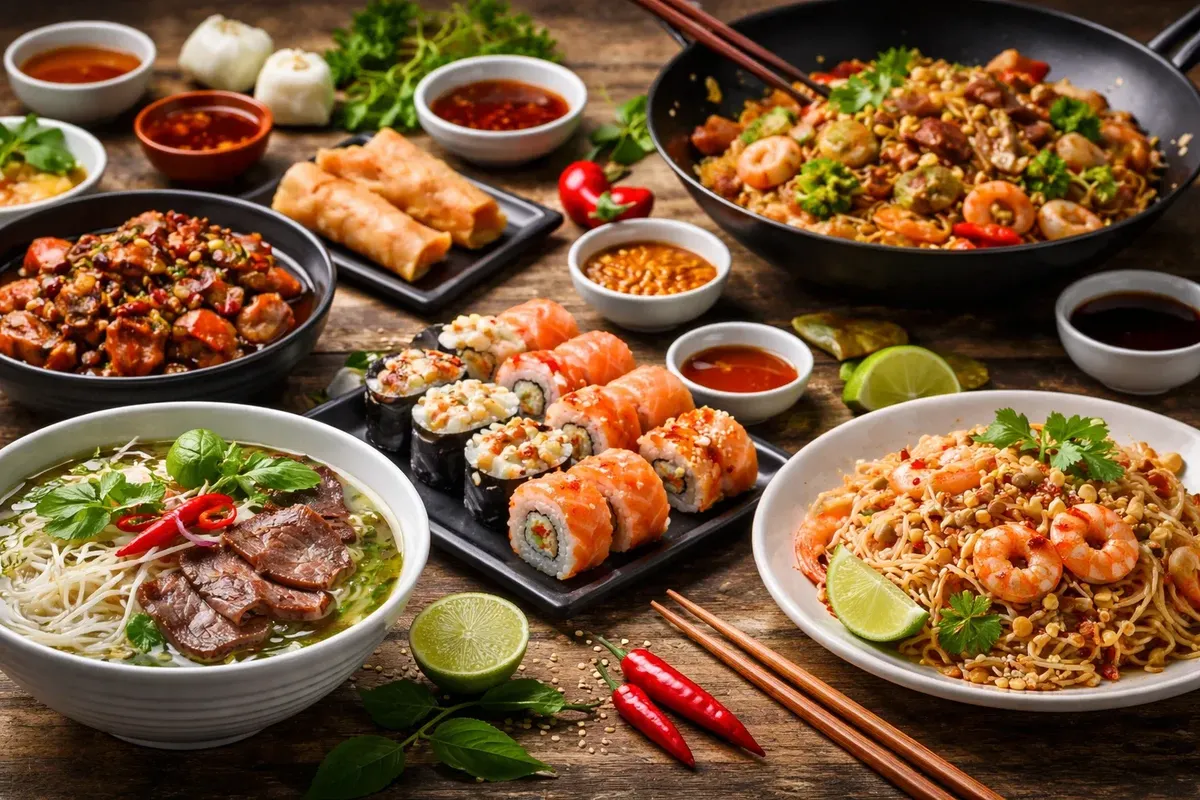
How to choose an Asian restaurant in Tbilisi based on your needs, not just a photo of the dish
- What to look for first:
- Do you need a quick wok and noodles or a full sit-down dinner?
- Is adjustable spiciness important, or are you looking for a mild, adaptable flavor?
- Do you primarily prefer Thai soups and curries, Chinese hot dishes, or a Japanese-style restaurant?
- Do you plan to dine in, take out, or order delivery?
- Are you willing to reserve a table for evenings and weekends?
If you're visiting for the first time, it's more convenient to order dishes that showcase the kitchen's technique rather than the most decorative items. For a Thai restaurant, this might be soup, noodles, or curry; for a Chinese restaurant, a single hot wok dish and a simple appetizer; for a Japanese restaurant, a classic roll, rice dish, or ramen, if that's truly the concept. This type of order will quickly demonstrate how well the kitchen maintains balance, texture, and presentation. If your main preference is wok-fried noodles, it's best to eat the dish on-site or pick it up immediately, avoiding a long delivery. Wok-fried dishes tend to lose their texture more quickly during transit: the noodles soften, the vegetables become watery, and the sauce becomes dominant. This issue is usually less noticeable with soups and rolls, so the specifics of your visit really do influence your choice of place.
It's helpful to check the spiciness level before your visit. In Tbilisi, some Asian restaurants offer a milder flavor by default, while others are willing to adjust the spice to suit your taste. This is especially important if you're looking for more than just a "pan-Asian menu," but a Thai or Chinese twist. For an evening visit, it's also worth checking reservations, the speed of service, whether a service charge is included, and whether the place is convenient for dinner, not just a quick afternoon stop.
Review from a catalog reader
Min Ho Lee, Seoul, South Korea
This rating became an excellent reference point for me when I wanted to diversify my dining experience in Tbilisi. It was interesting to see how different Asian cuisines are represented here, from Thai to Japanese.
We chose a couple of places from the list, and the impressions were very positive: vibrant flavors, good sauces, fresh ingredients, and careful presentation. Some dishes are closer to the classics, while others feature slight adaptations, but overall, everything is done with respect for the cuisine.
I liked that the selection offers a variety of formats—you can choose from a quick lunch to a full dinner. A very convenient guide for those who sometimes miss Asian flavors while traveling 🍜🥢✨
How does Asian cuisine in Tbilisi differ from the conventional "Pan-Asian" cuisine, and why is this important when choosing?
What's important to understand:
- Thai, Chinese, and Japanese cuisines are distinct culinary concepts, not interchangeable labels;
- Many establishments in the city adapt the spiciness, sweetness, and richness of sauces to suit a broader range of tastes;
- The Japanese cuisine often begins with rolls, but isn't always equally strong in soups and hot dishes;
- woks can be a quick casual option or part of a full restaurant dinner.
For Tbilisi, Asian cuisine has long ceased to be just about sushi and rolls. But along with the growing choice, another problem has emerged: the word "Asian" often lumps together too many different formats. Thai food is built on a balance of flavors and spicy aromas. Chinese dishes and wok-style cooking rely more heavily on frying techniques, texture, and speed. Japanese cuisine, even in its more urbanized form, demands precision, restraint, and a clear menu structure.
That's why it's important not to lump everything into one basket without explanation in a ranking like this. It's helpful for readers to understand in advance what they're looking for: tom yum and pad thai, hot wok noodles, Chinese dishes with a distinct technique, rolls, or a Japanese dinner in general. The more clearly a page explains this difference, the less likely you are to choose a place based on the catchy word "Asian" and end up with a completely different experience than you expected.
❓ Frequently Asked Questions about Asian cuisine in Tbilisi
This ranking includes places where the Asian format is expressed through Thai, Chinese, Japanese menus, wok-based dishes, and similar styles of hot cuisine. The purpose of the page is to help choose a broad Asian dining scenario rather than focusing on a single narrow genre.
This guide is for those choosing between multiple formats at once: tom yum, pad thai, wok dishes, rolls, ramen, and other Asian options. If you are looking specifically for sushi or only Thai cuisine, it is better to use a more focused sub-ranking.
For a first experience, it’s best to choose a dish that reflects the kitchen’s technique: tom yum, pad thai, wok noodles, a classic roll, ramen, or another core hot dish. These make it easier to evaluate balance and execution than the most visually impressive menu items.
In many places, the level of spiciness is adapted, but not uniformly. It’s better to check in advance whether the dish can be made milder or, наоборот, closer to its original intensity.
Many venues offer dishes with vegetables, mushrooms, rice, tofu, and meat-free noodles, but it’s important to check sauces and broths separately. This is especially relevant for soups, curries, and wok dishes.
For a spontaneous daytime visit, it’s not always necessary, but for evenings and weekends, reservations are recommended — especially if you are planning a full dine-in experience rather than a quick meal.
A good wok dish is defined by texture: noodles are not overcooked, vegetables remain crisp, meat or seafood is not dry, and the sauce enhances rather than overwhelms the dish. If everything turns into a soft, uniform mass, the technique is likely weak.
It depends on the concept of the specific place. Some venues focus on sushi and rolls, while others excel in ramen, rice dishes, and hot meals. Before visiting, it’s useful to understand what the main strength of the Japanese menu is.
📌 Help us keep our rating up-to-date
Have you been to any of these Asian cuisine spots in Tbilisi? Share in the comments what you liked, what was a good choice, and what didn't live up to your expectations. If you notice an inaccuracy in the listing or represent a restaurant that actually fits this rating, please let the editors know via the form – we'll verify the information manually.
Have you been to these places or know of a great Asian restaurant in Tbilisi that the editors should check out? Share your thoughts in the comments below.
❓ How this rating is compiled
This rating was compiled by the MADLOBA editorial team based on the criteria of the "Where to Eat" category: analysis of concept, menu structure, cooking techniques, user signals, maps, service format, and relevance of the maps. For the Asian cuisine page, a clear focus, the quality of the main dishes, a balance of flavors, and the use of a wok, soups, and Japanese cuisine are especially important.

10 comments
Log in to leave a comment
E poi, c’è sempre quella sensazione che la cucina asiatica a Tbilisi sia un insieme di esperienze mescolate, non necessariamente coerenti. A volte sogno di trovare un posto che sappia unire il wok cinese e i rotoli giapponesi in un modo che non sembri forzato. Mi chiedo se qualche ristorante locale abbia provato ad esplorare questa fusione in modo più profondo. Avete mai trovato un ristorante che riesca a combinare sapori così diversi senza compromettere l’autenticità?
Lo que me gusta de tu artículo es que al menos da una guía, aunque no sé si siempre la sigo. Yo busco ese lugar donde la calidad sea prioridad, no solo un menú variado. ¿Tienes alguna recomendación específica para un buen pho en la ciudad?
Помню, как в прошлую поездку, наевшись хинкали до отказа, мы случайно забрели в один тайский ресторанчик из вашего списка — это было спасением для желудка! Грузинская кухня — боги, но иногда хочется именно азиатского баланса: кислого, острого, сладкого. Так что для меня такие места в Тбилиси — отличный план Б на случай «хочу чего-то другого» или когда путешествуешь с друзьями, которые не фанаты кинзы и сыра.
Как вы думаете, азиатские рестораны в Грузии честно пытаются повторить оригинальные рецепты или всё же заметно подстраивают вкусы под местного любителя более привычных сочетаний? Было у вас такое, что заказываешь острый пад-тай, а приносят что-то сладковато-нейтральное? Делитесь, кто что пробовал! 🥢🍜
Мне особенно хочется заглянуть в Thai House — уже представляю себе насыщенный вкус том‑ям и пикантные вок‑блюда после прогулки по историческому центру. Fujiyama Sushi и Tokyo Sushi Bar тоже в моём маршруте — люблю, когда суши подаются красиво и со свежими ингредиентами, особенно в уютной атмосфере.
Ещё очень хочу попробовать блюда в Sakura Asian Cuisine — кажется, там интересно сочетаются японские и китайские вкусы, а China Town Restaurant и Wok Street звучат как идеальные места для позднего ужина после насыщенного дня.
И вообще, как хорошо, что есть такие подборки — они делают гастрономическое путешествие по Тбилиси интересным и вкусным 🍜😋
Девочки, а вы когда путешествуете, ищете такие азиатские рестораны вроде Thai House и Fujiyama Sushi заранее, чтобы спланировать, где пообедать или поужинать, или предпочитаете находить такие места прямо во время прогулки? 😊🍣🥢