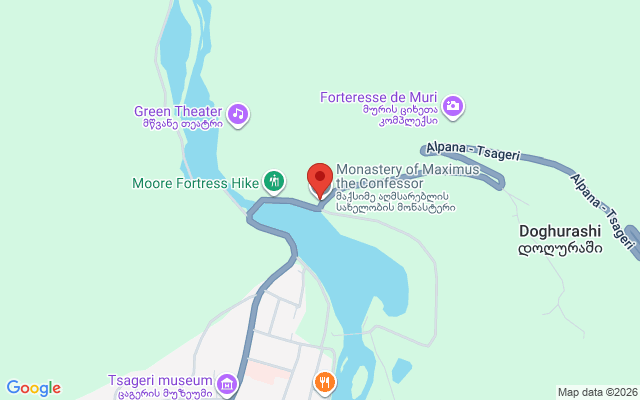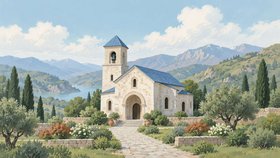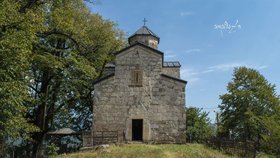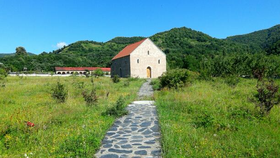



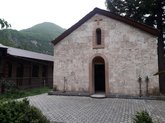


St Maximus Confessor Monastery stands atop a rocky ridge, by the Muris-Tsikhe fortress, on the border between Svaneti and Lechkhumi, above the narrow gorge of the Tskhenistskali River, Tsageri Municipality, among the churches and monasteries of the region. Maximus the Confessor, a 7th-century Byzantine theologian who fought against the Monothelite heresy, was exiled to Lazica (Western Georgia) after being tortured, where he died in 662 at the age of 82.
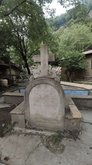
What's confirmed and what remains tradition. The Georgian church has long venerated this site as his burial place. In 2010, during repair work at the monastery, the remains of four people were found beneath the altar floor: one skull bore a carved cross, and two skeletons were missing finger bones, consistent with historical accounts of the torture inflicted on Maximus and his disciples. Following research, including examination by Tbilisi State University, the Georgian Orthodox Church officially declared the find to be the saint's genuine relics in 2015.
Today it's an active monastery, led by an abbot, with cells arranged around the church. The original temple was restored in the 1980s, allowing monastic life to resume here after decades of interruption.
For a fuller account of what's confirmed and what's tradition regarding Maximus's grave, alongside the timeline of the region's other fifteen churches and monasteries, see the guide Churches and Monasteries of Racha-Lechkhumi.