

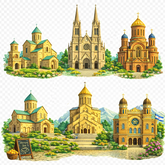

A parish church of Saint George, the church of the part of the village across the river. Gaghma is Georgian for the far side, beyond the river, and the prefix works just as gadmoghma does for the near side: rivers split villages in two here, and each half acquires its own name and its own parish.
The village lies in eastern Imereti. A caution in passing: Boslevi should not be confused with Bosela, a neighbouring village of similar name to the west, where a church of David the Builder stands. The names are so alike that a mistake comes easily. The century of building is not established.
The parish is active and services follow the church year. Dress modestly, women wear a headscarf. Check the name before setting out so as not to end up in the neighbouring village.
📜 Nearby
- A parish church of Saint George, the church of the part across the river
- Eastern Imereti, the far-bank half of the village cluster
- Not to be confused with Bosela: a different village with a church of David the Builder
🚗 Getting there
- Landmark - the far-bank part of the Boslevi village cluster, eastern Imereti
- The Build Route button will show the exact way
✍️ Have you visited this place? Share your impressions on Madloba: your reviews help other travellers.