


Cultural heritage - Samtavro monastery. History and architecture of one of the most significant monuments of culture in Georgia.

If you come to Mtskheta, do not forget to visit the Samtavro Monastery. In the blog "MadLoba" you will find a lot of useful information about this place: photos, history, architecture (of the Main Temple, the Church of St. Nino), real reviews of people who have already visited the attraction


Visit Samtavro Monastery⬇️

content
  1. History
  2. Architecture of the Main Temple
  3. Architecture of the Church of St. Nino
  4. Bell Tower

In Mtskheta-Mtianeti district, in the city of Mtskheta, which for you can become the most beautiful place in Georgia, there is one of the most significant monuments of culture and art of the country. We are talking about the Samtavro Monastery.

It was here that Saint Nino spent most of her life, and King Mirian and Queen Anna are buried in this place. In addition, one of the Assyrian fathers, who bore the name Abibo Nekreseli, was laid to rest in Samtavro.

History

The monastery complex combines more than one structure. This is the main temple, the church of St. Nino, as well as a bell tower and a fence with a tower. The exact time of construction of the main temple remains unknown, but it dates back to the XI century. The smaller church of St. Nino belongs to the same century, but there is information that the first construction of the church took place in the fourth century during the reign of Mirian.

The church is mentioned in the biography of Saint Nino. The history of the monastery itself dates back to 1820. A dozen monozones in Mtskheta laid the foundation for the appearance of the monastery. At the time described, monastic life in Georgia was gradually decreasing. In addition, the monozones were the restorers of St. Nino's Church.

During the Soviet Union, they tried to preserve the monastery as diligently as possible.

Nowadays, the Transfiguration Cathedral and the Chapel of St. Nino have been restored.

At the moment, various workshops are functioning in the monastery: art, sewing and others. The monastery is working on separate editions. This is the “Principality” and the “Monk's Diadem”, which contains memories of Monk Gabriel.

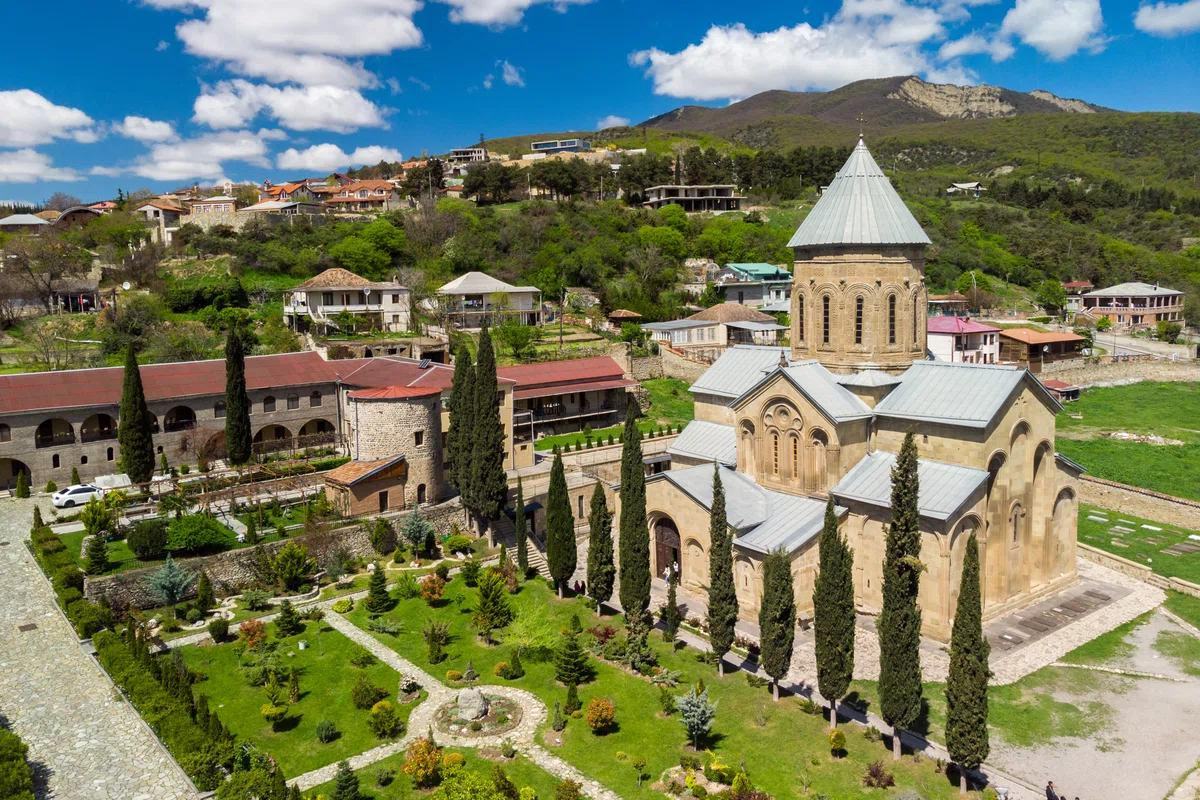
Общий вид на монастырь в Самтавро

Architecture of the Main Temple

The sights of Georgia are largely distinguished by an interesting architectural solution and interior decoration, Samtavro is no exception. The main temple, the Church of St. Nino, the bell tower and the fence with the tower are combined into the Samtavro complex.

The main temple is a cross-domed structure. Its walls are built of yellowish-brown stones, the frames are well smoothed. Two pillars standing separately and the walls of the sanctuary are the supports for the dome. The apse in the eastern side of the temple is shaped like a semicircle, it is surrounded by a fairly wide bema. The capitals, bases and supporting arches of the support are profiled in the temple. Inside the building there are high ceilings, the space is united, everything is harmoniously combined in it.

Inside the hall is arranged according to the traditions of the medieval Georgian cross-domed temple. The entrance is through the gate from the south. In 1823, an earthquake occurred, as a result of which the dome collapsed. But it was re-installed at the turn of the XIII -XIV centuries.

The facade of the building on the east side is quite simple, but concise. It is decorated with a scheme of their five solid arches. In the center there is a window, which is decorated with a sapphire with a horizontal clasp, as well as intricate weaves on the sides of the window. The side windows of the facade and the cross located in the front side of the pediment date back to a later period of time. The facade from the east is decorated with a low figure, which I date from the IX century.

The western facade remained without significant damage. It is decorated with simple arches.

The facade from the south can be characterized by soft profiles and interesting patterns. The paired window in its center is decorated with wide edges framed by a decorative arch.

On the northern facade there is a building of one floor, also dating back to the XI century. It fits perfectly into a single complex of the temple. The altar and the dome of the main temple have preserved fragments of paintings of the XVII century. However, most of the altar has not been preserved.

The tombs of Mirian and Nana are located in the southwest corner of the building.

Фрагмент архитектуры в монастыре Самтавро

Architecture of the Church of St. Nino

St. Nino's Church is a small domed building. Cobblestone and brick were taken as the building material for it. The outline of the church is rectangular from the outside, the neck of the dome with eight corners is built along a rectangle. Narrow arched windows open from the east nave. A semicircular niche covered with a shell is located on the north side of the apse. The form of a semicircle is worn by the triumphal arch, the western arch, supported by consoles, the entrance arch, as well as the outer western niche.

Fragments of the life of Saint Nino and other stories are viewed in the interior.

Церковь Св.Нино в Самтавро

Bell Tower

The bell tower is a three–storey structure of the XV-XVI centuries. Its walls are lined with smoothed squares of yellowish-gray sandstone.

The first floor is built in the form of a square, and the northern facade is built into the fence wall. The storeroom can be entered through a wide entrance in the form of a cylindrical arch.

The second floor opens from all sides with double arches.

Panchatur, which can be accessed from the second floor, has a pyramid-shaped roof with several levels.

The fence was supposedly built in the XVIII century. Only the cylinder-shaped tower has survived from it.

The cemetery stretches in the north and northeast sides of the fence.

Samtavro is one of the most important and recognizable sights of Mtskheta, its architecture is unique. Therefore, the Samtavro monastery complex is what you need to see in Georgia to get acquainted with the culture of the country.

See all the sights of Georgia


Do you want to increase the number of clients by 5 times?

Choose premium placement on Madloba and attract customers who are currently leaving for your competitors.

I want
Increase the number of clients
to rate this post.

27 comments

  • ნინო
    გაინტერესებს, თუ შესაძლებელია თანამედროვე სამყარო დაუკავშირდეს წმინდა ნინოს ცხოვრებას დეტალურად და როგორ აღწერს შექმნილ მასალებს "კნიაჟესტვო" და "დიადემა მონახა" ამ თემაზე?
  • С
    Светлана
    Была в Самтавро несколько лет назад и до сих пор под впечатлением. С одной стороны — величие Спасо-Преображенского собора и история, чувствовавшаяся у каждой стены. Какой мощный и спокойный крестово-купольный архитектурный стиль! С другой стороны — уют и тишина церкви Св. Нино, где жизнь прошлого буквально оживает в фрагментах жизнеописаний. Особенно запомнилась колокольня с её элегантными арками. Была приятно удивлена современными мастерскими — казалось, что в этих стенах древность переплетается с напряжением творчества сегодняшнего дня.
  • B
    Bahar
    The description of the Samtavro complex sounds fascinating, especially with the historical elements like the XI-century Transfiguration Cathedral and the Church of St. Nino. I’m curious about the restoration of the cathedral's dome after the 1823 earthquake—how closely does it match the original design? Also, the workshops sound intriguing; do they offer any public tours or demonstrations?
  • K
    Keti_Starheart
    სამთავროს სამონასტრო კომპლექსი ძალიან შთამბეჭდავია თავისი ისტორიული მნიშვნელობით და არქიტექტურული სიძველეებით. განსაკუთრებული აღნიშვნის ღირსია XI საუკუნის ჯვაროვანი გუმბათოვანი ტაძარი თავისი უნიკალური დეტალებით. ასევე საინტერესოა წმინდა ნინოს ეკლესია და მისი კედლების შიგთავსი. დასაფასებელია თანამედროვე სახელოსნოები, რომლებიც იქ არსებულნი არიან; ისინი ნამდვილად წარმოაჩენენ ჩვენი კულტურის სიმდიდრეს.
  • N
    Nancy
    The description of the Samtavro Monastic Complex highlights such a rich tapestry of history and architecture. The combination of the XI-century Transfiguration Cathedral and the Church of St. Nino, with its intriguing stone and brick structure, invites one to imagine the past lives interwoven within these walls. The restoration of the cathedral's dome after the 1823 earthquake speaks to the resilience and care for preserving heritage. The bell tower's unique design adds an elegant structural layer to this complex. It's also fascinating to learn about the burial sites of kings and their connection to Saint Nino. Such intricate details about the workshops and publications suggest an ongoing cultural vibrancy. This place seems like a treasure trove of Georgian ecclesiastical history.
  • С
    Светлана
    Читая о восстановлении купола Спасо-Преображенского собора после землетрясения 1823 года, возникло сомнение: использовались ли при реконструкции оригинальные материалы или применялись современные? Интересно, как это скажется на исторической идентичности сооружения.
  • ბადრი
    ინტერესით წავიკითხე, მაგრამ მაინტერესებს, ნამდვილად XI საუკუნისაა თუ IV საუკუნიდან მოდის წმინდა ნინოს ეკლესია? კიდევ, კედლების აღდგენა 1823 წლის მიწისძვრის შემდეგ მოხდა, მაგრამ როგორ შეძლეს „საფირონის“ ფანჯრის და დეკორაციული ელEMENTS-ის პირვანდელი სახის დაბრუნება? ხშირად მიჩნდება ასეთი კითხვები ძველი შენობების რესტავრაციის პროცესზე, თუმცა ყოველთვის არის უკეთესობის მოლოდინი, განსაკუთრებით ჩვენს ქვეყანაში.
  • В
    Виталий
    В статье упоминается, что церковь Св. Нино, возможно, была построена в IV веке. Но в тексте неясно, как это установлено, ведь точных археологических подтверждений такого раннего периода обычно нет. Может, стоило бы осветить этот момент подробнее?
  • A
    AnthonyEdwards
    Are there any reliable sources on the original construction date of the Church of St. Nino? The article suggests it might be from the 4th century before being rebuilt in the 11th, but it's hard to confirm that without more evidence.
  • G
    Geluka
    კიდევ როდის მოხდა სვეტიცხოვლისა და სამტავროს კომპლექსის მნიშვნელოვანი აღდგენა და რა ცვლილებები შეიქმნა მაშინდელ დროში?
  • Д
    Денис
    Очень интересно узнать, какие именно фрагменты жизнеописаний можно найти внутри церкви Святой Нино. Это рукописи или, может быть, фрески?
  • J
    JeremyR0binson
    Is it possible to visit the workshops you mentioned? I'd love to see the artistic and sewing crafts in action. Also, are the “Principality” and “Diadem of the Monk” publications available for purchase in English?
  • I
    Irakli
    საინტერესოა, იქნებ იცით, რატომ უწოდეს ცენტრალურ ფანჯარას "საფირი"? ეს ტერმინი რაიმე სიმბოლურ მნიშვნელობას ატარებს თუ უბრალოდ ესთეტიკურ დიზაინს უკავშირდება?
  • Q
    Quinn
    The architectural details of the complex are impressive. The cross-in-square design of the cathedral with its yellow-brown stone walls creates a historical ambiance. The restoration of the dome after the 1823 earthquake shows resilience. The façade with five arches and the central sapphire-like window is stunning. The Church of St. Nino, possibly dating back to the 4th century, offers a unique blend of cobblestone and brickwork, along with fascinating life fragments inside. The bell tower with its triple-tiered structure and unique pyramid top is a standout feature. Discovering the final resting places of King Mirian, Queen Nana, and their connection to St. Nino adds a special touch. The modern artistic and sewing workshops offer a glimpse into the monastery's ongoing cultural contribution.
  • Е
    Е.
    Интересно, насколько точно восстанавливались здание и его элементы после землетрясения 1823 года.
  • О
    Олег
    Интересный рассказ о монастырском комплексе. Есть упоминание о современных художественных мастерских и изданиях, связанных с комплексом. Было бы интересно узнать больше о том, какое влияние это оказало на местное сообщество и культуру. Как монахам удается сочетать заботу о памятниках прошлого с развитием новых инициатив?
  • Р
    Ростислав
    Удивительно, что церковь Св. Нино в статье упоминается как XI века, хотя слышал, что её начало может доходить и до IV века. Хотелось бы узнать, насколько это подтверждено исторически и на каких данных основывается такая ранняя датировка?
  • Р
    Ростислав
    Удивительно, что церковь Св. Нино в статье упоминается как XI века, хотя слышал, что её начало может доходить и до IV века. Хотелось бы узнать, насколько это подтверждено исторически и на каких данных основывается такая ранняя датировка?
  • X
    Ximena
    The description of the Samtavro complex sounds fascinating, especially the combination of materials and styles from different centuries. I'm curious about the decorative weavings on the facade of the main cathedral. Are they symbolic, and do they have any particular meaning in Georgian culture?
  • X
    Ximena
    The description of the Samtavro complex sounds fascinating, especially the combination of materials and styles from different centuries. I'm curious about the decorative weavings on the facade of the main cathedral. Are they symbolic, and do they have any particular meaning in Georgian culture?
  • G
    G_elel
    Это место оставляет неизгладимое впечатление. Я была поражена историей этого комплекса, который является не только духовным центром, но и архитектурным шедевром. Особенно восхищает архитектура главного храма и церкви Святой Нино, а также колокольня, которая добавляет особую атмосферу. Прогулка по этому монастырю позволила не только узнать о богатой истории Грузии, но и почувствовать её культуру и дух. Обязательно рекомендую посетить это место, если вы окажетесь в Мцхете!
  • Н
    Надежда
    "О монастыре Самтавро слышала много хорошего и интересного. Но в статье как-то сумбурно очень всё изложено. Например цитата ""В 1823 году произошло землетрясение, в результате которого купол рухнул. Но он был заново установлен на рубеже XIII -XIV веков."" Была машина времени, а я всё пропустила? В 19м веке рухнул, а где-то между 13м и 14м восстановили, здорово... Или вот: ""В интерьере просматриваются фрагменты жизни Святой Нино и другие истории"". В интерьере. Фрагменты жизни. Печаль печальная, да. Лайфхак: когда работа сделана - в нашем случае текст написан, его можно перечитать полностью - это помогает найти недочёты. Ещё, кстати, в наш продвинутый век тексты пишут нейросети... А они всё ещё несовершенны."
  • A
    7410070
    Как интересно было узнать про монастырь Самтавро в Мцхете! Статья отлично передаёт атмосферу святого места, где сочетаются исторический колорит и духовный заряд. Интересны подробности про храмы и их оформление, а также про жизнь святых Нино и Шушаников. Поездка в Монастырь Самтавро обязательна для тех, кто интересуется историей и духовностью Грузии. Большое спасибо автору статьи за такую информативную и увлекательную подачу материала.
  • B
    bikteeva94
    Для любителей культурного вида отдыха может понравиться монастырь Самтавро, это один из самых значимых памятников культуры Грузии. История монастыря берет начало еще в 1820 году. Очень интересно было прочитать его историю создания, яркие события, об архитектуре зданий. Если у вас есть возможность, обязательно посетите эти места!
  • V
    volobuevaanastasia331
    Про комплекс Самтавро слышала много интересного. Вообще в Мцхете каждая пядь земли - исторический памятник. Столько легенд, сколько связано в этим местом, нет нигде в Грузии. Вот только автор статьи меня совсем запутал: "В 1823 году произошло землетрясение, в результате которого купол рухнул. Но он был заново установлен на рубеже XIII -XIV веков" - это как? Или грузинские зодчие открыли временной портал? Вообще хорошие статьи часто страдают одним большим недостатком: путаницей в датах. А это портит все впечатление.
  • natali_khannanova
    Грузия пропитана святыми местами, сердце православия. Святая Нино-христианская просветительница Грузии. Проповедовала Евангелие. Важное место не только для грузинского народа, но для всех православных. В церкви просматриваются фрагменты жизни Святой Нино и другие истории. Удивительное место с божественной красотой. Хотя бы один раз здесь надо побывать. Спасибо автору за информативную статью.
  • В
    Влада
    Грузия - разносторонняя страна в плане достопримечательностей, но скрывать тот факт, что в Грузии много различных церквей и монастырей просто-напросто нельзя. Как бы эти церкви не были похожи друг на друга по-внешнему виду, история у всех разная, именно это и делает каждую церковь или монастырь уникальным, в том числе и монастырь Сантавро!