




Why Superhero Movies Are No Longer a Guaranteed Hit
The genre isn't disappearing, but it's losing its automatic advantage
A few years ago, talking about box office forecasts for a superhero film was almost a formality: the question was no longer whether the film would make a lot of money, but only how much. By 2026, that confidence has visibly wavered. New assessments show that comic book-based projects are no longer perceived as the sole center of mass interest, and audiences are increasingly spreading their attention across different genres.
This doesn't mean comics will vanish from screens overnight. It's more about a shift in status. After nearly a decade of dominance, the genre is no longer a universal answer to the question of what should bring in the most money. A well-known brand alone is no longer enough to guarantee studios their previous results, and audiences respond far more sharply to a sense of novelty, tone, and surprise.
The key change is that viewers no longer watch only comic book films. They are choosing more frequently between different genres. In that environment, the decision is no longer dictated by a studio's poster — personal interest drives the choice: some things are found through recommendations, others directly at kinogo.org, when people want to move quickly from discussion to watching.
What changed in 2025–2026
One of the most visible signs is the comparison of projected revenues. A few years ago, the idea that original science fiction — like Project Hail Mary — could feel more confident in the market than yet another superhero film sounded strange. Now it no longer sounds like a sensation. On the contrary, non-comic book premieres increasingly look like the more attractive bet for a broad audience.
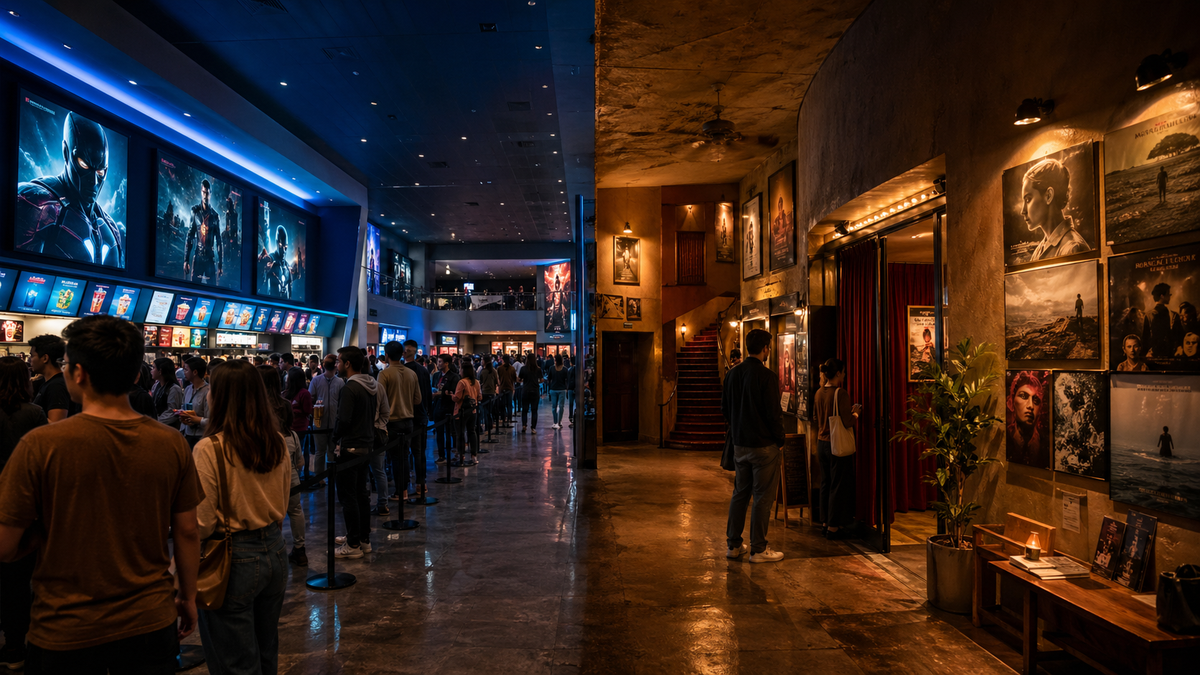
Another sign is the changing attitude toward rival adaptations. If films based on video games were once considered a far riskier direction, they are now often perceived as the safer choice. The reason isn't that they suddenly surpassed everyone artistically — it's simply that the market has grown tired of uniform superhero tension and responds far more willingly to a new type of spectacle.
That said, the industry still isn't letting go of its strongest brands. New films about Spider-Man, Batman, or the upcoming Avengers continue to enjoy near-automatic recognition. But this is already more of an exception than a rule. For other projects, studio confidence has clearly dropped: a franchise logo alone is no longer enough — there needs to be a clear answer to why this film should interest audiences right now.
Why talk of the genre's "death" is still too sharp
Despite the seriousness of these signals, speaking of a total collapse of superhero cinema would be an oversimplification. The genre still has characters that maintain an almost unconditional pull. Batman and Spider-Man are foremost among them. Interest in them has gone nowhere, and new Avengers films or the next Spider-Man installment can still become events in their own right.
The problem lies elsewhere: such guarantees are now far fewer. Previously, the industry could rely on almost any comic book brand — today that insurance works only for the strongest names. Other projects have to prove their necessity by the same rules that apply to everyone: through quality, surprise, a clear tone, and the feeling that audiences will see not just another familiar combination, but a genuinely anticipated premiere.
What this means for studios
Launching a franchise is no longer enough
Studios will have to calculate audience interest more carefully and stop treating the genre as a self-replicating machine. Big budgets and loud costumes can no longer mask fatigue if there's no living idea at the heart of the project.

What will win is not the brand, but the feeling of novelty
The main conclusion of 2026 sounds clear-eyed enough: superhero cinema is not dying, but it is no longer insured against failure. What will survive is not every consecutive project, but only those that give audiences back the feeling that what lies ahead is not another franchise checkpoint — but a truly desired premiere. And this turn in the market is already visible enough that it's hard to ignore.

1 comment
Log in to leave a comment