




🧱 8 Best Architectural Attractions in Kutaisi for Travelers 2026
🏛️ Kutaisi is one of the oldest cities, and its architecture is a clear proof of its long and rich history.
📍 Here you can walk past medieval temples, pre-revolutionary buildings and Stalinist facades that have preserved the spirit of different eras.
The most popular architectural sights of Kutaisi
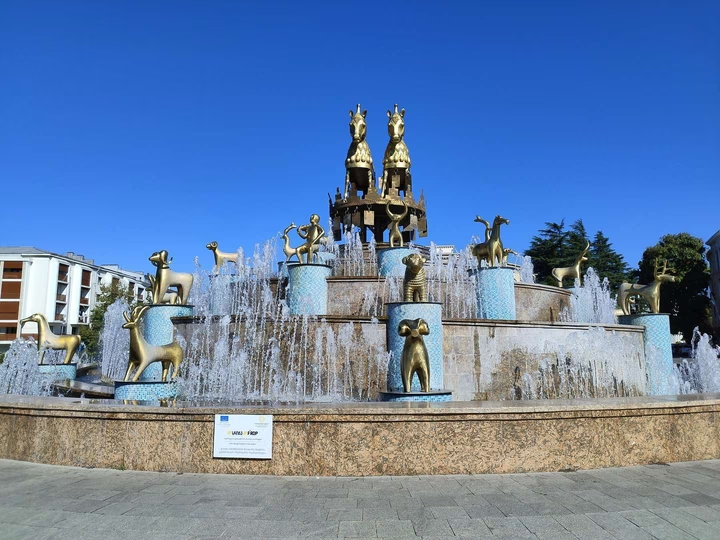


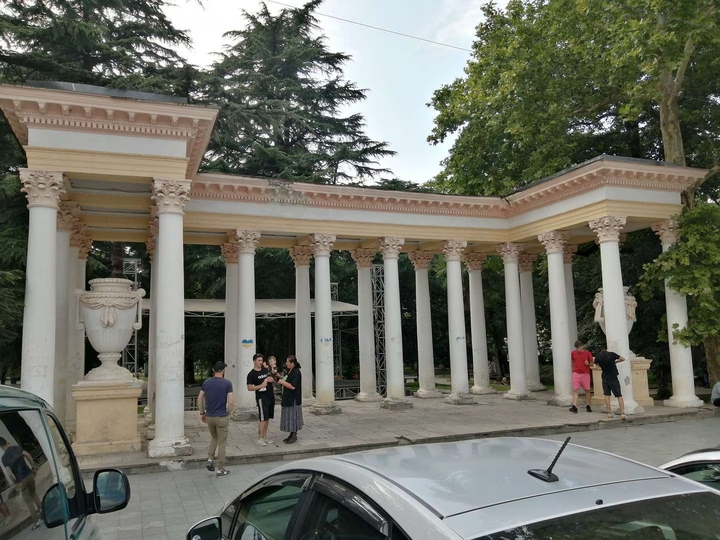

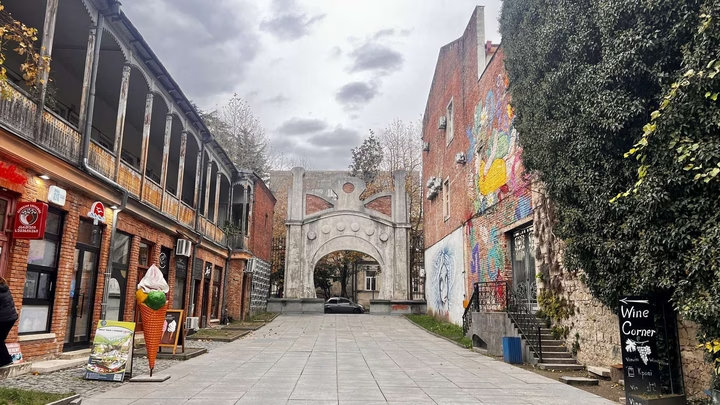
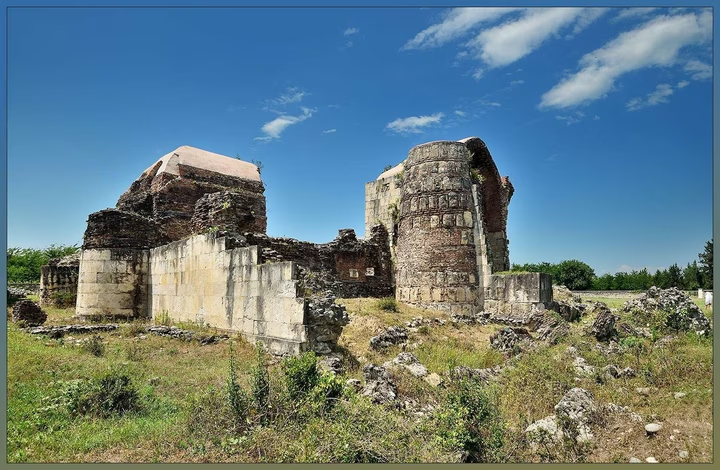
Architectural landmarks of Kutaisi that we recommend
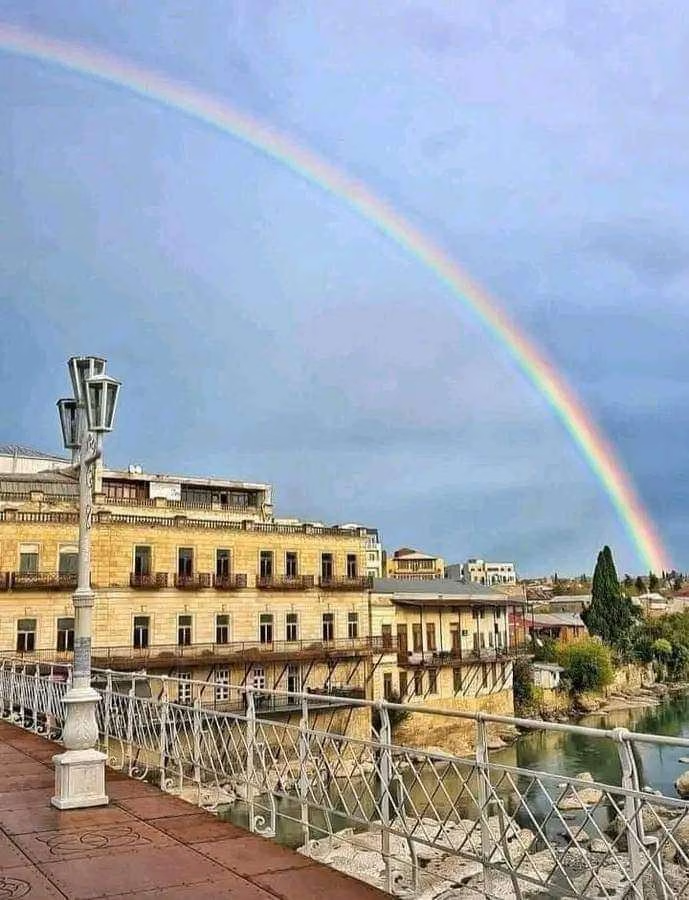

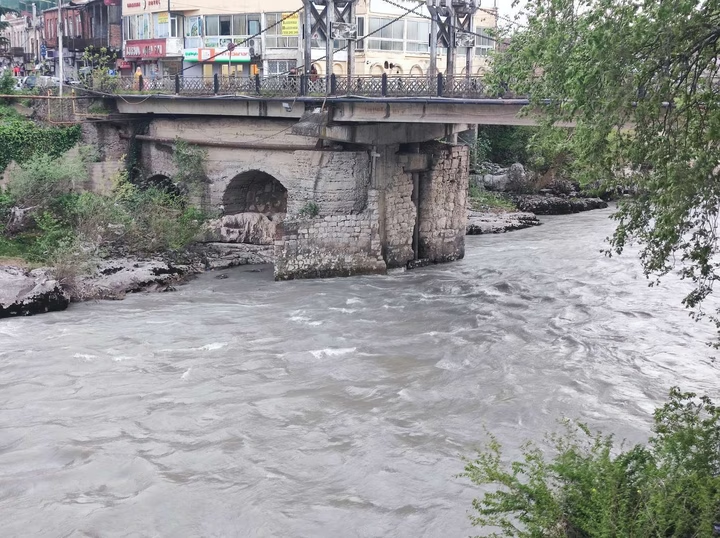

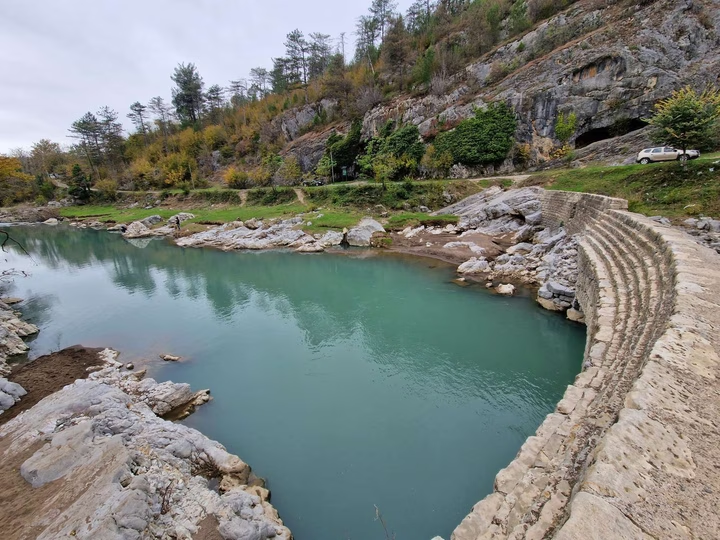

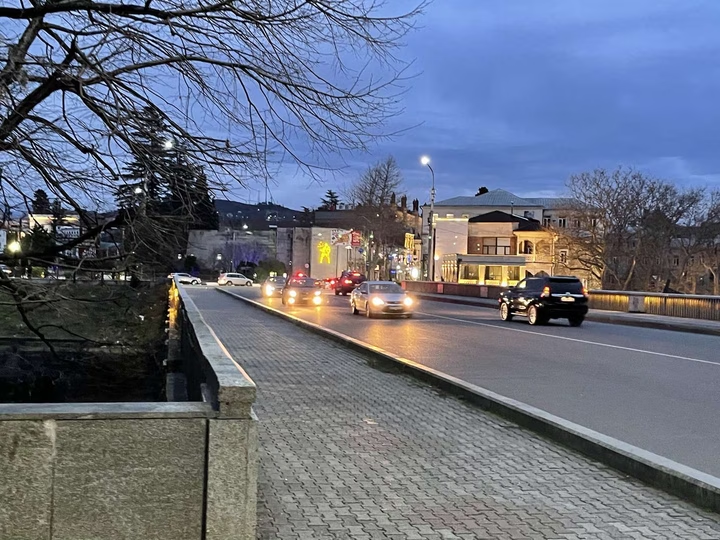
📌 This rating includes 8 objects that are not only beautiful in appearance, but also carry cultural and spiritual value for all of Georgia.
Explore architectural landmarks on the Kutaisi map.
📌 Main selection criteria:
- 💬 Reviews — mentions in tourist routes and guidebooks
- ⛪ Historical and cultural value
- 📍 Location — accessibility on foot and by landmarks
- 📸 Photogenicity — expressive details, panoramas
- 🧭 Atmosphere — spirit of the old city and architectural unity
- 🔄 Condition — preservation, restoration, accessibility
🕍 What you need to know about the architecture of Kutaisi
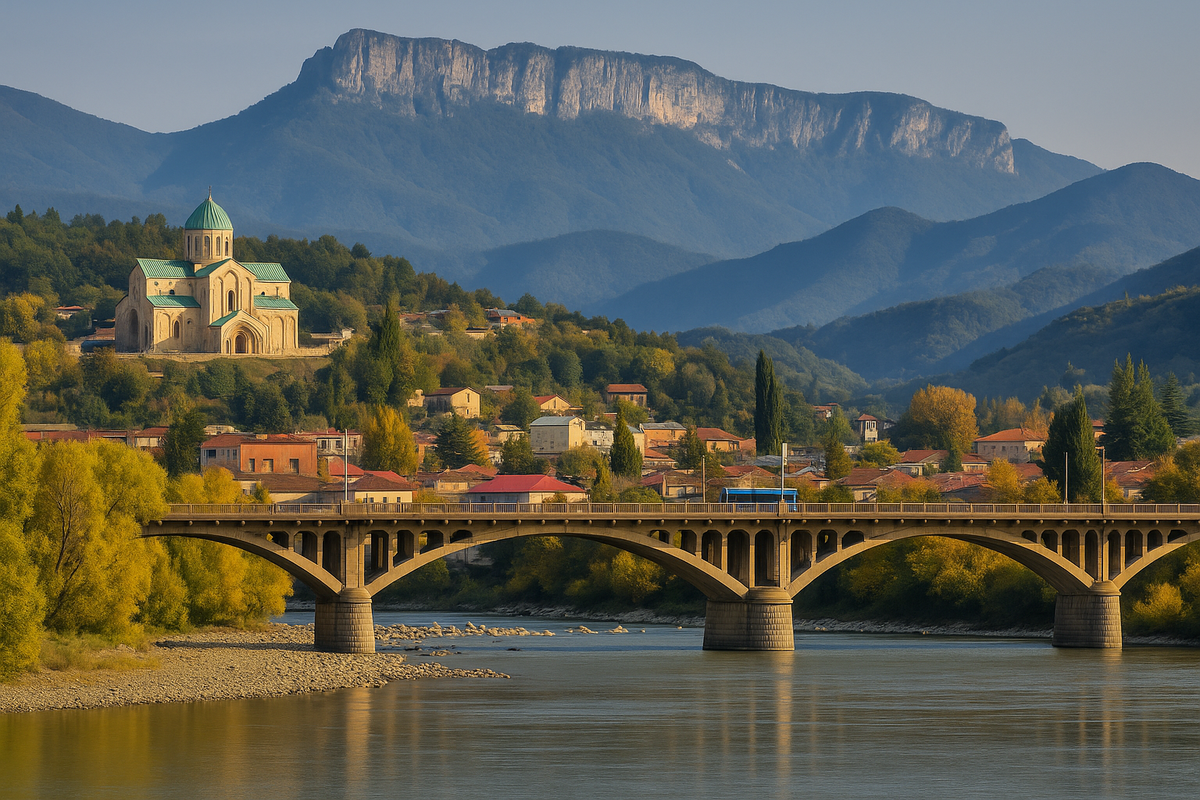
- 🧱 Kutaisi is not just an ancient city, but a real open-air encyclopedia of Georgian architecture. Different eras and styles are combined here: from ancient ruins and Byzantine cathedrals to buildings with elements of Soviet constructivism and European Art Nouveau.
- 🕍 Georgian architecture is revealed here in all its fullness: streets where ancient rulers walked are replaced by temples, and around the corner there are carved balconies and Stalinist Empire style. This is a city where the sacred and the everyday go hand in hand.
- 📍Convenience for the traveler - most of the attractions are within walking distance. In one day, you can walk around an entire era in stone: from the Gelati Monastery to the theater square and fragments of the ancient fortress.
- 📸 The photogenicity of Kutaisi is amazing: cozy courtyards, ancient colonnades, decorative balconies and stairs. Even a random turn can lead to a place you want to capture.
💡 Lifehack: don't limit yourself to what's listed in the guides - go into the courtyards, look into the arches. It's in these hidden corners that the city's true character lives.
Feedback from a reader of the catalog
Igor Terekhov, Kazan
"Kutaisi surprised me - I didn't think that such a compact city could accommodate so many architectural eras. The article on Madloba helped me plan my route so that I could cover Gelati, the center, and the old courtyards in one day. I especially liked how the churches were combined with Soviet buildings - you rarely see such a contrast. Thanks to the advice to go into arches and courtyards, I found real architectural gems that are not in guidebooks. The photos turned out amazing - there is a living story in each frame. Excellent material for those who appreciate walks with their eyes directed upwards"
🧭 Tips on how not to make a mistake when choosing a route

- ✅ Start your walk from the center of Kutaisi - Tsereteli, Rustaveli streets and David Agmashenebeli Square will give you an idea of the city's layout and architecture of different eras. Here, history literally breathes from every facade.
- 📍 Must-see places: Bagrati Cathedral, Gelati Monastery and the White Bridge over the Rioni River. These are not only architectural symbols of the city, but also key points from which to begin your acquaintance with the cultural heritage.
- 📸 Don't pass by buildings with history: former noble mansions, educational institutions, the Lado Meskhishvili Theater and the Philharmonic Society retain original stucco elements, mosaics, old signs and doors - and all this is visible to the eye of an attentive tourist.
- 👟 The best way to explore Kutaisi is on foot. This way, you will not miss a single carved gate, street lamp or courtyard where the real charm of the old city is hidden.
💡Life hack: plan your route for the morning or closer to sunset - the soft light at this time emphasizes the architectural lines, creates a play of shadows and makes the photos especially atmospheric.
🗺️ How to plan a route

- 📆 It is possible to see 5-7 architectural sites in Kutaisi in 1 day if you plan your route wisely. The city center is compact, and most of the attractions are conveniently located next to each other.
- 🚶 The ideal format is a walking route. Start the morning with the Bagrati Temple, then go down to the old Jewish quarter through the park and the White Bridge. After lunch, go to the Gelati Monastery, and end the day at a panoramic point near the theater.
- 🛏️ With an overnight stay - even better: choose a guest house in a historical building or a boutique hotel near the Rioni embankment. This way, you will be one step away from the main locations and feel the atmosphere of the city even in the evening.
- 🧭 Add details to the route: sit in a cafe with a vintage interior, walk along stairs with bas-reliefs, look into arched passages into courtyards - they are what form the architectural soul of Kutaisi.
📸 Lifehack for travelers: hunt for unusual doors, mosaics, grilles or carved balconies - this will not only decorate your photo archive, but also give you a reason to notice more than what is visible on the map.
Review from a reader of the catalog
Maria Kolesnikova, Rostov-on-Don
"Kutaisi was a real discovery for me - thanks to the rating on Madloba, I was able to create a convenient route and see the main things in a day. I really liked that there is architecture literally at every step - from ancient temples to cozy courtyards with carved balconies. I was especially impressed by the transition from the park to the old quarter: each house seems to tell its own story. In the evening, I chose a hotel in an old building near the embankment - and this was the best solution for full immersion in the atmosphere of the city. The tips from the article turned out to be useful - thanks to them, I paid attention to details that are easy to miss. The walk turned into a real architectural adventure!"
🎒 What to take with you
- 📱 Camera or smartphone — the architecture in Kutaisi is very photogenic
- 👟 Comfortable shoes — you will have to walk a lot on cobbled streets
- 🧢 Panama hat, water and sunglasses — especially in spring and summer
- 🗺️ List of addresses or offline map — many buildings may not have signs
- 📓 Notes or a notebook — to write down interesting finds and stories from locals
🔚 What's the bottom line?
🏛️ Kutaisi architecture is a heritage that everyone interested in the culture and history of Georgia should get to know. Old houses, temples, streets and squares here live their own special life and create a unique atmosphere of coziness and depth.
📣 Have you already walked along the architectural streets of Kutaisi? Share your impressions - and suggest objects that, in your opinion, are worthy of being included in the rating.
Answers to frequently asked questions
✅ Yes, most of the sites are available for independent inspection.
✅ On average, 2-4 hours, if you do not go inside.
✅ It is advisable - many sites are located in side streets and are not always indicated.
✅ Bagrati Cathedral and Gelati Monastery.
✅ Yes, if you alternate walks with stops and cafes.
✅ In spring and autumn - warm, but not hot, ideal light for photos.
✅ To some temples and museums - yes, but the prices are symbolic.
✅ Yes, there are views of the old city at several points.
✅ The city center and tourist areas are illuminated and safe.
✅ In the Rustaveli Street area or near the embankment - close to all the sites.

0 comments
Log in to leave a comment