




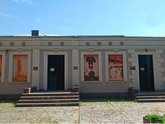
The Zestafoni Local History Museum is a cultural and educational institution located inside a one-story pink house opposite the Zestafoni train station. The museum is dedicated to the history, culture and natural environment of the region. The museum's exhibits include artifacts, household items, documents and photographs that illustrate the life and development of the city and its surroundings over the centuries. The museum is open to everyone, including tourists, students, researchers and local residents. It provides a unique opportunity to become familiar with the history of Zestafoni and its cultural heritage, deepen knowledge of the region and appreciate its contribution to the historical and cultural wealth of Georgia. A visit to the Local History Museum can be especially beneficial for school groups and local history students, as well as for those interested in the history and culture of Zestafoni and its surrounding area. The museum also regularly organizes thematic exhibitions and events dedicated to various aspects of local history and culture.
Local History Museum in Zestafoni

- General
- Description
- Service types
- Museum type
- Organization type
Similar places nearby
Places in the same category within 5 km. Distances are approximate and measured in a straight line.
-
 About 50 m
Drama Theater
23 David Agmashenebeli St., Zestaponi, Imereti Region, Georgia -
 About 100 m
Pedestrian bridge over the Kvirila River
Zestafoni, Imereti, Georgia -
 About 100 m
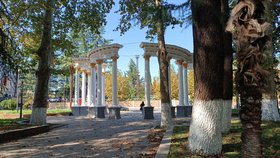
central square
st. David Agmashenebeli, Zestafoni, Imereti, Georgia, 42.10724386313584, 43.03928841164291 -
 About 200 m
Irina Park
Central Park, Zestafoni, Imereti Region, Georgia -
About 300 m
Black Sea
st. David Agmashenebeli, 39, Zestafoni, Imereti, Georgia -
About 350 m
Old cinema "Spartak"
39 David Agmashenebeli St., Zestaponi, Imereti Region, Georgia
- В


Краеведческий музей в Зестафони расположен в здании конца XIX века в стиле модерн и был основан в 1968 году. В этом музее представлены:
- Каменные орудия из эпохи палеолита, колхидские бронзовые топоры, орудия труда, маленькая бронзовая скульптура наездника (VII–VI века до н. э.), хозяйственные инструменты и боевое оружие античных времён, ожерелья, керамика, глиняные трубы, черепица, металлические изделия, каменный якорь и другие артефакты. Большинство из них были найдены в крепости Шорапани, гробнице Клдеети и на горе Квинцихи.
Также есть экспонаты феодальной эпохи, такие как одежда духовных и светских лиц, боевое оружие и кольчуга. Музей содержит этнографические и нумизматические коллекции, а также фотодокументы.
Экспозиции, посвященные XX веку, включают серебряную медаль, полученную жителем Зестафони Д. Месхишвили в 1906 году за отличное вино, а также золотую медаль и Орден почётного креста, завоёванные Г. Тутберидзе в 1910 году.
Есть личные вещи Варинки Церетели — дайра, гитара, граммофон и другие предметы. Музей также располагает богатой библиотекой с книгами и документами по истории Зестафони и Грузии.
Экспозиция традиционных ремёсел включает ткацкое оборудование, ковры, глиняные изделия, национальные костюмы и другие предметы, большинство из которых датируются XIX–XX веками.
Кроме того, в залах галереи можно увидеть картины известных грузинских и мировых художников, выполненные в различных стилях — от реализма и импрессионизма до современного искусства. - М
Когда заходишь внутрь, словно всплываешь в прошлое, где каждый уголок оживает тихими историями. Атмосфера гостеприимства, кажется, читается даже в узорах плитки на полу. Закрытые страницы прошлого оживают перед глазами, рассказывая о забытых эпизодах и людях. Это место — не просто музей, это настоящее путешествие во времени с теплой встречей и увлекательными вдохновениями.
- L
The museum staff is incredibly helpful and welcoming. They shared insights about the rich and diverse local history with us using a mix of English and Russian. Much appreciated!
- E
The museum is situated in a charming single-storey pink house right across from the railway station. The staff there are incredibly friendly and make you feel right at home. The exhibits are excellent, covering a range of topics from the construction of the ferroalloy plant and the history of the local theatre, to World War II and the Shorapani Fortress. The building itself is beautiful, with original floor tiles, ceiling roses, and ceramic fireplaces. It’s definitely a place you shouldn’t miss when in town.