

🐱 Discover Georgian Humor: 13 Idioms - Read and Share!
Find out why "sitting on tkemali" means not knowing anything, and "delighting the worm" means fooling around. Let's look at 13 figurative phrases with examples. Read, try them in speech, share your impressions!
"Are you sitting on a tkemali? - Jump down!"
Similar riddle phrases are heard at Georgian markets and feasts every hour. Once you understand them, you will understand not only the language, but also how the original Caucasus jokes and reasons.
What are we talking about?
The article contains thirteen striking idioms (with examples), interesting facts about the Georgian alphabet and tkemali sauce, a question-and-answer section, and an invitation to share your own discoveries.
Introduction - "for one fork" 🍴
The Georgian language plays with the imagination: words are connected in such a way that a direct tracing loses its meaning. But once you reveal the hidden joke, you enrich your vocabulary and laugh at the same time, as if you were at a real supra. Even a simple phrase, “sitting on tkemali,” sounds like an invitation to the world of local humor. 🇬🇪
📜 13 Vivid Georgian Idioms
| 📜 Idiom | ← Literally | → Meaning | Example |
|---|---|---|---|
| თავის მოკატუნება / tavis mokatune ba | “pretend to be a cat” 🐱 | Act innocent | “Gekos, stop pretending to be a cat!” |
| ენის მიტანა / enis mitana | “bring the tongue” 👅 | Snitch, tattle | “Enis mitana ar sheidzleba — no tattling.” |
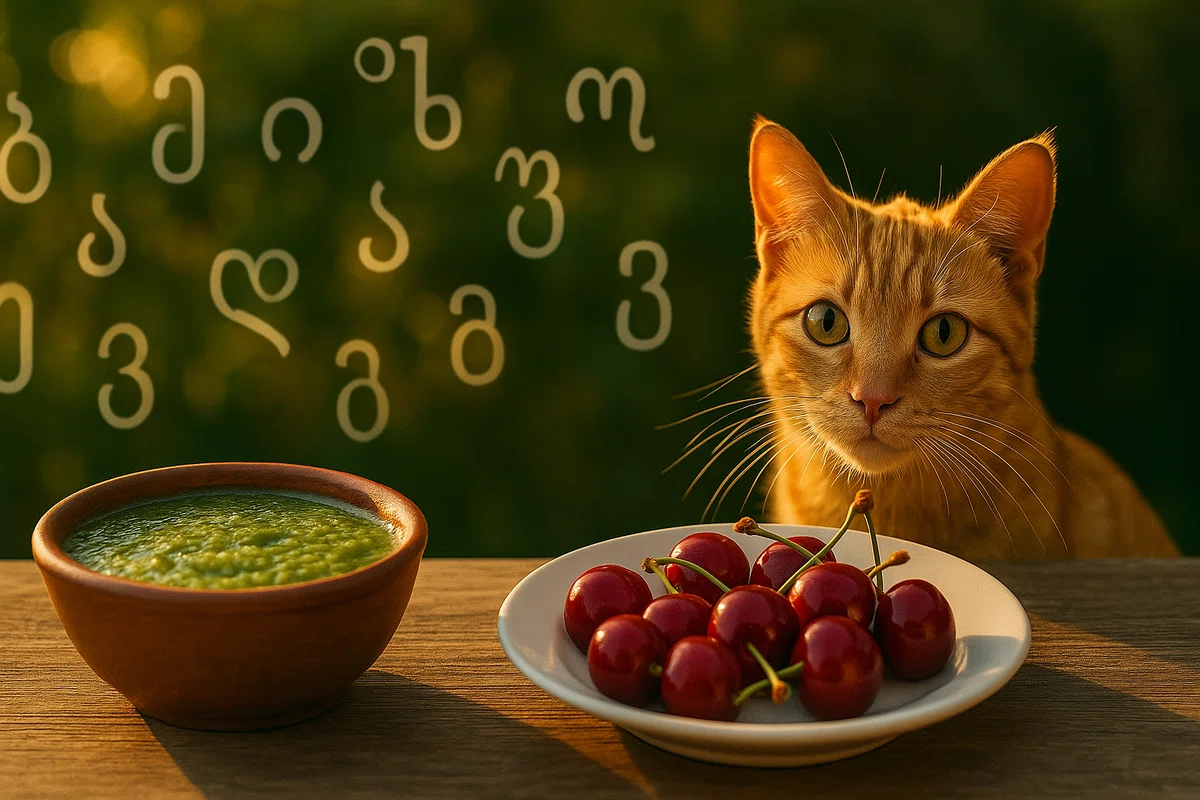
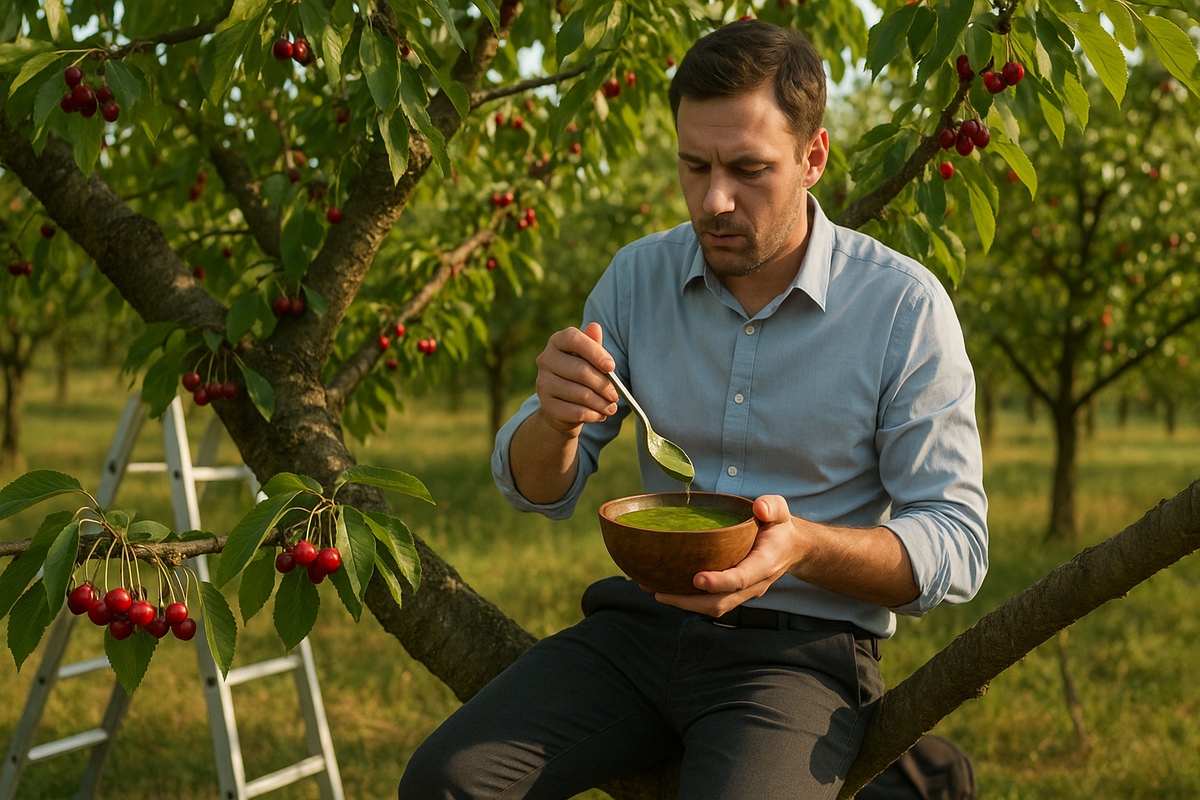
| ტყემალზე ჯდომა / tkemalze jdoma | “sit on tkemali” 🫙 | Be unaware of the obvious | “He’s sitting on tkemali again, missed the news.” |
| ბალზე ჯდომა და ტყემლის ჭამა / balze jdoma da tkemlis chama | “sit on a cherry — eat tkemali” 🍒 | Do the wrong thing in the wrong place | “Balzea da tkemals chams instead of working.” |
| თავის ჭიას ახარებს / tavis chias akharebs | “please one’s worm” 🪱 | Indulge oneself, kill time | “After lectures Nino is pleasing her little worm in a café.” |
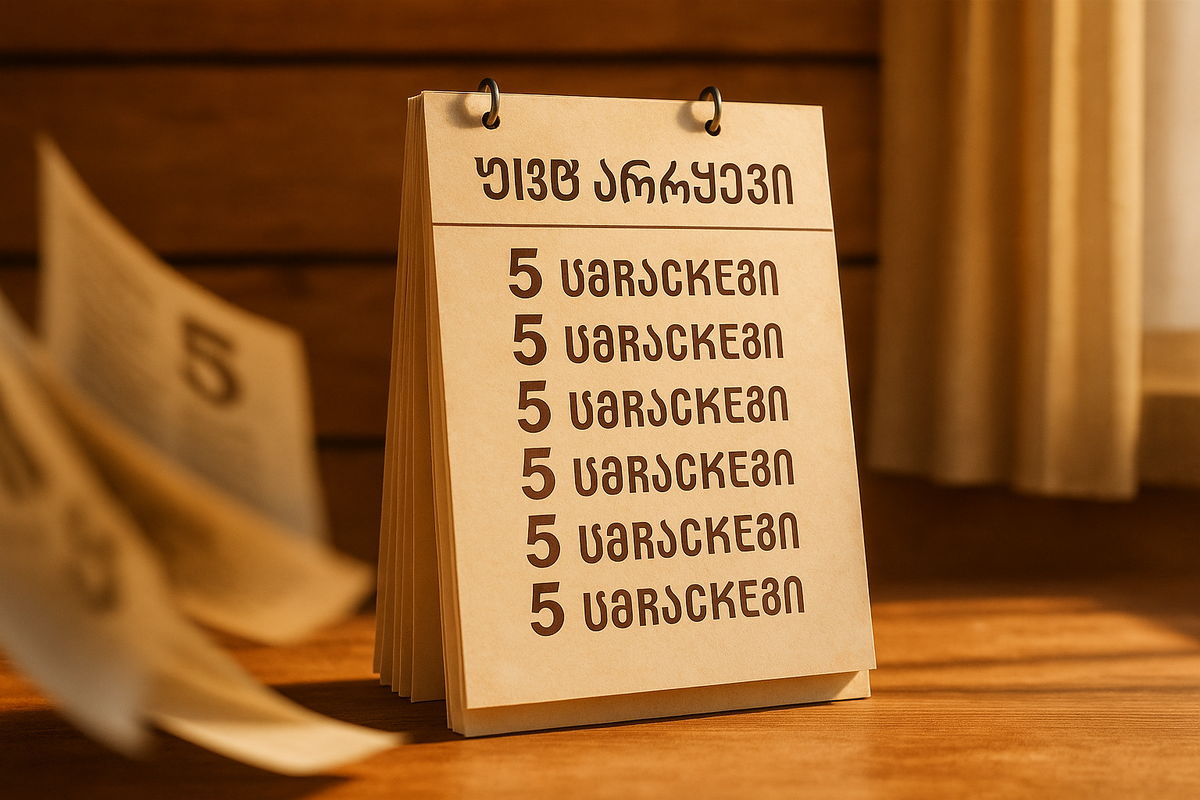
| შვიდი პარასკევი აქვს დღეში / shvidi paraskevi akvs dg eshe | “seven Fridays in a day” 📅 | Constantly change one’s mind | “He’s tough — he has seven Fridays a day.” |
| მეცამეტე გოჭი / mecamete gochi | “thirteenth piglet” 🐖 | Stick your nose where not invited | “Don’t be the 13th piglet, let me finish.” |
| დაბალი ღობე / dabali gob e | “low fence” 🪵 | Weak, defenseless | “He’s a low fence, everyone picks on him.” |
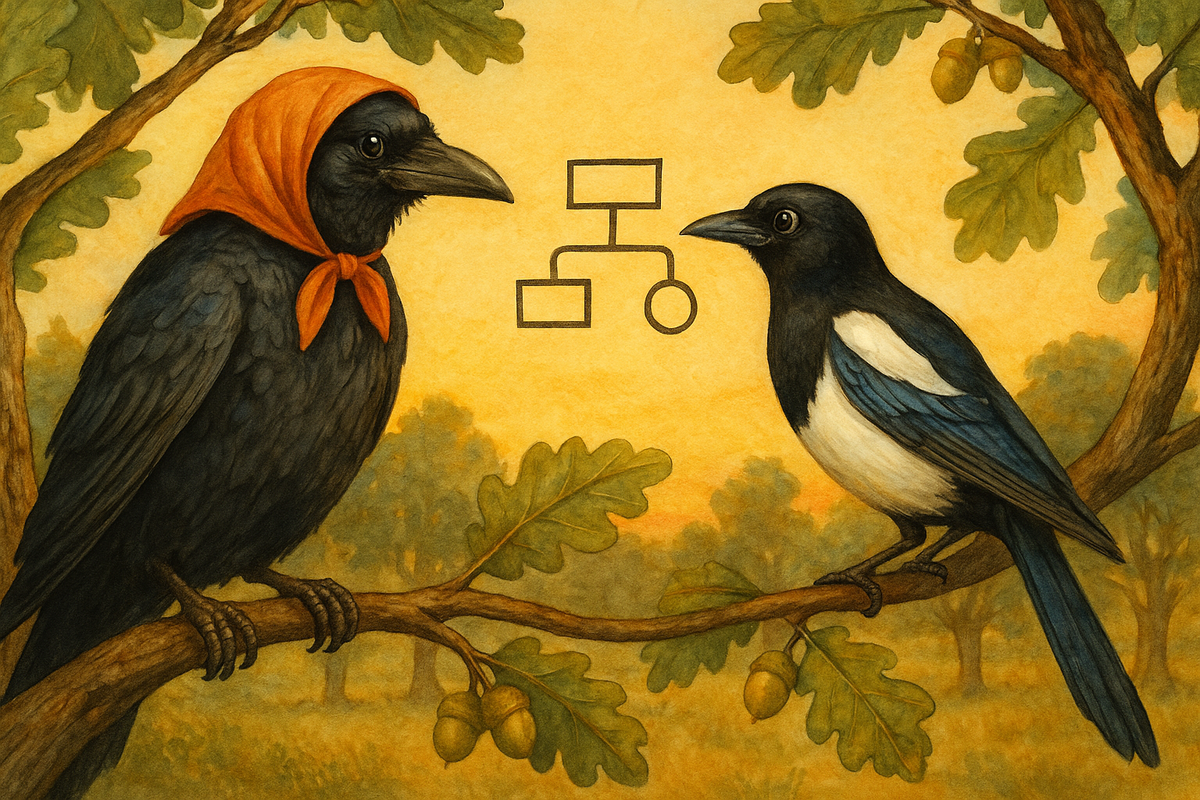
| ყვავი ჩხიკვის მამიდა / kvavi chkhikvis mamida | “crow is the magpie’s aunt” 🪶 | Distant relative | “We’re barely acquainted, a crow is a magpie’s aunt.” |
| კოვზის ნაცარში ჩავარდნა / kovzis nacharshi chavardna | “spoon fell into ash” 🥄 | Plans collapsed, disappointment | “Our hike? A spoon in the ashes.” |
| ცეცხლზე ნავთის დასხმა / tsetskhlze navtis daskhma | “pour kerosene on fire” 🔥 | Inflame a conflict | “Don’t pour kerosene, there are enough sparks.” |
| ბედნიერ ვარსკვლავზე დაბადებული / bednier varsklavze dabadebuli | “born under a happy star” 🌟 | Lucky person | “Marika was born under a lucky star.” |
| ბეწვის ხიდზე გავლა / betsv is khidze gavla | “walk on a rope bridge” 🌉 | Go through risk | “Passed the exam — like walking on a rope bridge.” |
Curious to know 🧐
- Three scripts, one language. The Georgian alphabets — Asomtavruli, Nuskhuri and Mkhedruli — have been included in the UNESCO Intangible Heritage List since 2016.
- Tkemali is the local "ketchup". The sour and spicy sauce made from blackthorn plums is served with meat as often as a bottle of tomato sauce is served in the US.
- Numbers in speech. "Seven Fridays" and "the thirteenth pig" show a love for images with numbers; philologists count dozens of such expressions.
💬 What readers say
"I am amazed at how many Georgian idioms echo English ones. That's why I love collecting them!"
- John, UK
"When I heard the expression "seven Fridays in a day", I thought the week in Georgia had been shortened. Now I joke about my "defector" friends."
- Janet, France; comment on the collection "Georgian Idioms"
🇬🇪 What Georgians themselves say
“Phrases like შვიდი პარასკევი აქვს დღეში (shvidi paraskevi akvs dg eshe, “seven Fridays in one day”) are instantly recognizable to everyone — we laugh so hard at people who change their minds every five minutes.”
— Baia Dzagnidze, journalist
“Idioms keep us closer to our traditions: even children know that დაბალი ღობე (dabali gobe, “low fence” — about a weak, defenseless person) isn’t about a fence at all, but about character.”
— Merab, guide from Kutaisi
⚡ Flash Analogies: Spot a Familiar Phrase
| 🌍 Russian / English | 🇬🇪 Georgian Idiom | 💡 Meaning |
|---|---|---|
| “Seven Fridays in a week” / flip-flop | შვიდი პარასკევი აქვს დღეში | Constantly change one’s mind |
| “Add fuel to the fire” / add fuel to the fire | ცეცხლზე ნავთის დასხმა 🔥 | Intensify a conflict |
| “Born in a shirt” / born under a lucky star | ბედნიერ ვარსკვლავზე დაბადებული 🌟 | Lucky person |
| “Thirteenth guest” / third wheel | მეცამეტე გოჭი 🐖 | Insert oneself without invitation |
Share your findings! 💬
Have you tried to insert "don't sit on tkemali" into a conversation? Or do you know other figurative expressions? Write in the comments - let's add to the collection together.
შენს პირს შაქარი! — "Sugar to your lips" 🍬 May your words about Georgia always bring sweet news.
🤓 FAQ: you asked - we answer
- 😅🗣️ Is it possible to make a mistake when pronouncing?
Georgians appreciate effort. Speak in a friendly manner, watch your stress — even if you miss, you will be corrected with a smile. - 🍲 Why are there so many phrases about food?
The feast is the heart of the culture. Dishes and sauces quickly became figurative “marks” for jokes and advice. - 🚻 Is there a feminine/masculine form?
No. The idioms themselves are unchangeable; only the verb endings change according to number and person. - 🎤 Where to hear them live?
The Dezertirka Bazaar in Tbilisi, football broadcasts, minibuses and, of course, village supra (feasts). - 🎯 How to put the stress correctly?
Almost always — on the penultimate syllable: mo-KA-tu-ne-ba, tkema-LI, pa-RA-skevi. - 🗺️ Do idioms differ by region?
Yes. In Guria they love hyperbole, in Adjara you can hear Turkish notes, but “tkemali” and “seven Fridays” will be understood throughout the country. - 💼 Can idioms be used at work?
In official letters, it’s better to be formal. But at the water cooler or in chats, the phrase “don’t sit on tkemali” will ease the tension. - ❓🤔 How to politely ask for an explanation of a phrase?
Say: “რას ნიშნავს…?” (ras nishnafs — “what does… mean?”) — Georgians will be happy to explain. - 📱 Are there any apps for practicing pronunciation?
Yes: “Learn Georgian – Bravo” and “uTalk Georgian” – audio media, cards, mini-games.
- 🐱 "When did you first hear "pretend to be a cat", what came to mind?
- 🌍💬 "Are there similar expressions in your country?
Write, it will be interesting!


16 comments
Log in to leave a comment