





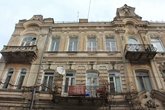
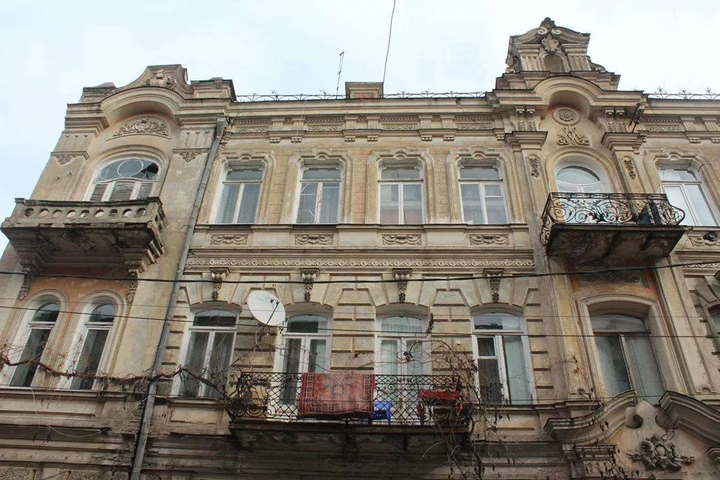
Just a five-minute walk from the Rustaveli metro station on Griboyedov Street stands a modest, at first glance, mansion. It is located directly opposite the former home of Andrey Tunebegov. Several old steps lead to the house, leading up to the second floor. The walls of the first floor are painted a gloomy brown color, the same as the house opposite, as if the same artist tried to hide the former splendor under this paint. But even this touch of desolation does not hide the rich history that the mansion hides.
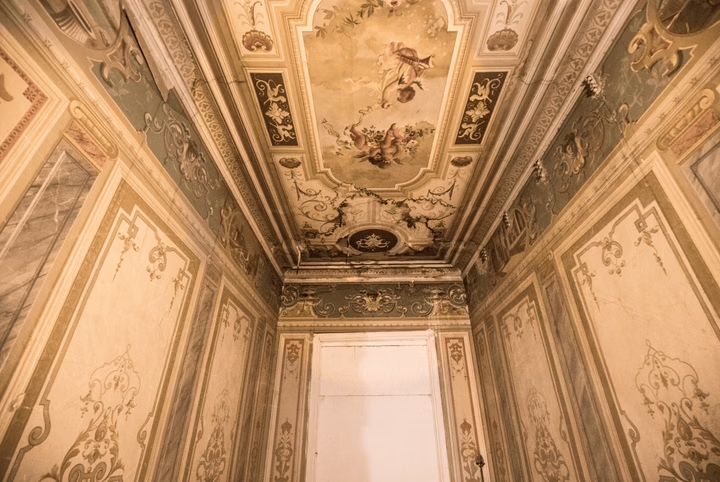
Unlike its neighbor, Tunebegov's house looks better maintained. But the interior of Ananov's mansion is surprising at first glance. One only has to go up to the second floor, and a completely different picture opens up before your eyes: the walls are decorated with beautiful paintings that envelop the space, creating an atmosphere of calm and comfort. Here you want to see a round oak table with a green lampshade, a fragrant apple pie and, of course, a bottle of fine wine. After all, without wine, this house would be completely different.
Winemaker Ananov not only lived here, but also ran a winemaking business that was one of the most famous in Imereti. At the end of the 19th century, he began growing grapes using both local and European varieties. At the beginning of the 20th century, he focused on French varieties, and in 1914 he planted the largest vineyard. His factories, built according to the designs of French and Italian masters, were famous for their extensive wine cellars. Products, including wines, champagne and cognac, were very popular far beyond the borders of Georgia.
Ananov was not only a successful entrepreneur, but also a philanthropist. It was with his funds that the 3rd Girls' Gymnasium was built in 1905, later known as the 66th School, and today - the 4th Author's School, the architecture of which resembles the fairytale Hogwarts. This is not surprising, because in Tiflis at that time many buildings looked mysterious and romantic.
Unfortunately, today the house of winemaker Ananov is not included in the list of cultural heritage sites and needs restoration. Cracks on the facade indicate many years of neglect, and it, like many other historical buildings in Tbilisi, is waiting for its verdict: to be restored or disappear forever.

