




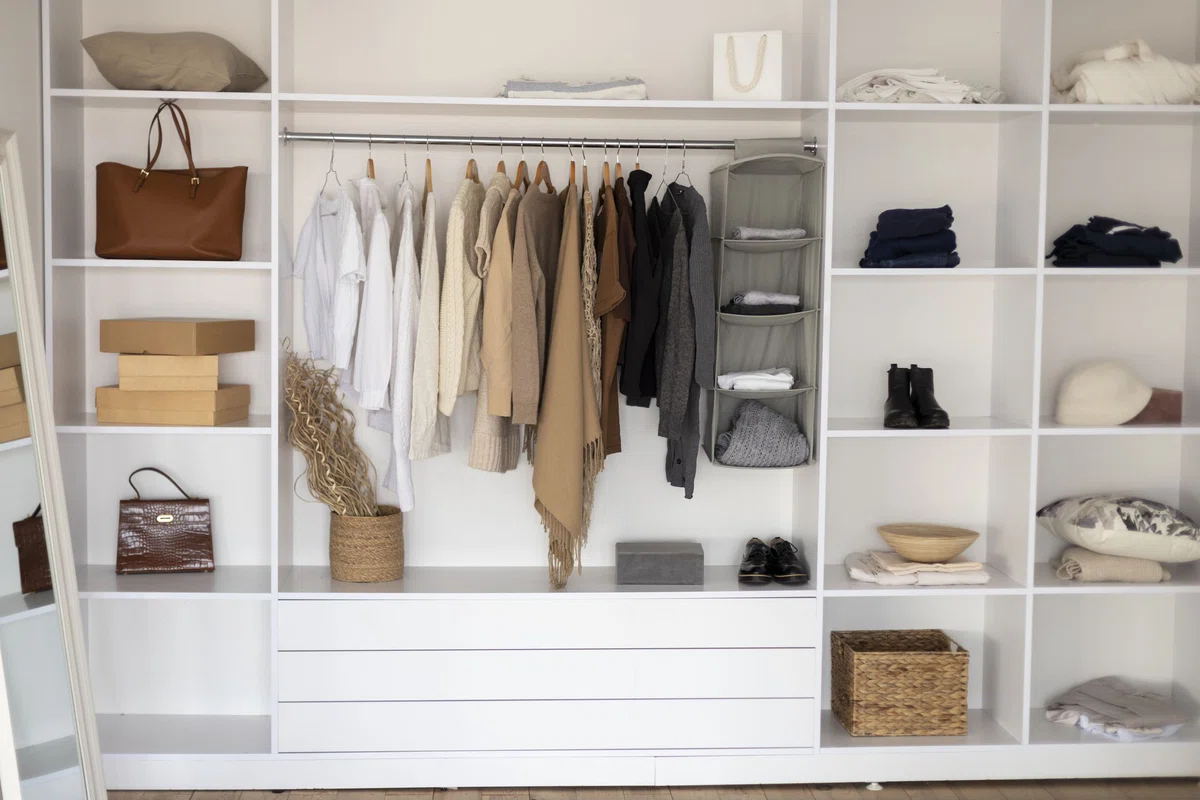
Optimizing Your Clothes Storage: Tips for Efficiency and Convenience
Let's figure out how to organize your clothes storage: optimize your space, easily find the things you need, and keep them in good condition. Find out useful tips here!
Content
- Free up space in your closet and get rid of unnecessary clothes!
- Important steps: sorting and organizing your wardrobe
- Wardrobe organization: everything in its place
- Various options for organizing clothing storage
- Methods for Properly Folding Clothes and Organizing Storage
- Tips and life hacks for efficient storage of clothes
- The secret to making cleaning and storing your home clothes easier
- How Warehouses Can Be Useful for Storing Seasonal Items
- Benefits of Storage Services in Georgia
- What matters most is how we feel, not what we wear.
- Frequently asked questions
- 🤔 What is the importance of optimizing your clothing storage system?
- 📏 How to properly organize your clothing storage system?
- 🗓️ How much time should you devote to periodically organizing your wardrobe?
In today's world, many people have the problem of inefficient organization of clothing storage. Clothes can take up a significant amount of space in the wardrobe or be scattered throughout the apartment, which creates disorder and makes it difficult to find the right items. Organizing a clothing storage system becomes a key factor in maintaining order and comfort in the home.
It is important to understand that efficient clothing storage has several aspects. First, it is the optimization of the available space. When each item has its place and is clearly structured, it allows you to make the most of the available space and avoid its inappropriate use. Various storage systems, such as shelves, hangers, drawers and containers, can be used to create a convenient organization.
Secondly, the storage system should be convenient and functional. People want to have easy access to their clothes and the ability to quickly find the right item. To achieve this goal, various methods of sorting and labeling clothes can be used, such as categorizing by type (dresses, pants, T-shirts) or season (summer, winter). It is also worth considering the individual preferences of each family member when organizing storage. Finally, it is worth paying attention to the preservation of clothes. Proper storage helps to protect clothes from damage, loss of shape or discoloration. Using hangers with appropriate shapes, protection from dust and proper ventilation will help to extend the life of your clothes. In this article, we will look at various methods and recommendations for organizing clothes storage to make your life easier and create a comfortable space for your clothes. Ideas for optimal use of available space, tips for sorting and labeling, and information on methods for preserving clothes will be presented. No matter the size of your wardrobe or your lifestyle, you will find useful tips to help you organize your clothes efficiently and conveniently.
Free up space in your closet and get rid of unnecessary clothes!
Conducting a wardrobe audit is the first step to organizing a new clothing storage system. Deciding what to keep, give away, donate, sell, or store requires determination and persistence. Let's take this procedure step by step.
First, take all the clothes out of the closets and lay them out on the floor of the room. Then walk through the pantry, the balcony, climb up to the mezzanine, and don't forget to check the dryer - your goal is to find all the things in the house.
What to do next? Sort all the clothes into four groups:
- The first group includes clothes that are broken, very dirty, torn or very worn out. These items cannot be repaired or washed and should be thrown in the trash.
- The second group is clothes that are in good condition, but do not fit you in size or you no longer like them. Perhaps you already have a fashionable and new item of the same style. Items from this group can be donated to a charity shop, given to friends or relatives, or sold online.
- The third group is seasonal clothing, divided into summer and winter items. Items that are not relevant in the current season should be put into storage, but do not temporarily fill the shelves of your closets - they will come in handy for other things!
- The fourth group is all other items of clothing. Analyze each item, asking yourself a simple list of questions:
- Do I like this item?
- Do I wear it at least once every week or two?
- Does it fit my current style and is easy to combine with other items?
- Is this item relevant for the current season?
If your answer to all of these questions is "yes", then this item deserves a place in your new storage system.
In addition, I would like to share
additional information that will help you organize your wardrobe:
- Space Management: Try using vertical organizers, extra shelves, or hangers to maximize the space in your closet. This will allow you to organize and find the clothes you need easily.
- Capsule Wardrobe: Consider creating a capsule wardrobe, which includes a small number of interchangeable items. This will help you create a variety of looks using only a limited number of items.
- Regular Inspection: Conduct regular closet inspections to avoid accumulation of unnecessary items. Gradually develop your own style and get rid of items that no longer reflect your preferences and style.
- Donation: If you have items you want to donate to charities, reach out to local shelters, homeless centers, or thrift stores. Your unwanted items can help others and make their lives better.
Remember that a well-organized closet helps you easily find the items you need, create stylish looks, and highlight your individuality.
Important steps: sorting and organizing your wardrobe
Step 1: Sort by type of clothing. Our goal is to create a clear hierarchy in our wardrobe so that we can easily find the items we need. The first step in this process is to sort by type of clothing. We start by separating the outerwear from the general pile. This includes coats, jackets, blazers, and other outer layers. We then move on to underwear, including socks and stockings, and then pants, jeans, and trousers. Next come the top combinations, such as blouses, shirts, and sweaters, and so on.
This systematization allows us to easily handle each type of clothing and find the items we need quickly and efficiently. Step 2: Sort by season. The second important aspect of organizing your wardrobe is to sort by season. We create sets for each season so that we have access to the right clothes at the right time. We create sets for spring-summer, summer, fall, fall-winter, and spring. This allows us to easily adapt to changing weather conditions and have the right clothes on hand for each season.
Step 3: Sort by purpose. The third step of wardrobe sorting is separating clothes by purpose. We classify clothes into casual, work, dressy, sports and other categories. This helps us easily find the right clothes for different situations. For example, casual clothes will be stored in open storage systems such as open shelves or hangers for easy access and quick selection. At the same time, dressy clothes can be stored in closed storage systems to keep them in perfect condition and protect them from dust and damage.
Wardrobe organization: everything in its place
After sorting by type, season and purpose, we move on to organizing the storage of clothes. Depending on their characteristics and functions, we distribute things to different storage places in our home. For example, outerwear can be placed in a wardrobe or hallway, where it will be conveniently at hand when leaving the house. To store seasonal clothes that we are not currently using, we can use a pantry or other free space. It is also important to consider that open storage systems are ideal for everyday clothes, as dust settles less on them. This also allows us to see all available options at a glance and easily experiment with color and style combinations.
In addition to sorting and organizing, there are other methods that help keep your wardrobe in order. For example, you can use various organizers and containers to store small accessories such as jewelry, belts or ties. This will keep them intact and make it easy to find the items you need without unnecessary clutter.
It is also worth paying attention to the proper care of clothes. Regular washing and drying according to the instructions on the label will help keep things in perfect condition for a long time. In addition, proper storage, taking into account the material and characteristics of each item, also plays an important role. For example, woolen items require special attention and should be folded or hung on special stands to avoid deformation.
Various options for organizing clothing storage
- Wardrobes are one of the most popular ways to store clothes, providing convenience and accessibility in everyday life. They can be of different sizes and shapes, with different compartments and shelves to suit the individual needs of each person. In addition, modern wardrobes can be equipped with various innovative features, such as built-in lighting or mechanisms for convenient placement and organization of clothes.
- Chests of drawers are a classic source of inspiration for storing clothes that have been around for centuries. They usually have a vertical structure with drawers that allow you to organize your clothes according to the Marie Kondo method, based on the principle of joy and minimalism. Chests of drawers not only help keep your clothes in order, but also serve as an aesthetic element of the interior, adding charm and character to the room.
- Floor hangers are functional and stylish solutions for storing a wardrobe. They offer the opportunity to visually display your clothes, allowing you to easily choose the right outfit at any time. Floor hangers can be made of various materials such as wood, metal or plastic and offer various design options including built-in shelves or hooks for accessories.
- Wall hooks/hangers are practical and space-saving solutions for organizing clothes in the hallway or other rooms. They provide convenient placement of jackets, coats and other items and can also be used to hang trousers or accessories such as bags or hats. Wall hooks can be installed in any convenient place and will help you use the available space effectively.
- Shelves are a versatile solution for storing clothes, providing functionality and organization. They can be of various sizes and shapes, perfect for placing folded sweaters, t-shirts, jeans and other wardrobe items. For a more ergonomic use of shelves, you can use dividers that will allow you to easily separate and sort clothes by category or color.
- Drawers and boxes are useful accessories for storing clothes that will help protect them from dust and keep them in good condition. Boxes are especially useful for storing small items such as lingerie or accessories, while drawers allow you to keep your clothes closed, especially in tight spaces. When choosing boxes and drawers, you can look for materials with protective properties, such as textile or plastic, as well as tags or labels for easy organization.
- Suitcases are not only stylish travel accessories, but also a great solution for storing clothes in the bedroom. Placing a suitcase at the foot of the bed allows you to use the space efficiently while creating an atmosphere of adventure and travel in your personal space. Suitcases come in a variety of sizes and designs, and can be chosen to suit your personal preferences and interior style.
- Trunks are special rigid containers that provide extra protection for storing certain types of clothing. They are ideal for storing hats, very fragile fabrics, or outfits with decorative elements. Trunks usually have a padded design and latches for secure fastening, which helps keep clothes safe and in their original condition.
- Clothes organizers are practical accessories that will help you create a compact and organized storage of your clothes. They can be placed on the wall or closet door, offering convenient pockets or compartments for sorting socks, accessories or underwear. Organizers provide order and make it easier to find the things you need, allowing you to make the most of the available space.
- Bags/covers are a great solution for storing wardrobe items that you do not use so often. Bags help protect clothes from dust and moisture, and vacuum bags can significantly reduce the amount of space taken up, especially when storing seasonal items. Covers are also a practical option for storing outerwear, providing protection from dust and keeping them in good condition. When choosing bags or covers, you can pay attention to quality materials, such as breathable fabric or waterproof coatings, for long-term preservation of clothes.
Methods for Properly Folding Clothes and Organizing Storage
Organizing your clothes storage depends greatly on how to fold them, especially if they are not hung. Below are some guidelines for folding different types of clothes. Shirts can be folded with the sleeves facing up, which helps prevent them from wrinkling. Pants are usually easy to fold by first folding them in half and then folding them in half again. For more detailed information on vertical storage of clothes or the Marie Kondo method of folding clothes, it is recommended to watch instructional videos. Using these methods can greatly simplify and improve the organization of clothes storage at home, making it more convenient and practical.
Tips and life hacks for efficient storage of clothes
- 1. Storing fur and leather products in the right conditions is key to their durability and quality. Natural materials do require ventilation to avoid moisture and odors. However, you need to be careful when choosing a storage method to prevent damage. It is important to remember the temperature regime to avoid extreme conditions that can negatively affect the materials. Avoid storing on the balcony in winter at temperatures below -20 degrees Celsius or on the summer loggia at high temperatures up to +25 degrees Celsius with direct sunlight to preserve the color and quality of the products.
- Proper storage of fur coats and sheepskin coats plays an important role in maintaining their attractiveness and shape. It is recommended to use voluminous covers made of breathable materials for storing outerwear. This will help prevent dust and provide sufficient air circulation so that the fabrics can air out.
- It is better to store clothes, including jeans, folded, especially if they are not intended for wearing at the moment. Folded clothes will retain their shape and avoid the classic folds that can appear if they are hung on a hanger and exposed to their own weight.
- Wool and fur products require special attention when storing and protecting them from insects. To prevent damage from moths, you can use special repellents. One effective way to protect against pests is to use sachets with lavender flowers. This will not only provide protection from insects, but also a pleasant aroma for your things.
- To prevent deformation of outerwear and men's suits, it is recommended to store them on hangers with wide shoulders. This is especially convenient in dressing rooms, where you can place the required number of hangers.
- When choosing hangers, you need to consider the size of the clothes. Using hangers that are too big can stretch the fabric in the shoulder area, which can be difficult to fix, especially on knitwear or wool. On the other hand, hangers that are too small are inconvenient and can cause unpleasant creases in the clothes.
- If you use clothing storage services, you should only send clean and dry clothes for storage. Dirt left on fabrics can penetrate deep and become difficult to remove. In addition, stains, crumbs and dirt make the fabric less resistant to wear and tear and reduce its strength.
- For storing silk blouses and light dresses, it is recommended to use hangers with an anti-slip coating or covered with fabric, such as satin. This will help to maintain the softness, volume and prevent abrasion of silk. It is important to maintain the volume of the fabric in the shoulder area, and soft hangers will ensure this condition.
- For storing underwear, it is recommended to use special organizers. There are many modern clothes storage accessories that are easy to find online, such as containers, dividers, organizers, trunks, boxes, and baskets. They will help organize your laundry and keep it in good condition.
- Bulky items such as blankets, throws, and pillows are best stored in soft trunks that can take the shape of the folded textile. This will protect against dust and keep the items in good condition.
The secret to making cleaning and storing your home clothes easier
It is important to remember the well-known wisdom that it is not clean where they clean, but where they do not litter. This principle should be learned and applied in the context of cleaning and storing home clothes. It is important to avoid buying clothes that you do not need and not to put unnecessary things in the closet. It is recommended to periodically review and sort clothes at least once every six months or a year. Refreshing your look at your wardrobe, taking into account the changing seasons and following fashion trends will help you determine what has not been used in your closet for a long time. Those things that are no longer needed can always be donated to charity shops, where they will find new owners and bring joy.
How Warehouses Can Be Useful for Storing Seasonal Items
We adhere to the principle of organization and order in our home space. Whether it is a balcony, hallway or dressing room, it is important to maintain cleanliness and tidiness everywhere. One of the main sources of disorder is things that are temporarily not needed, especially seasonal clothing.
In the summer, there is no need to store heavy winter down jackets and fur coats, especially considering that storage spaces usually do not meet the required conditions. If you store clothes on the balcony, they can fade and become less durable due to sunlight and high temperatures. In addition, imagine how much additional space will be freed up in your wardrobe if you move there not only winter clothes, but also winter shoes!
But what to do in winter? One solution may be to hand over a box of summer clothes, accessories and shoes to a warm warehouse, for example, in the Attic. This way, your things will be stored in a dry and warm place, and by the beginning of the next summer season they will remain fresh and clean, while at home, clothes that are not suitable for the season will simply gather dust for six months.
Benefits of Storage Services in Georgia
In order to maintain order and organization in the home environment, many have turned their attention to storage services. Whether it is things that are not relevant at the moment, seasonal clothing items or simply things that take up too much space in the apartment, storage services in Georgia have become a popular solution.
One of the cities where such services are offered is Tbilisi. Storage warehouses in Tbilisi offer a number of advantages:
- Optimal storage conditions: Warehouses provide stable temperature conditions and maintain the right level of humidity, which helps keep your clothes and other items in perfect condition throughout the entire storage period.
- Safety and reliability: Warehouses are equipped with a reliable security system, including video surveillance and access control, to ensure the protection of your belongings. You can be sure that your belongings are under reliable protection.
- Convenience and flexibility: Storage services in Tbilisi offer convenient terms of use. You can easily hand over your belongings for storage and access them as needed. This is especially convenient when it comes to seasonal items that need to be stored for a certain period.
- Space saving: One of the main advantages of storage services in Georgia is that they allow you to free up space in your apartment. You can get rid of unused items and things that are temporarily not needed, and at the same time be sure that they are stored in a safe and suitable place.
What matters most is how we feel, not what we wear.
Andy Warhol said: "I want to die in my blue jeans." This statement emphasizes that the choice of clothes, as well as other areas of our lives, is a form of creativity. We decide what to buy and how to wear, and the main criterion is true satisfaction. It is important that the contents of our wardrobes bring us joy, and when opening the closet, our eyes immediately turn to "that" item. Free up space in your closets along with storage areas and start creating!
The final choice in clothing is determined by our comfort and self-expression. When we wear what we feel good in, it is reflected in our well-being and confidence. Each of us has our own style and preferences, and it is these elements that allow us to express our individuality.
Therefore, it is important to understand that the clothes we wear are of great importance for our well-being. This is an expression of our personality and an opportunity for constant creativity. Freeing up space in our closets with Attic allows us to create new combinations and find pleasure in our look, reflecting our uniqueness and style.
Frequently asked questions
🤔 What is the importance of optimizing your clothing storage system?
💡 Optimizing your clothing storage system allows you to use the space in your closets or storage units as efficiently as possible, provides easy access to your items, and maintains order, making it easier to choose and reducing the time it takes to find the right clothes.
📏 How to properly organize your clothing storage system?
💡 There are several approaches you can use to organize an effective clothing storage system: sorting by type and season, using hanging systems for hangers, labeling boxes or drawers for easy searching, and eliminating the storage of unnecessary or irrelevant items.
🗓️ How much time should you devote to periodically organizing your wardrobe?
💡 The time spent on periodically organizing your wardrobe depends on the volume of clothing and personal preferences. It is recommended to set aside time at least once a season to inspect and review your items, eliminate clutter, and optimize your storage system.


24 comments
Log in to leave a comment