



Public transport in Batumi. How do I pay for the bus fare?
Buses and stops
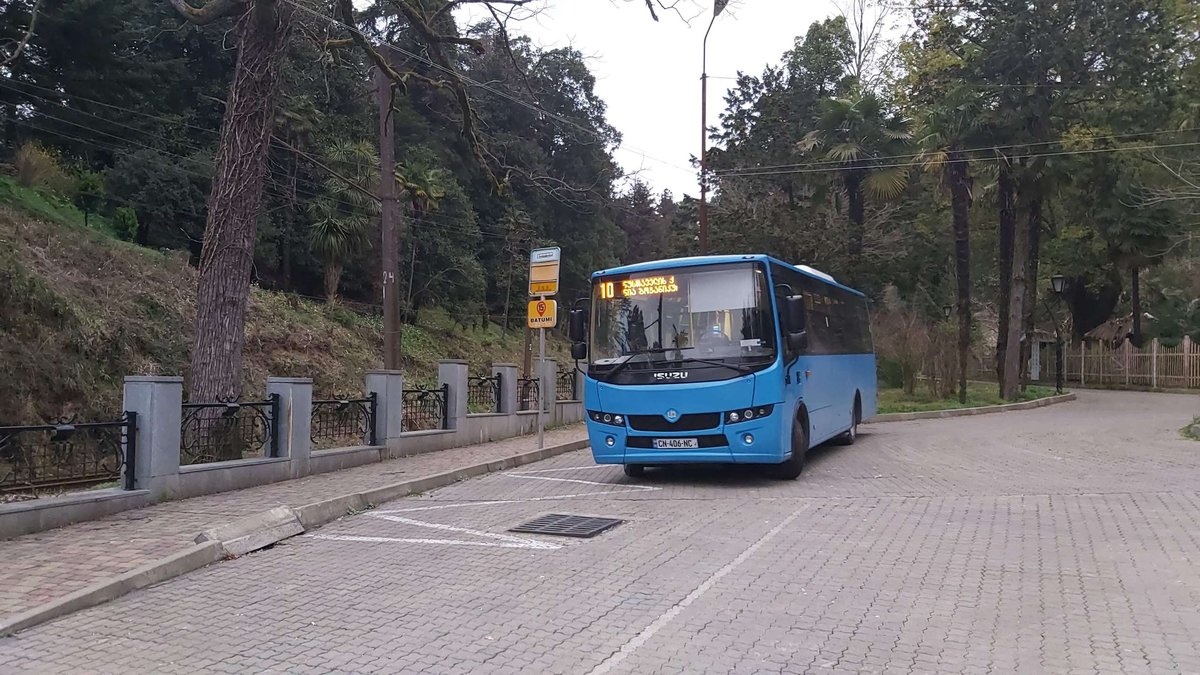
Batumi is a small city, however, the transport system here is well developed. Regular buses of yellow, gray and blue colors run around the city on 17 routes. Unlike minibuses, buses run on schedule and stop only at designated stops. Although, if necessary, you can stop the bus at an unspecified place.
The stops are equipped with electronic displays, where the route numbers and the time before the arrival of the nearest buses are indicated. The text on the scoreboard is written in Georgian and English. On buses, route numbers and text are displayed in Georgian and English.
There are a lot of traffic jams in Batumi at any time of the year, which is why buses are often late. If a scoreboard is installed at the stop, it starts flashing, notifying about the delay.
Bus Route No. 1 on the Batumi map with all stops
Bus Route No. 2 on the Batumi map with all stops
Bus Route No. 3 on the Batumi map with all stops
Bus Route No. 4 on the Batumi map with all stops
Bus Route No. 6 on the Batumi map with all stops
Bus Route No. 7 on the Batumi map with all stops
Bus Route No. 8 on the Batumi map with all stops
Bus Route No. 9 on the Batumi map with all stops
Bus Route No. 10 on the Batumi map with all stops
Bus Route No. 11 on the Batumi map with all stops
Bus Route No. 12 on the Batumi map with all stops
Bus Route No. 13 on the Batumi map with all stops
Bus Route No. 14 on the Batumi map with all stops
Bus Route No. 15 on the Batumi map with all stops
Bus Route No. 16 on the Batumi map with all stops
Fare. Tariffs and payment methods
If you’re used to riding buses with a paper ticket, a monthly pass sold on board, or buying a ticket from a conductor or driver, it works differently here. There are no onboard ticket sales: the driver and conductor cannot take cash or issue tickets. Payment is made only by card. Even if you get on the bus without knowing this, don’t have a card, or boarded the wrong bus, you can ask the driver or other passengers for help. Many people speak Russian, so you’ll be understood and guided. Locals may even offer to pay your fare with their own card—and sometimes won’t take any money for it.
Fare payment on all buses is made using a special transit card, which you can buy and top up at Bank of Georgia payment terminals or in chain supermarkets around the city. One card can be used to pay for several passengers—just tap it on the validator the required number of times.
You can also pay with Express Bank, Solo, Visa Electron, and other cards, which is very convenient.
Contactless plastic cards are divided into categories and can be obtained free of charge:
- Standard “Batumi Card” — bus fare: 30 tetri
- Discount (concession) card
- Student card
- Student ID
Traveling without paying is not recommended: inspectors board buses quite often. They are usually not strict or rude—they behave respectfully and friendly, even if a passenger hasn’t paid the fare.
About “Batumi Autotransport”
This is a state-owned company with an official website: batauto.ge. On the website, you can read news, track bus movements in real time, and find information about fares.
The company was founded in 2004. Passenger inquiries and complaints are accepted via email at info@batauto.ge. The company office is located at 13 Sulkhan-Saba Orbeliani Street. Service phone number: +995 422 24 76 76. The official website also provides updates on route changes and timetable adjustments due to roadworks.
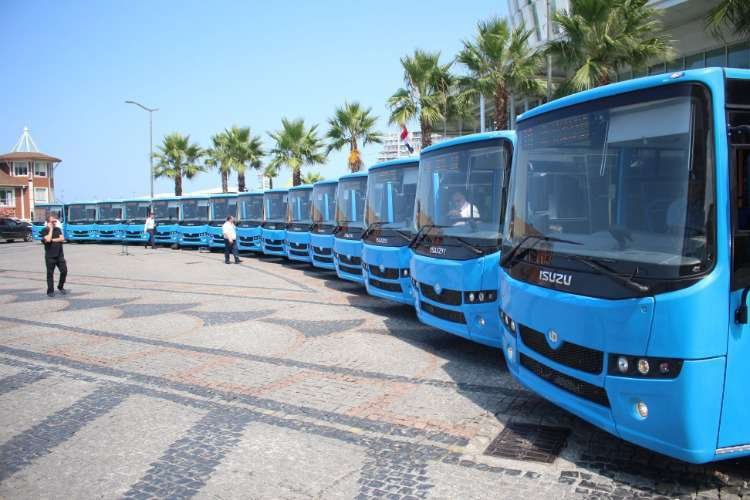
The fleet includes four types of buses: Bogdan (Ukrainian-made), Zonda and FAW (Chinese-made), and Isuzu (Japanese-made).
The company operates routes both in central Batumi and in the surrounding seaside areas. City buses can take you to nearby Black Sea resorts and settlements such as Gonio, Kvariati, Sarpi, and Makhinjauri.
Minibuses (marshrutkas) in Batumi and nearby attractions
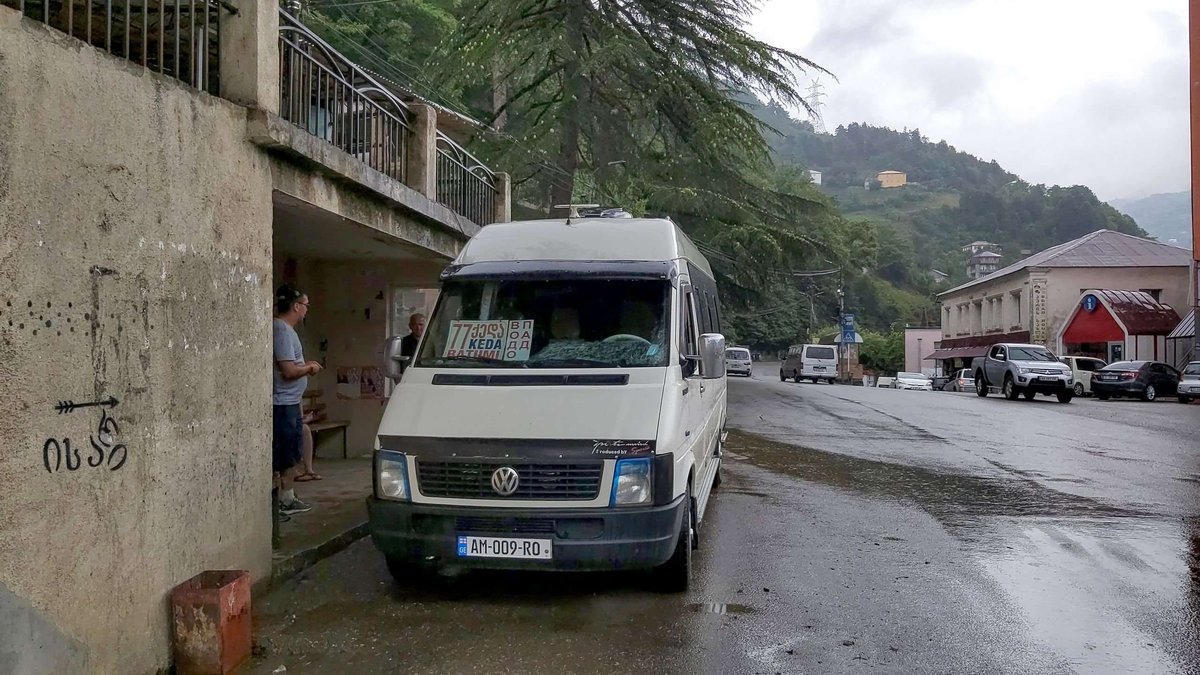
In Batumi, marshrutkas are a convenient and popular way to get around—both for exploring local sights and for visiting beautiful places outside the city. Take a trip to the Batumi Botanical Garden (Route No. 31) or explore the ancient Gonio Fortress (Routes No. 88 and 33)—each place is rich in history and natural beauty. Ride along Chavchavadze Avenue and Abuseridze Avenue, which run parallel to the coastline and offer views of the sea and the cityscape. In the city center, marshrutkas travel along Gorgiladze Avenue and King Parnavaz Street, bringing you right into the heart of Batumi’s everyday life.
Mercedes Sprinter-type minibuses in Batumi offer a comfortable ride—there are about 600 of them operating on 28 routes. These marshrutkas do not follow a strict timetable, but their frequency usually means minimal waiting time. To stop a marshrutka, simply raise your hand or ask the driver to stop by saying “gamichered.”
If you prefer more comfort, consider using a taxi. In Batumi, taxis are available at reasonable prices and provide a more individual and convenient way to travel around the city.
Paying for a marshrutka ride: how, when, and how much?
Paying for marshrutkas in Batumi is simple and convenient. You pay in cash directly to the driver when you get off at your stop. The fare depends on the distance, which makes the system flexible and suitable for different routes.
Within Batumi city limits, a ride costs just 70 tetri. If you’re traveling outside the city—for example, to Keda—the fare is 3 lari, and to Khulo it is 10 lari. A trip to the scenic Batumi Botanical Garden costs 2 lari.
This payment system makes it easy to plan your transportation expenses while staying in Batumi.

0 comments
Log in to leave a comment