





Ujarma - a museum-fortress in Kakheti ⚔️ Discover the secrets of the citadel, temples and palaces!
Immerse yourself in the atmosphere of medieval Georgia in the Ujarma Museum-Reserve 🏰 Discover the ancient fortress, follow in the footsteps of kings and archaeological finds! ✨ Find out how to get there, when to go and what to take with you!
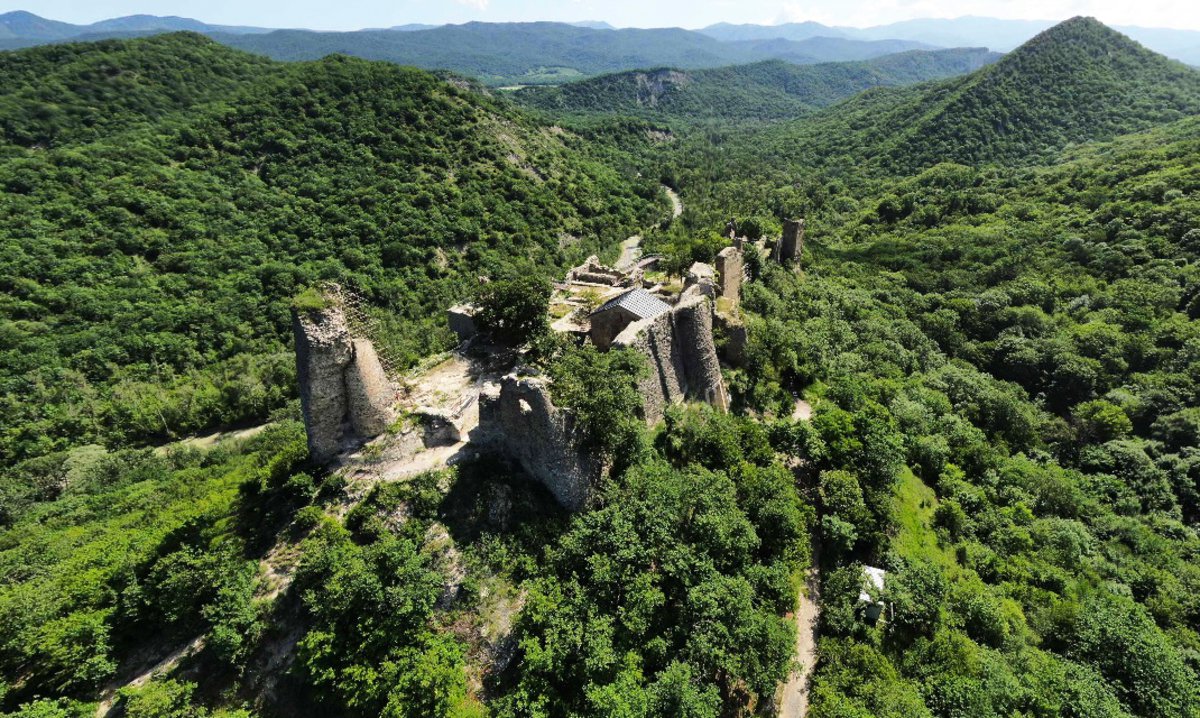
Imagine: ancient stone walls that remember kings and sieges rise among the green hills of Kakheti. This is what the Ujarma fortress looks like – a medieval fortress town, now turned into an open-air museum-reserve. In the 5th century, King Vakhtang Gorgasali chose Ujarma as his residence, and in 914 the Arabs burst in, leaving behind only the ruins of majestic towers. It is no wonder that Forbes magazine included the Ujarma fortress in the top 9 most ancient castles in the world. Are you ready to feel the spirit of the past and discover one of the treasures of Georgia? Then go ahead – a fascinating journey through time and space awaits you 😃.
What will you learn from the article?
- 📜 History of Ujarma and the museum-reserve
- 🏰 Architectural and archaeological attractions
- 🏺 What to see in the museum
- 🚗 How to get there
- 🍴 Where to eat and stay nearby
- 📅 Best time to visit
- 💡 Useful tips for tourists
- 💬 Visitor comments
- ❓ Frequently asked questions
📌 Brief reference information
📍 Location: Ujarma, Sagarejo
📅 Date of foundation: 2015
🏛️ Legal status: LEPL — National Agency for Cultural Heritage Preservation of Georgia
🏰 Type: historical museum-reserve
📏 Area of the territory: 30,000 m²
🏺 Number exhibits: a fortress with buildings from different eras
🕙 Opening hours: daily (except Mon), 10:00–18:00
🎫 Ticket price: 10 ₾ (adults); 1 ₾ (students, pensioners); free – children under 6, disabled people, IDPs, museum staff, ICOM members
📞 Phone: +995 599 85 11 86
📧 Email: ujarma@heritagesites.ge
🌐 Website: heritagesites.ge
🔗 Social networks: Facebook
📜 History of Ujarma and the museum-reserve
Ujarma is not just a fortress. It is a living testimony to Georgian history, hidden among the hills of Kakheti. The fortress city was founded in the 3rd-4th centuries under King Asfagura. During the reign of King Vakhtang Gorgasali and his son Dachi, the fortress was expanded, fortified with powerful walls and towers, and a royal palace and churches were built. It was then that Ujarma became the second residence of the kings of Iberia.
⚔️ Arabs, Wars and Decline
In 914, the fortress survived a severe Arab invasion led by Abu-l-Qasim. The citadel was destroyed and lay in ruins for a long time. However, in the 12th century, during the reign of King George III, Ujarma was restored - the royal treasury was again located here.
Unfortunately, after the Mongol invasion in the 13th century and the weakening of the Georgian kingdom, the fortress gradually lost its significance. Over time, Ujarma became a small village, hiding a great history within itself.
🛡️ New life for ancient walls
In the 21st century, Ujarma experienced a rebirth:
- 📜 On November 7, 2006, the fortress received the status of a cultural heritage monument of national importance.
- 🏛️ In 2015, the Ujarma Museum-Reserve was established here.
- 🏛️ The institution became part of the National Agency for the Preservation of Cultural Heritage of Georgia.
Since then, the ancient walls have begun to breathe again - now they are protected by the state and open to everyone who wants to touch the history of Georgia.
⚠️ Advice for tourists: do not miss the opportunity to climb the stone steps of the fortress, examine the remains of the palace, towers and an ancient church. The landscapes around Ujarma are truly mesmerizing - especially at sunset.
🧭 Today, the Ujarma Museum-Reserve is included in the list of the best historical routes inKakheti - a great place for a day trip from Tbilisi.
🏰 Architecture, fortress and secrets of the dungeons
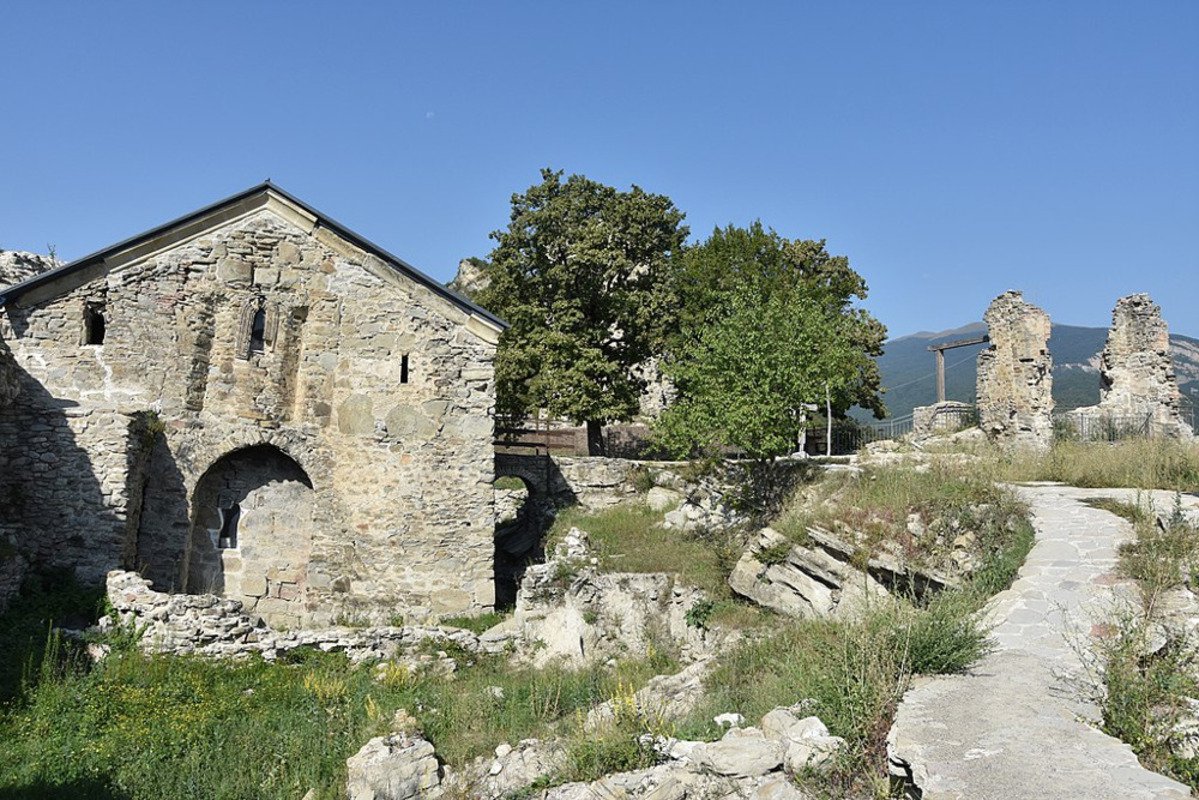
Ruins of the church and fortress walls of Ujarma on the top of the hill
The Ujarma Fortress is divided into the Upper (citadel) and Lower parts – these were once the royal castle 👑 and the adjacent town 🏘️. Fragments of powerful defensive walls descending the hillside to the Iori River 🌊, with surviving battle towers 🛡️, have survived to this day. In the Middle Ages, there were nine defensive lines here, and cavalry was stationed on their second and third tiers to protect the fortress 🐎.
In the citadel, archaeologists discovered the foundations of a two-story palace – this is where the residence of King Vakhtang Gorgasali 🏛️ was located.
⛪ The Church of the Holy Cross (Jvarpat Iosani), located inside the fortress, deserves special attention. This is a two-level temple: the lower floor was built in the 5th–6th centuries, and the upper floor was added in the 10th–11th centuries. The thick walls are made of large stone blocks 🧱, and the interior is cool and dark, with light coming in from narrow windows 🕯️.
At the foot of the hill, by the river bank, there is another small church (of late origin) — according to legend, the ruins of the very first fortress built by King Asfagur 🧭 were located next to it.
🏺 Traces of life in the Middle Ages
In addition to the surviving buildings, archaeological traces of everyday life can be seen on the territory of the fortress. For example:
- 💧 Remains of a reservoir - a large stone tank for collecting rainwater
- ⚱️ Fragments of pottery
- 💍 Bronze and glass bracelets, rings, jewelry
- 🍞 Ruins of a bakery - an ancient workshop for baking bread
Walking around Ujarma, you are actually walking along the streets of a thousand-year-old city. Every stone here keeps its own history 📜 — and it seems that it is about to start talking...


🏺 What to see in the museum
The Ujarma Museum-Reserve is essentially an open-air museum 🌤️. The main "exhibits" here are the ruins of the ancient fortress itself, atmospheric and picturesque. 🏰 Walking along the winding paths among the ruins, you will see:
🔸 remains of powerful fortress walls 🧱
🔸 surviving towers with observation platforms 🔭
🔸 foundations of the royal palace 🏯
🔸 an ancient church 🕍 with ancient fragments of frescoes
📸 In clear weather, stunning views of the Iori River valley and the mountains of the Tsiv-Gombori Range open up from here 🏞️ - don't forget to take a camera or a smartphone with a good camera!
🧭 At the entrance to the territory, you will be greeted by information stands with a map of the fortress and historical information in several languages. Sometimes museum staff offer excursions - most often in Georgian, but sometimes in Russian 🇷🇺 or English 🇬🇧.
⛪ Services are held inside the church on major holidays. On ordinary days, it is open to visitors - look inside to feel the hidden atmosphere of centuries.
⚱️ What about archeology? Jewelry, ceramics, weapons — archeological finds made during excavations in Ujarma are carefully stored in museum collections. Some have been transferred to the Sagarejo Museum of Local History, where artifacts from the entire region are exhibited.
✨ Even if you don’t see all the artifacts in person, the walk through the fortress itself will leave a deep impression. Here, among the stones and ruins, history seems to resound in every step…


🚗 How to get there
Ujarma is conveniently located, about halfway betweenTbilisi andTelavi, on the picturesque Gombori Pass road. This is one of the most beautiful driving routes in Eastern Georgia.
🛣️ Distance from Tbilisi — about 40–50 km, travel time by car — about 1 hour.
🚘 The road is serpentine, but paved and safe. Along the way, there are breathtaking views of the valleys and mountains.
🅿️ At the foot of the fortress there is a sign and a small parking lot. From there — 5–10 minutes walk along the path up the mountain to the entrance to the fortress.
🚌 Public transport
🚐 From Tbilisi, minibuses to Telavi (via Gombori) depart from Isani bus station.
📍 Tell the driver that you need to stop at Ujarma - it is a popular point on the route.
🎟️ The cost is about 10-15 lari, the journey takes about 1.5 hours.
🕒 From Telavi, minibuses also go past Ujarma every 30 minutes.
⚠️ Please note: minibuses may not run late in the evening, so plan your return journey in advance.
🧭 Alternative options
🚖 You can get there by taxi (from 60-80 GEL one way).
🚌 Or book an individual transfer with a guide - such excursions often include Ujarma in the route.
👨👩👧👦 For groups - rent a minibus or a car with a driver for a day - it is convenient and economical.
🏡 Where to eat and stay near Ujarma
🍽 Meals:
Ujarma is located in a picturesque but remote rural area - there are no cafes or restaurants directly near the fortress. Therefore, it is better to plan your meals before or after the visit.
- 👉 On the way from Tbilisi, stop in Sagarejo (about 20 km to the fortress) - there are canteens, bakeries and markets where you can grab a quick bite.
- 🍷 If you are heading to Telavi - the wine capital of Kakheti - leave lunch for later: there are many cozy restaurants, wine bars and cafes.
- 🍗 Be sure to try mtsvadi (shashlik), aromatic shoti bread, fresh pies and local Kakhetian wine - the gastronomy of the region will not disappoint!
🛏 Accommodation:
There are no hotels or guest houses near the fortress, so plan to stop in neighboring villages:
- 🏘 Telavi is an ideal place to spend the night: just 30 km fromUjarma, many options from family guesthouses to boutique hotels.
- 🏙 If you are returning to Tbilisi (about 50 km), you can limit yourself to a one-day trip and have dinner in the capital.
- 💡 In Ujarma itself, there is almost no infrastructure, so it is better to decide everything in advance: where to eat, where to fill up with gas and where to stay for the night.
What else to see in the area?

Sagarejo Local History Museum
The State Museum of Local Lore in Sagareggio was founded in 1962. Since its establishment…

Church of St. Dodo Garejeli
The Church of St. Dodo Garejeli in Sagarejo is an iconic place for everyone interested in…

House-Museum of George Leonidze
Georgian poet, novelist and literary critic Georgi Leonidze is one of the most successful…
📅 Best time to visit
🌸 Spring
🏞 April–May: One of the most picturesque seasons! The hill is covered in 🌿 greenery, wildflowers 🌸 bloom, and the fortress seems to come alive against the backdrop of blooming nature. Perfect for photos, easy hikes, and a picnic overlooking the Iori River Valley.
☀️ Summer
June–August: The temperature can reach +30…+35°C 🔥. But at the top of the hill 🌬 a cool wind often blows, and the trees provide shade. ⚠️ We recommend visiting early in the morning or after 17:00 to avoid the heat.
🍇 Autumn
September–October: 💛 It is considered the best time. The air remains warm, the fortress is covered in golden leaves 🍂, and in Kakheti it is the Rtveli grape harvest season. A great time to combine a historical excursion and participation in a wine festival! 🍷
❄️ Winter
November–March: There are snowfalls and ice in the Gombori Mountains ❄️, but the fortress does not close. ⛷ Snow-covered Ujarma looks fabulous! Important: ❗ In case of heavy snowfall, the pass may be temporarily closed, so check the road conditions before leaving.
📌 Important things to consider
- 🧣 In summer — take water, a sun hat, and sunscreen
- 🧤 In winter — warm shoes, a jacket, and gloves are a must
- 🚌 Public transport is infrequent — plan your return route
- ⚠️ Roads through the Gombori Pass may be temporarily closed in winter
✅ Is it right for you?
If you love hiking, are interested in history, architecture, and beautiful views — Ujarma is worth a trip in any season.
🎯 Summary:
👉 The ideal months for a trip are April, May, September, October. But even in winter or summer, with the right preparation and mood, Ujarma will give you unforgettable impressions 💚
💡 Useful tips for tourists
👟 Shoes and clothing:
Wear comfortable, stable shoes for walking around Ujarma - the climbs can be steep and rocky.
In summer, a hat 🧢, sunscreen 🧴 and sunglasses 😎 will come in handy, and in winter - a warm jacket, hat and gloves 🧤, especially if you are climbing to the top of the hill.
🧳 What to bring:
Be sure to bring a bottle of water 💧, a light snack 🍎, some cash 💵 and a camera 📸 - the scenery here is magnificent.
Mobile network coverage can be spotty 📶, so it's best to save the necessary information on your phone or tablet in advance.
⚠️ Safety:
Be careful on the ruins - do not go near the edges of the walls, especially with children 🧒.
Do not climb the towers - there are not fences everywhere, stick to the paths and observation platforms.
🚻 Infrastructure:
There are no toilets on the territory 🚫, so think about it in advance.
Also, there are not bins everywhere, so it is better to take your trash with you ♻️.
There may be no guide, prepare in advance or use this article as a guide 📱.
🙏 Respect for the place:
Remember: Ujarma is part of the cultural and spiritual heritage of Georgia 🇬🇪.
Do not leave graffiti on the walls, do not shout, do not disturb the peace of other travelers and locals.
📞 Emergency numbers
🚓 Police: 112
🚑 Ambulance: 113
🚒 Fire department: 114
💬 Now the floor is yours
Have you been to Ujarma? What impressions did this place leave on you? Perhaps you have your own tips or interesting facts that you would like to share 🙌. We will be glad if you tell us about your experience in the comments! If you are just planning a trip and you still have questions, feel free to ask them below. Your reviews and questions help other travelers better plan their adventure. Let's discuss and share our love for amazing Georgia together! 💖
ℹ️ Relevance of information
All information presented in the article has been carefully checked and is current as of May 2025.
We try to keep the information up to date, but please note that ticket prices, opening hours and available services may change without notice, especially during holidays or during the tourist season.
If you notice an inaccuracy or the data is out of date, please write to us. This will help other tourists to be better prepared!
Thank you for your attention to detail and help in developing the guide 🙏
❓ Frequently asked questions
🕘 Q: When is the museum open and do I need to book in advance?
A: The Ujarma Museum-Reserve is open every day from 10:00 to 18:00, except Mondays. 🗓️ No need to book in advance - just come during opening hours. If you are planning a visit in a large group or want a guided tour 🎙️, it is better to call in advance.
🎟️ Q: How much is the entrance fee? Are there any discounts?
A: The entrance fee for adults is 10 GEL, for children and those with discounts - 1 GEL. 👧👴
Children under 6 years old and museum employees/ICOM members with an ID are admitted free. 🆓
👶👵 Q: Is Ujarma suitable for children and elderly tourists?
A: Yes, but a little preparation is required. The climb to the fortress is short but steep 🏞️. Children should wear comfortable shoes and hold their hand ✋.
Elderly tourists with normal mobility can climb the climb — there are benches for rest at the top 🪑.
Unfortunately, there is no infrastructure for the disabled.
⏳ Q: How much time should I allow for exploring the fortress?
A: On average, 1–1.5 hours. The climb will take 10 minutes, and the walk around the fortress will take another 30–40 minutes 🚶.
If you plan to take photos 📸 or sit at the top, add another 30–60 minutes.
It is convenient to combine Ujarma with a trip to Telavi or other attractions in Kakheti.
🚫 Q: Are there any cafes, toilets, souvenirs — any infrastructure for tourists?
A: Almost nothing.
🍽️ Cafes and shops - only in Sagarejo or Telavi.
🚻 No toilet (in summer there is a bio-toilet, but this is rare).
🎁 Souvenirs - only in Tbilisi.
But this means: no intrusive commerce, full immersion in the atmosphere of antiquity 🏰.
If you need a guide - organize it in advance 📞.


20 comments
Log in to leave a comment