




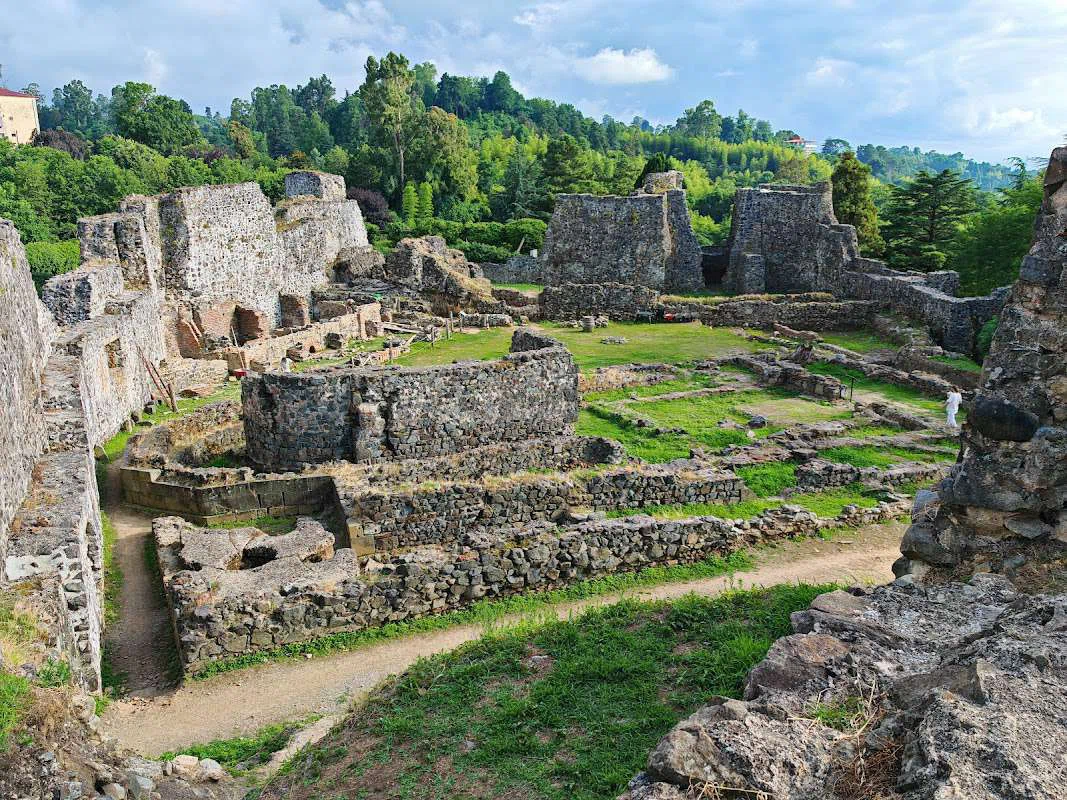
Petra Fortress in Tsikhisdziri - Museum-Reserve of Early Medieval Georgia
The Archaeological and Architectural Museum-Reserve of the Petra Fortress in Tsikhisdziri is an ancient Byzantine outpost built in the 6th century by Emperor Justinian. Fortress walls, ruins of the ancient city and unique archaeological finds have been preserved here. Learn the history of the fortress, what exhibits can be seen in the museum and how to visit it!
The Petra Fortress in Tsikhisdziri is a unique archaeological site on the eastern coast of the Black Sea.
This is the place where East and West met, where the Byzantine Empire confronted Sassanid Persia, and where Georgian statehood was later formed.
Today, the Petra Fortress is a museum-reserve where you can see the ruins of an ancient city, fortress walls, archaeological finds dating back to different eras, and enjoy a stunning view of the Black Sea.
What secrets does this place hide? Why is it so important for the history of Georgia? Let's find out!
The founding of the fortress: why did Byzantium need Petra?
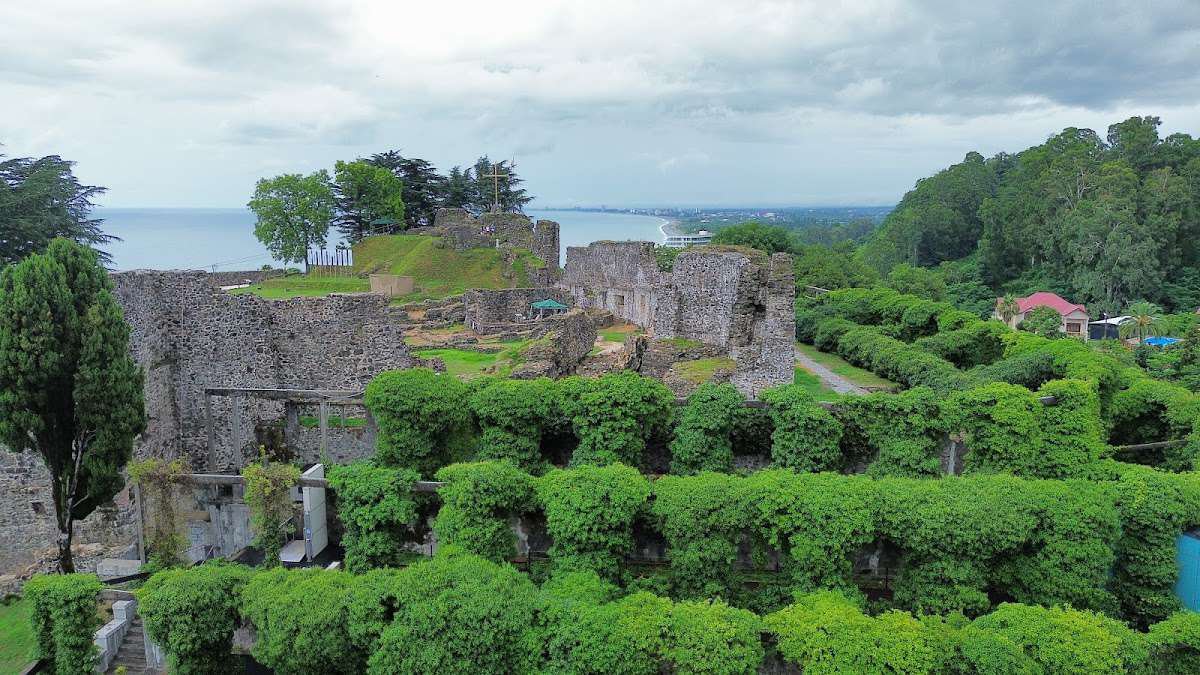
Military and trading outpost
The Petra Fortress was founded in the 6th century by order of the Byzantine Emperor Justinian I.
Why did Byzantium need to build a fortress here?
🔹 Strategic location - the fortress controlled an important trade route connecting Byzantium and Persia.
🔹 Border protection - Tsikhisdziri was a natural barrier against invasions from the east.
🔹 Control over coastal trade - caravans with silk, spices and gold passed through Petra.
The Petra Fortress became a key link in the confrontation between Byzantium and Persia.

The Rise and Fall of an Ancient City
Period of prosperity
In the 6th century, Petra became a developed city, surrounded by powerful walls and populated by merchants, artisans and warriors.
The following were built here:
🏛 Palaces and administrative buildings
⛪ Christian churches
🏰 Military fortifications
Thanks to its favorable location, the city became rich and attracted merchants from different countries.
Destruction of the fortress
However, the peace did not last long. In 541, the Persian Shah Khosrow I Anushirvan besieged Petra and after fierce battles destroyed the fortress.
After these events, the city never regained its former power, although it continued to exist for several more centuries.

What remains of the fortress to this day?
Today, the Petra Fortress Museum-Reserve is an archaeological site where you can see the remains of one of the most significant Byzantine fortifications in the region. Despite wars and destruction, part of the fortress has survived to this day, allowing you to imagine what the city looked like during its heyday.
The main attractions of the fortress
🏰 Fragments of fortress walls — massive stone blocks that have survived centuries. The thickness of the walls reached several meters, and their design was thought out in such a way as to withstand long sieges. The stonework, made in the Byzantine style, still amazes with its strength.
🛡 Ruins of defensive towers — they once served as strategic points for protecting the city. The towers had a view of the sea, which made it possible to notice enemy ships in a timely manner. Today, their ruins rise above the excavations, recalling the former power of the fortress.
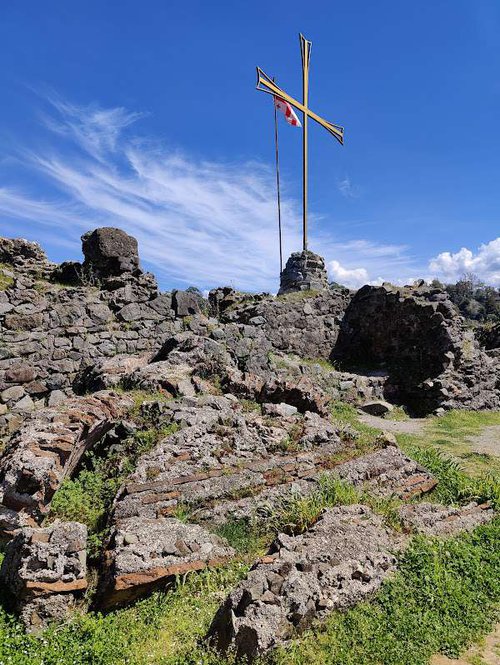
⛪ Remains of early Christian churches — several churches were built in Petra, one of which has preserved unique mosaic masonry. You can see fragments of the altar part, columns, and even ancient stone sarcophagi used in religious ceremonies.
📜 The ancient streets of the city are narrow cobbled paths where merchants, warriors and ordinary citizens walked. Here you can see the remains of shops, workshops and residential buildings that formed the urban landscape in the 6th century.
🌊 Picturesque location - the fortress is built on a high cliff, from where a breathtaking view of the Black Sea opens up. This place was considered one of the most strategically important in the region.
Archaeological finds and museum collections
Numerous archaeological excavations have been carried out on the museum's territory, which have helped to reconstruct scenes from life in ancient Petra.
What can you see in the museum?
🔹 Ceramics and Glass Vessels — The collection includes exquisite Byzantine amphorae, glass jugs, and ceramic dishes found in the ruins of the fortress. Many of them were used in the daily life of the inhabitants of Petra, and some items served as ritual vessels in religious ceremonies.
🔹 Ancient Coins — The museum presents a collection of coins from different eras, including Byzantine, Persian, and Georgian. These coins confirm the economic importance of the city, which was located at the crossroads of trade routes between Byzantium, Persia, and the Caucasus.
🔹 Weapons and Armor — Remains of swords, arrowheads, bronze helmets, and shields belonging to the soldiers of the Petra garrison were found in the fortress. These finds confirm that the fortress played an important military role, protecting the borders of the Byzantine Empire.
🔹 Stone inscriptions - ancient Georgian, Greek and Latin texts engraved on stones tell about the life of Petra. Among them are imperial decrees, trade agreements and epitaphs that have helped historians to better understand the structure of the city.
📜 The museum's archaeological finds help to recreate the lifestyle of ancient Petra, its role in the Byzantine world and its significance for Georgian history. This is a place where the past comes to life in artifacts found among the ruins.
New exhibition hall
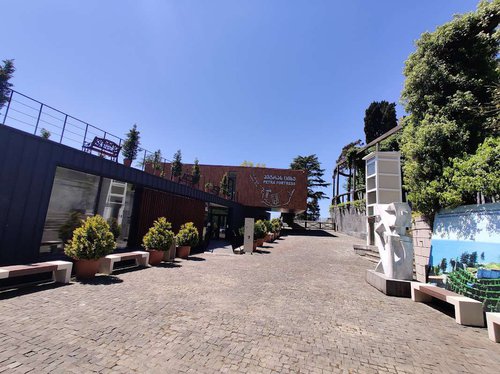
A restoration and museum hall has recently opened on the territory of the fortress. It exhibits a restored antique mosaic from a 6th-century basilica, which was discovered during excavations. The restoration was carried out by specialists from the Agency for the Protection of Cultural Heritage in cooperation with a Polish expert.
In addition, from July 17, tickets and an audio guide can be purchased online at tkt.ge:
entrance for children - 2 GEL,
for adults - from 8 to 10 GEL.
Useful information for tourists
📍 Address: Tsikhisdziri village, Kobuleti municipality, Adjara, Georgia
📞 Contact numbers: +995 590 880 121
📧 Email: petratsikhe@heritagesites.ge
🕒 Working hours: daily from 10:00 to 18:00
💰 Ticket prices:
- 1 GEL for schoolchildren and students
- 3 GEL for adults
🌍 How to get there:
- By car from Batumi (about 30 minutes)
- By bus or minibus (to the stop "Tsikhisdziri")
🎟 Free admission is provided to:
- Children under 6
- People with disabilities
- ICOM members
- Museum staff
Petra Fortress is one of the most impressive archaeological sites in Georgia.
It preserves memories of Byzantium, Persia and ancient Georgia, and its walls offer a stunning view of the Black Sea.
If you want to feel the spirit of history and see Georgian archeology live, be sure to visit this museum-reserve!
 Frequently asked questions from visitors
- Can I take photos in the museum?
📸 Yes, but the use of flash and professional equipment must be agreed upon.
2. Are there tours?
🎤 Yes, the museum offers tours in several languages. It is better to check the schedule in advance.
3. What is the best time to visit?
🌅 It is better to come in the morning or late afternoon to avoid the heat.
4. Is there a cafe near the fortress?
☕ There are several cafes in the area where you can have a coffee with a view of the sea.
5. How long does the tour take?
⏳ On average, from 1 to 2 hours if you go through the entire route.
6. Is it possible to climb the walls of the fortress?
🏰 Some sections of the walls are accessible to tourists, but entering the destroyed areas is prohibited.


22 comments
Log in to leave a comment