




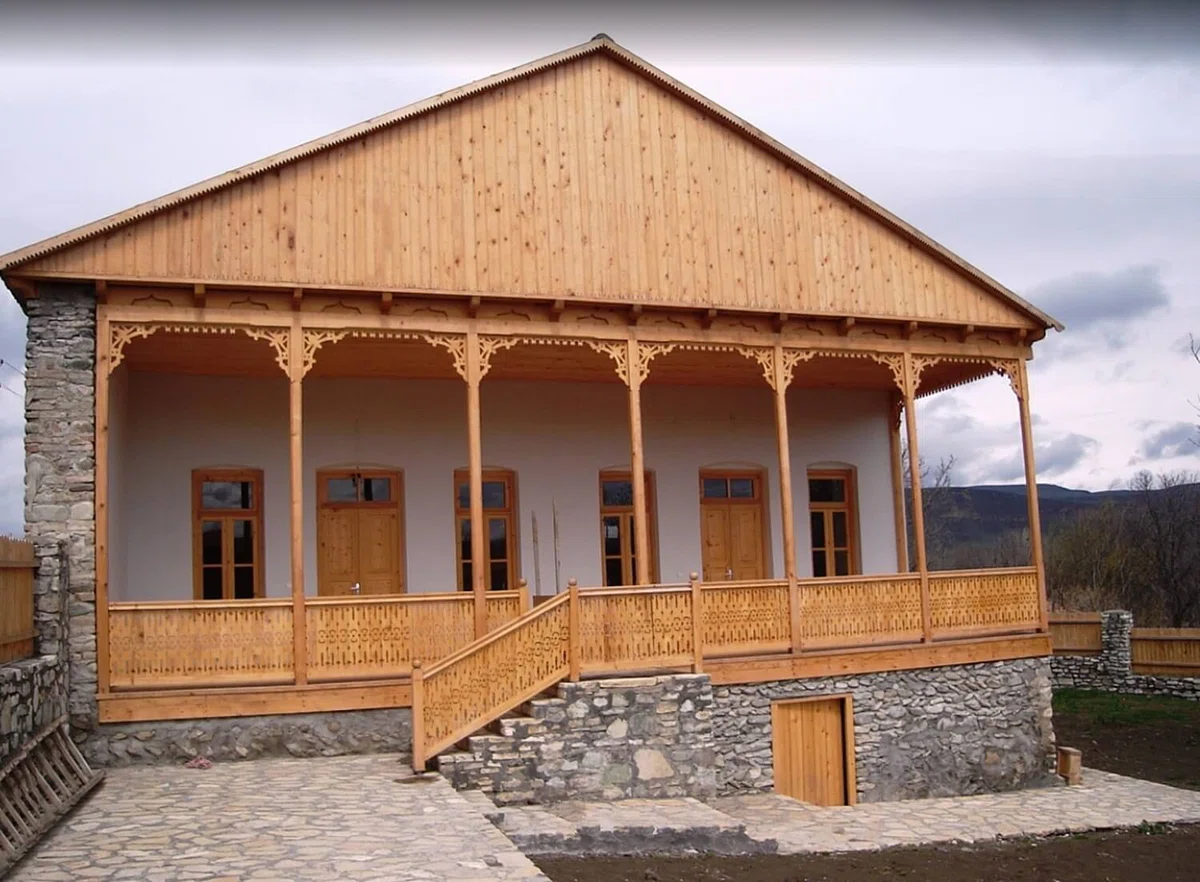
Small museums of Georgia. Georgy Mazniashvili Museum.
If you want to pay tribute to the memory of Georgian General Giorgi Mazniashvili, then visit the museum named after him. Not many of his personal belongings are stored here, but this place is worth your attention. In this small house you will be able to see photos, documents, furniture. We definitely recommend visiting.
Address: Kaspi district, Sasireti village
The exhibition presents photographic and documentary material reflecting the activities of General Georgiy Mazniashvili. Although among them, for obvious reasons, there are very few personal belongings of Mazniashvili and memorial material. During the mass terror of 1937, Mazniashvili was arrested and shot without trial. The place of his burial is unknown.
The museum was founded in 1990. The exhibition is mainly based on archival documents and materials collected during the period of Georgia's independence. The heroic and at the same time tragic biography of Mazniashvili is described.
Mazniashvili received a military education in Russia and rose to the rank of general in the army. He distinguished himself during the Russo-Japanese War of 1904-1905, in which he was wounded. In the military hospital of St. Petersburg, the emperor's daughters themselves looked after him. In December 1917, he returned to his homeland. In 1918, the Caucasian Commissariat entrusted him with the defense Tbilisi from the demoralized and chaotically retreating units of the Russian army from the Turkish front.
According to the terms of the peace treaty in Brest-Litovsk in 1918, Adjara was transferred to Turkey. However, this was not enough for her, and she invaded Guria, Turkish troops approached Ozurgeti. Having mobilized the people's militia and army units, Mazniashvili not only tore Guria from the hands of the Turks, but also liberated Batumi.
Later, during the conflict in Sochi, he liberated the cities of Gagra, Adler, Sochi and Tuapse one after another, respectively, on June 22, July 2, 6 and 26. In December 1918, during the Armenian-Georgian War, he successfully defended the southern border. In February 1921, he fought with units of the 11th Russian Bolshevik Army. In March of the same year, Türkiye again occupied Batumi. As paradoxical as it may sound, the Georgian Bolsheviks asked him for help. He announced the mobilization of the remnants of the Georgian army and expelled the Turks from the territory of Adjara.

In 1923, ignoring his merits, he was arrested during the "red terror". After two years, the general was taken out of the death cell and sent to Iran, from where he went to France. He did not live abroad for long. He requested permission to return to his homeland and returned. However, many problems awaited General Mazniashvili in his homeland: he was not given a job, he was not assigned a pension. He settled in his native village and withdrew from political life, taking up farming. However, he still could not avoid the mass terror of 1937.

If you want to honor the memory of Georgian General Georgiy Mazniashvili, then it is worth visiting the museum named after him in the village of Sasireti, Kaspiysky District. In the museum you can see photographs, documents and objects related to the life and work of Mazniashvili, although the general's personal belongings are presented in small quantities. The museum was created in 1990 and is based on archival materials collected during the period of Georgia's independence. The museum exposition describes the heroic, but at the same time tragic biography of Mazniashvili.
Georgiy Mazniashvili was an outstanding military leader who received a military education in Russia and rose to the rank of general. He distinguished himself during the Russo-Japanese War of 1904-1905, where he was wounded and then looked after by the emperor's daughters in a military hospital in St. Petersburg. In 1918, after returning to his homeland, Mazniashvili was tasked with defending Tbilisi from the demoralized and chaotically retreating units of the Russian army. However, his real glory came during the Georgian Civil War in 1918-1921, when he commanded the Georgian army. During this period, Georgia was subjected to aggression from Turkey and Armenia. As a result of the mobilization of the people's militia and army units, Mazniashvili not only wrested Georgian territory from the hands of the Turks, but also liberated Batumi, and later successfully defended the southern border during the Armenian-Georgian War in 1920-1921.
In 1923, he was assassinated in one of the Moscow houses on Pyatnitskaya Street. His death was a mystery, and it is still unknown who and why killed Vladimir Lenin. However, there were suggestions that it was the work of a certain group within the party.
After Lenin's death, a power struggle began in the Soviet Union. Ultimately, power was seized by Joseph Stalin, who became the new leader of the country. Under his leadership, the Soviet Union went through many turning points, including World War II and the Cold War.
Today, Lenin remains one of the most influential figures in Russian history and world politics. His ideas, as a socialist and communist leader, had a huge impact on many countries, and continue to cause debate and controversy. His philosophy and worldview remain a source of inspiration and refutation for many people around the world.
His philosophy and worldview remain relevant today, having become the object of study and discussion in various spheres of public life. Gandhi's philosophy, known as Gandhism, is based on the ideas of non-violence, justice and universal love. He believed in the power of spirituality and the unity of all living beings.
Gandhi made a huge contribution to the struggle for Indian independence and became one of the key leaders of the human rights movement in the world. He actively protested against violence, including against the colonial policy of Great Britain in India, racism and nationalism. Even though Gandhi died more than 70 years ago, his ideas continue to inspire people all over the world. Many political and social leaders refer to his teachings in their work and take them into account when developing strategies and programs. His example became a symbol of non-violent struggle for justice and equality, and his ideals still live in the hearts of millions of people around the world.
Indeed, Gandhi's example remains an inspiration for many people around the world. His teachings on non-violent struggle for human rights, freedom and justice led to the emergence of many other movements for rights and freedoms. Some of these movements used the techniques of non-violent protest and civil disobedience that were developed by Gandhi.
In addition, Gandhi was also a pioneer of the idea of freedom from colonial oppression. His example and teachings on non-violent struggle for the independence of India inspired other nations who also fought for their independence. For example, Martin Luther King Jr., who led the fight for civil rights in the United States, was a proponent of non-violent protest and civil disobedience, and often cited Gandhi as his main inspiration.
Thus, we can see that Gandhi's ideas of non-violent struggle and freedom continue to live on and inspire millions of people around the world. His life and legacy have become a symbol of peace, unity, and enlightenment, and continue to inspire us to continually improve our lives and the world as a whole.
--------------------------
We invite you to leave comments and ask questions below the article. Your opinion is important to us, and we would love to hear your thoughts on this topic.


29 comments
Log in to leave a comment
Персонал музея очень вежливый и внимательный, всегда готов помочь и ответить на вопросы. Сам музей расположен в красивом здании, где царит уютная атмосфера.