




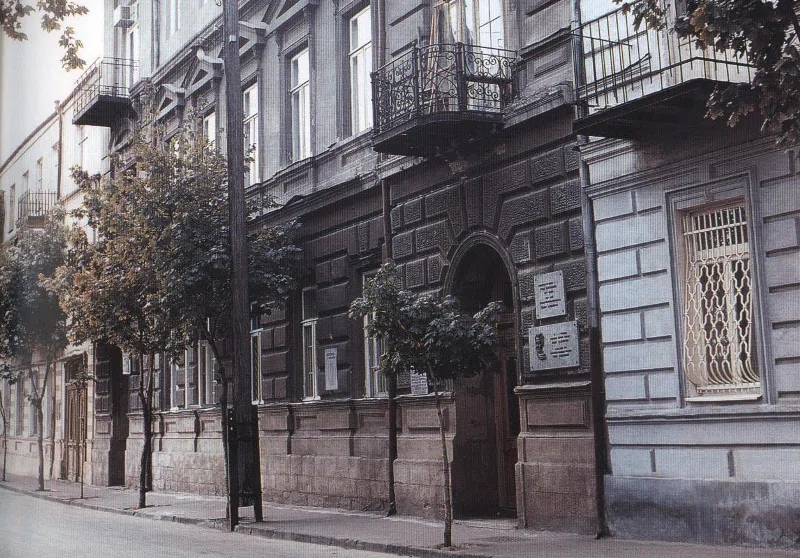
Interesting house-museums of famous figures of Georgia. House-Museum of Elena Akhvlediani.
The house-museum of Elena Akhvlediani preserves the richest memory of the famous artist. Her paintings, graphics, illustrations for various books, various sketches and other things related to the artist's life are presented here. This house is the former apartment-workshop of Elena Akhvlediani.
House-Museum of Elena Akhvlediani was created in 1976 on the basis of the apartment-studio of the People's Artist of Georgia, laureate of the Rustaveli Prize Elena Akhvlediani (1898-1975). The museum contains paintings by the artist, graphic and scenographic works, illustrations of various books, caricatures, humorous sketches, as well as ethnographic and archaeological collections collected by her in various parts of Georgia: curtains, carpets, ceramics, copper utensils; a unique personal archive, documentary and photographic material, a library. A total of 3,406 exhibits.
Elena Akhvlediani is one of the founders of Georgian easel painting. She received her education at the Tbilisi Art Studio, Academy of Arts, then in Italy and France (in Paris at the Free Academy of Colorossi). The Paris period in the work of Elena Akhvlediani is considered her "golden age".
Together with Kote Marjanishvili, Elena Akhvlediani is considered one of the reformers of the Georgian theater of the 20th century. Even during the artist's lifetime, her home-studio became one of the main places of concentration of cultural life in Tbilisi. Evenings of poetry, music and art were held here. S. Richter, G. Neuhaus, M. Grinberg, M. Rostropovich, E. Virsaladze and others performed here many times with concerts. To this day, the museum has preserved the unique atmosphere that prevailed here during the artist's life.
The Khariton Akhvlediani State Museum of Adjara is one of the most significant cultural treasures of the region. It was founded in 1908 and since then has become an integral part of the cultural life of Adjara and all of Georgia. The museum is located in a building that is an architectural monument of the 19th century. The museum exposition presents many unique exhibits. One of the most interesting areas is the collection of natural finds, among which is a tree that was petrified 25 million years ago. This tree is a rare specimen that survived due to the special conditions in which it was found. The museum also presents samples of ancient flora and fauna, mineralogical finds, as well as a collection of ethnographic materials of the 19th-20th centuries, folk, applied and fine art, manuscripts, photographs and other documents. In the museum you can see rare exhibits of artistic wood carving, archaeological materials: imported painted crater, bronze, silver and gold items, examples of small sculpture, military weapons and household tools, covering the period from the 12th century BC to the 4th century AD.
Also in the Adjara Museum there is a department dedicated to the history of culture and art of the region, which is of interest not only to art historians, but also to a wide range of history and culture lovers. Here you can get acquainted with the work of local artists and craftsmen, as well as see the works of famous Georgian artists. In the department of the history of culture and art of the region, visitors can get acquainted with the culture and customs of the Adjarian people. Various ethnographic materials are exhibited here, which reflect the cultural and historical identity of the Adjarians. The museum also presents exhibits dedicated to the art and crafts of Adjara, such as pottery, carpet weaving, jewelry and much more. One of the most unique exhibits of the museum is a petrified tree, which was discovered in Adjara and dates back to the Miocene period, about 25 million years ago. This tree is about 13 meters high and has a trunk diameter of about 1.5 meters. It is highly preserved and gives scientists a unique opportunity to study ancient flora and fauna.
The museum also features a collection of mineral stones, which include samples from different regions of Georgia and other countries of the world. Many of these stones have unique colors and textures, which makes them incredibly beautiful.
In addition, the archeology department of the museum presents artifacts related to the ancient history of Adjara. Among them are household items, jewelry, ceramics, coins, weapons and other artifacts that date back to the period from the 12th century BC to the 4th century AD.
The museum also introduces the history of Georgian painting and sculpture, as well as the work of outstanding Adjarian artists. A special place is occupied by a collection of retro cars that were used in Georgia at different periods of time. This collection is not only of cultural value, but also of historical value, as it reflects the various stages of development of the automobile industry in Georgia.
The Khariton Akhvlediani State Museum of Adjara is not only a unique opportunity to learn about the region and its history, but also a place where you can learn a lot about the geological and natural history of Adjara. The museum presents an extensive collection of fossils, among which are rare examples of flora and fauna that have been in the region for millions of years.
One of the most famous exhibits of the museum is a tree that was petrified more than 25 million years ago. This tree sample, which was discovered in the village of Chardakhli, remains one of the oldest petrified trees on Earth. The museum also features an exposition dedicated to the local flora and fauna, which includes samples of stones, minerals and other materials that can be found in Adjara.
In addition, the museum contains expositions dedicated to the history of culture and art of the region, reflecting the traditions and customs of the people of Adjara. The museum presents collections of ethnographic materials, folk, applied and fine art, as well as manuscripts, photographs and other documents that tell about the life and culture of the region's inhabitants over many centuries.
The museum also has a significant collection of archaeological materials that cover the period from the 12th century BC to the 4th century AD. These materials include an imported painted krater, bronze, silver and gold items, examples of small sculpture, military weapons and household tools. The exhibits that are presented in the museum demonstrate how cultural and social changes took place in the territory of Adjara over the centuries.
The Khariton Akhvledi Ani State Museum of Adjara is not only a fascinating place for nature and history lovers, but also an important center of the cultural heritage of the region. Each exhibit of the museum is a unique story telling about the life and work of the ancestors of the Georgian people. The museum is dedicated to the study and preservation of cultural, historical and natural monuments of the Adjara region. It was founded in 1908 and since then has not ceased to attract the attention of tourists and researchers from all over the world.
One of the most famous exhibits of the museum is a petrified tree, which is more than 25 million years old. This tree was discovered in 1887 by the Georgian geologist Andrey Kopper, who noted its exceptional significance for the study of the geological history of the region. Since then, the fossils of this tree have been studied by many scientists from all over the world, and today it is one of the main attractions of the museum.
But in addition to fossils, the museum has many other interesting exhibits. For example, the ethnography department displays household items, costumes and jewelry that were used by the inhabitants of Adjara in different historical periods. In addition, the museum has a collection of art products created by the masters of the region. Here are the works of artists, engravers, carvers, embroiderers and other craftsmen who created their works in different periods of the history of Adjara.
It is also worth paying attention to the archeology department, which displays exhibits reflecting the ancient history of the region. Here you can see various artifacts, from bronze items to gold and silver jewelry. These artifacts indicate that the territory of Adjara was inhabited already in ancient times and was an important cultural center of the region. The museum's collection of archaeological materials includes examples of small sculpture, tools and weapons, bronze, silver and gold items, as well as an imported painted crater, covering the period from the 12th century BC to the 4th century AD. They help to imagine the life and culture of the ancient inhabitants of the region.
In addition, the museum presents the history of the creation of the Autonomous Republic of Adjara, its development and achievements. Visitors can learn about how Adjara became part of Georgia and then gained autonomy within the country. The museum presents an interesting collection of documents, photographs and artifacts related to this topic.
In addition, the Khariton Akhvlediani Museum collaborates with other museums in Georgia and around the world to attract new exhibits and diversify its collection. In particular, the museum holds exhibitions dedicated to the art and culture of other regions and countries. Visiting the Khariton Akhvlediani State Museum of Adjara is an opportunity not only to see rare artifacts and learn the history of the region, but also to enjoy the beauty of Adjara's nature. The museum is located in the resort town of Batumi, which is located on the Black Sea coast.
--------------------------
We hope that our article about the Khariton Akhvlediani State Museum of Adjara was interesting and informative for you. If you have any questions or comments, please do not hesitate to leave them below. We will be glad to hear your opinion and answer all your questions.


35 comments
Log in to leave a comment