




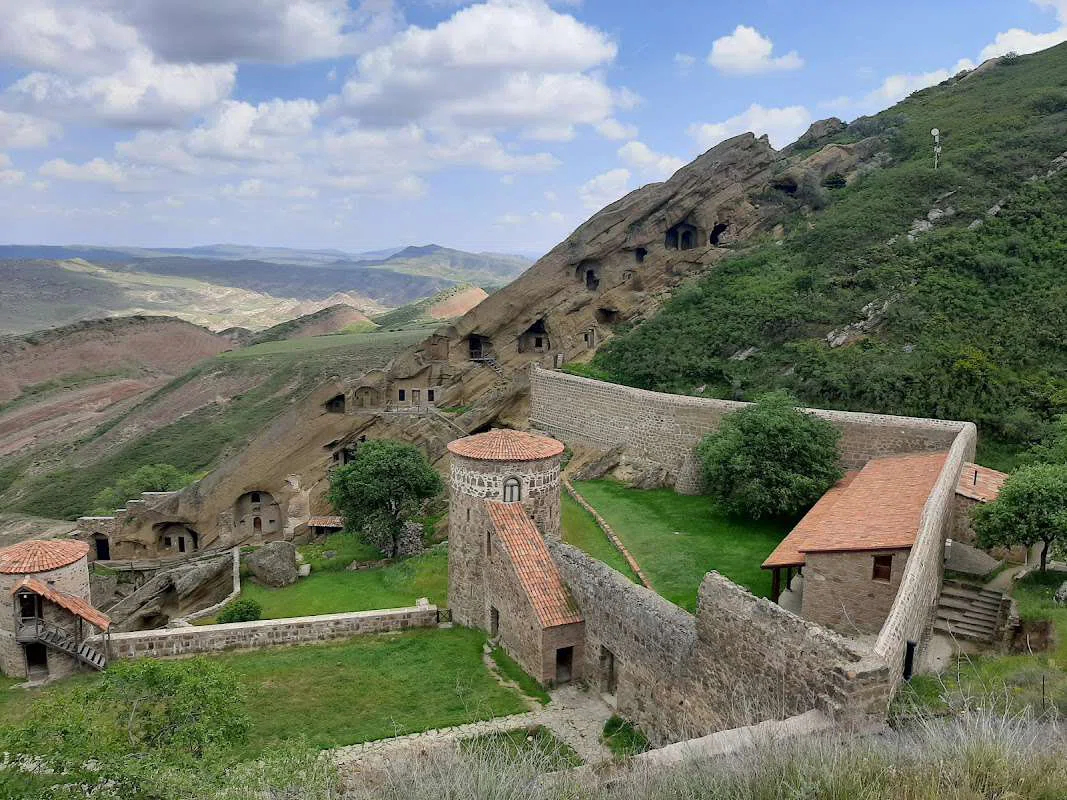
🌟 A must-see! David Gareji in the village of Udabno - historical mysteries and incredible routes await you!
⚠️ Don't miss the shocking legends and breathtaking landscapes of David Gareja in Udabno! 📅 Plan your trip now, find out how to get there and what to see. 🗺️ Travel tips, excursions and lots of life hacks - read and get inspired!
📖 What will you learn from this article?
- 🕰️ The history and significance of the David Gareji monastery complex and its founder, Saint David Gareji
- 🏛️ The variety of names and the cultural significance of the complex in the history of Georgia
- 🚗 How to get to the monastery, where to stay and eat nearby
- 📅 Up-to-date schedule and useful tips for a comfortable visit
- 📸 The best places for photos and what is definitely worth seeing
- 🧳 Useful recommendations for preparing for a trip to this unique corner of Georgia
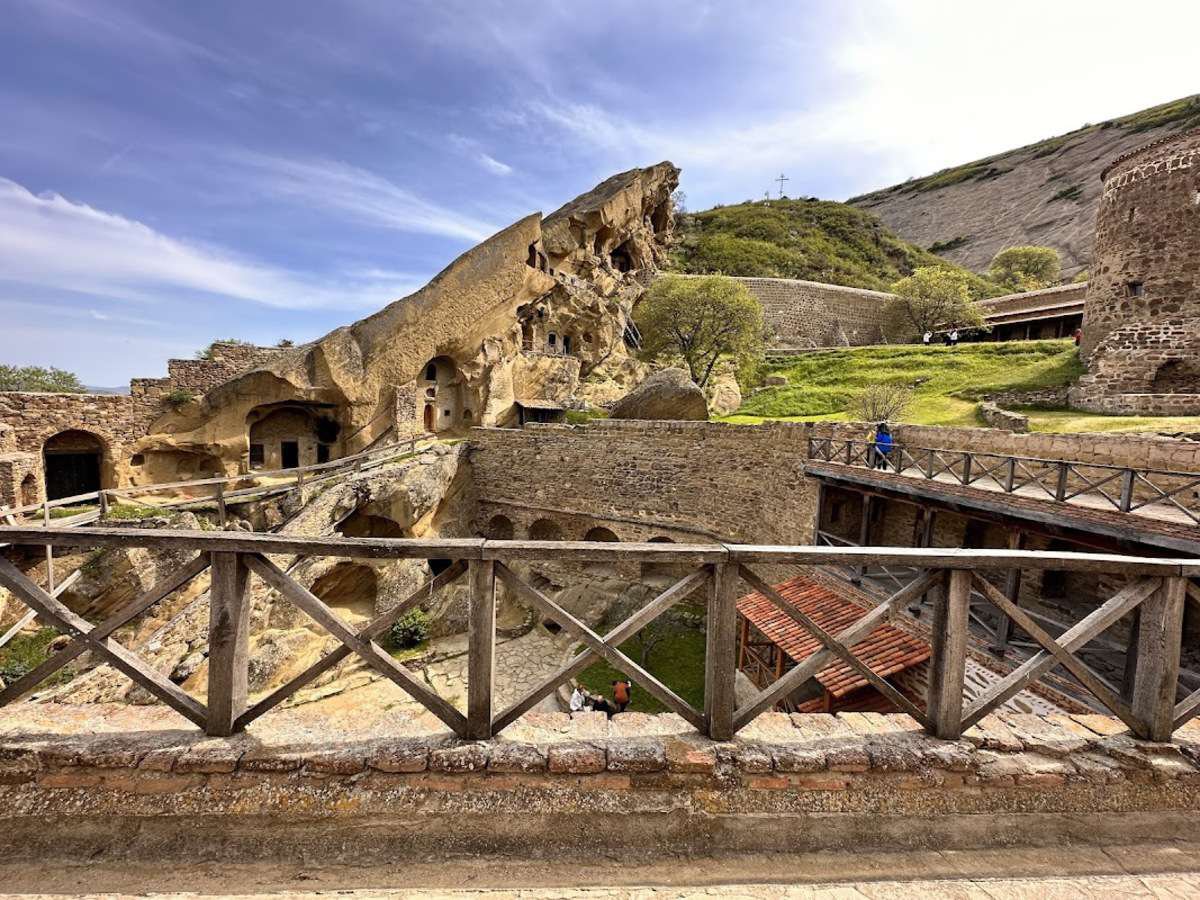
📚 Brief information for tourists - David Gareji Monastery
🏛️The David Gareji Museum-Reserve is a grand ensemble of cave and rock monasteries scattered over tens of kilometers along Georgia's eastern border. Founded by Saint David Gareji in the 6th century, the complex served as a refuge for ascetics, a center of spirituality and asceticism. Today, it is considered one of the most revered and mysterious places in Georgia, along with Uplistsikhe and Vardzia.
🏷️ Variety of names
- ⛪ David Gareji Monastery
- 🏞️ Gareji Monastery Complex
- 🌄 David Gareji Rock Monastery
- ✨ Georgian Jerusalem
- 📿 David Gareji Lavra
- 🏛️ David Gareji Historical and Architectural Museum-Reserve
- 📍 David Gareji Monastery Reserve
- 🏡 Udabno Monastery (named after the nearest village)
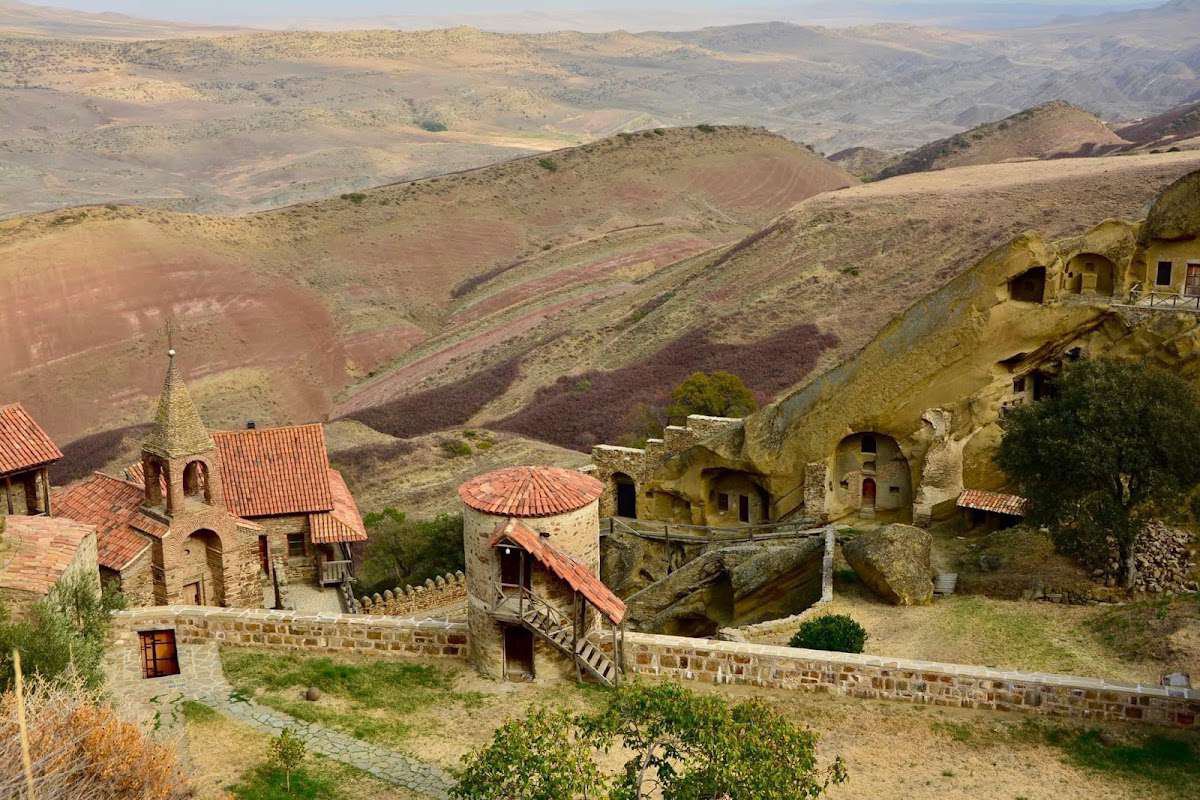
📜 History and Legends of the Gareji Desert
Secrets, myths, victims and politics - all intertwined here, in one of the most mysterious places in Georgia.
The complex was founded in the 6th century by Saint David of Gareji, one of the 13 Syrian fathers who came to Georgia to spread the word of God. David sought solitude and settled in these deserted rocky wastelands, where, according to legend, he ate roots and the milk of wild deer 🦌 and lived in a cave carved out of the rock.
🐉 Battle with Evil
Saint David drove out the mythical dragon that sowed fear among the inhabitants. The place became a symbol of the victory of good over evil and the power of faith.
⛪ Rock Monasteries
For thousands of years, monks carved temples, cells, and refectories right into the rock. Some frescoes have survived since the 9th century and are striking in their brightness.
🩸 Martyrs of Gareji
In the 17th century, the army of Shah Abbas carried out a massacre in the monastery. The monks refused to renounce their faith and were killed. Today they are canonized.
⚠️ Disputed territory
Part of the complex is in Azerbaijan. Tourists often cross the border without knowing it. The political dispute is still unresolved.
🌿 Archaeology and secrets
Here, sites of primitive people, tools, settlements of the Bronze and Iron Ages have been found. This makes Gareji an archaeological wonder.


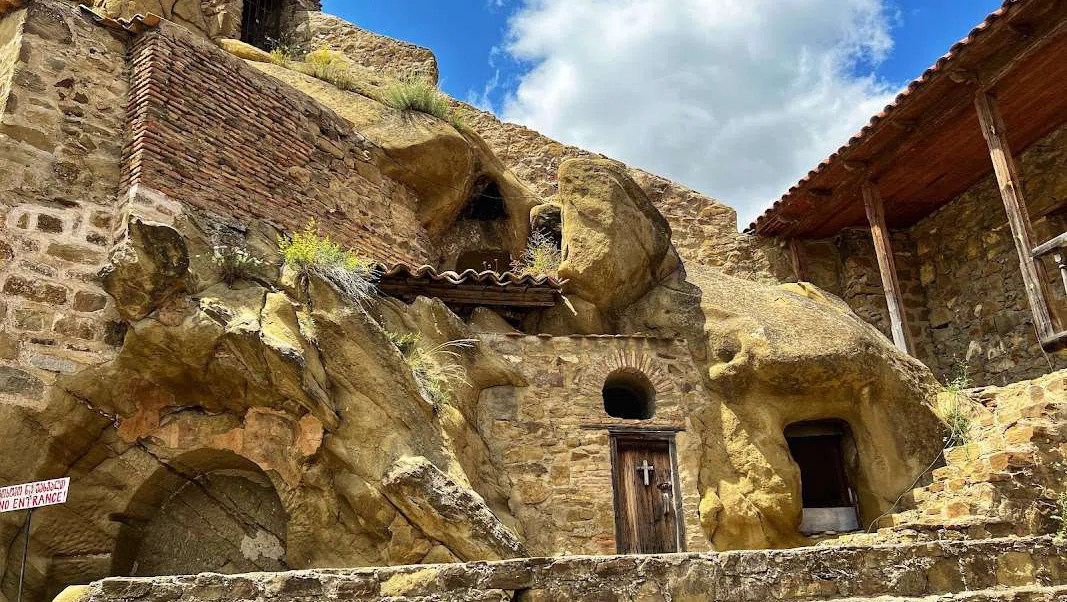


🗺️ Geography and location of the David Gareja Monastery complex
The David Gareji monastery complex stretches for about 30 kilometers along the harsh but fascinating mountain ranges of Kakheti. 🌄 This region is a real natural oasis among the desert steppes and picturesque rocky massifs. The place impresses with its wild beauty and unique landscape, opening up fascinating panoramas of the neighboring countries - Azerbaijan and Armenia. 🌍
🚶♂️ Several hiking trails of varying difficulty are available for researchers and tourists. They lead through narrow paths, stone gorges and to the foot of monasteries, allowing you to feel one with nature and history. Plan your visit taking into account weather conditions and physical fitness - walks can take from 2 to 3 hours to the main sites, but it will take more than one day to fully explore the complex. ⛺🥾
⚠️ Attention! The territory partially overlaps with the state border - be careful and follow the recommendations of local guides.

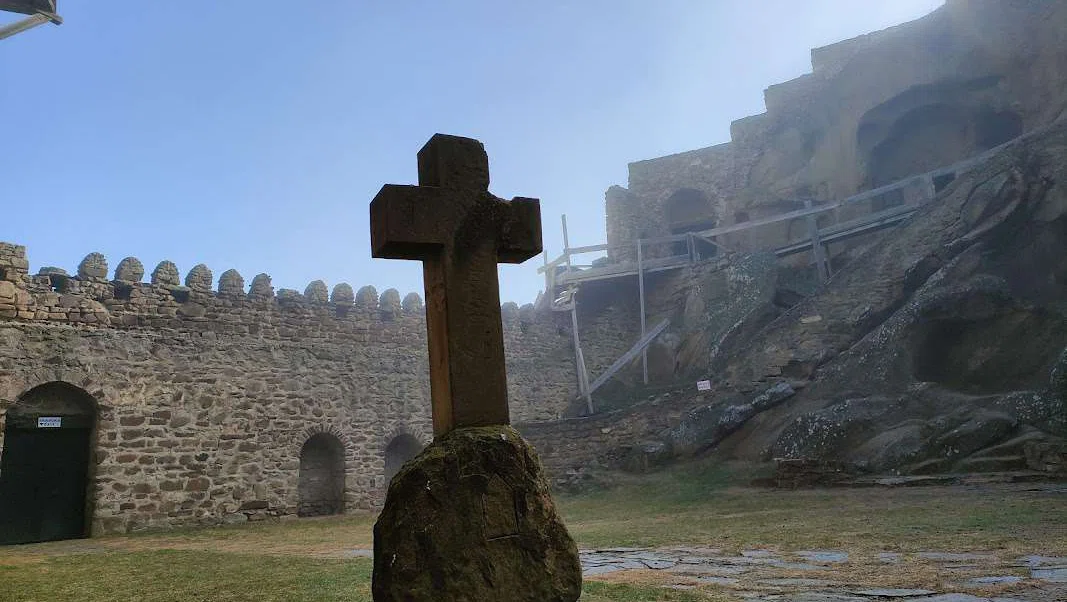

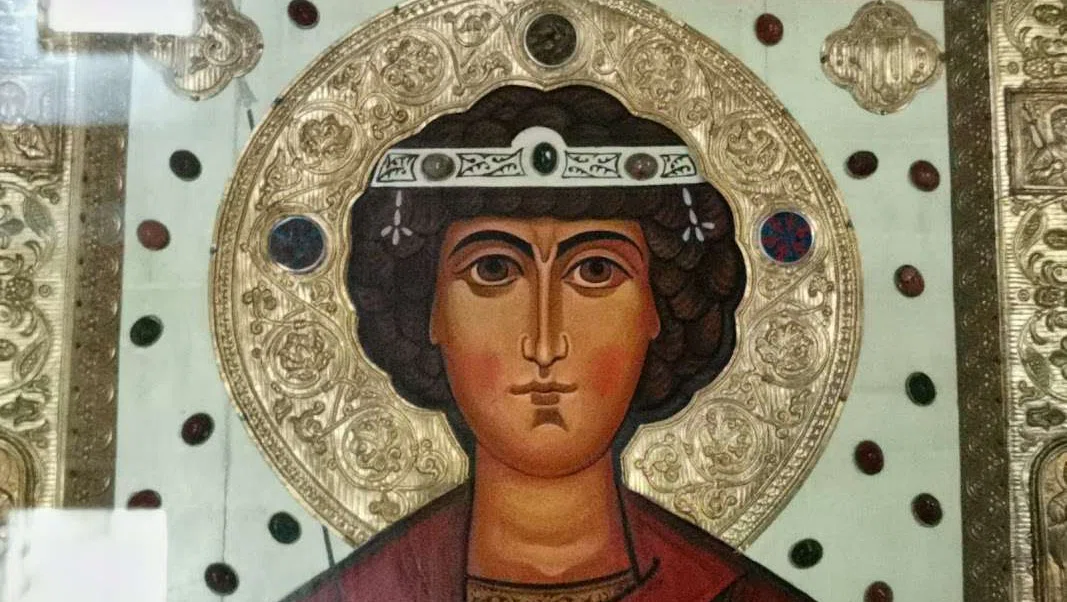
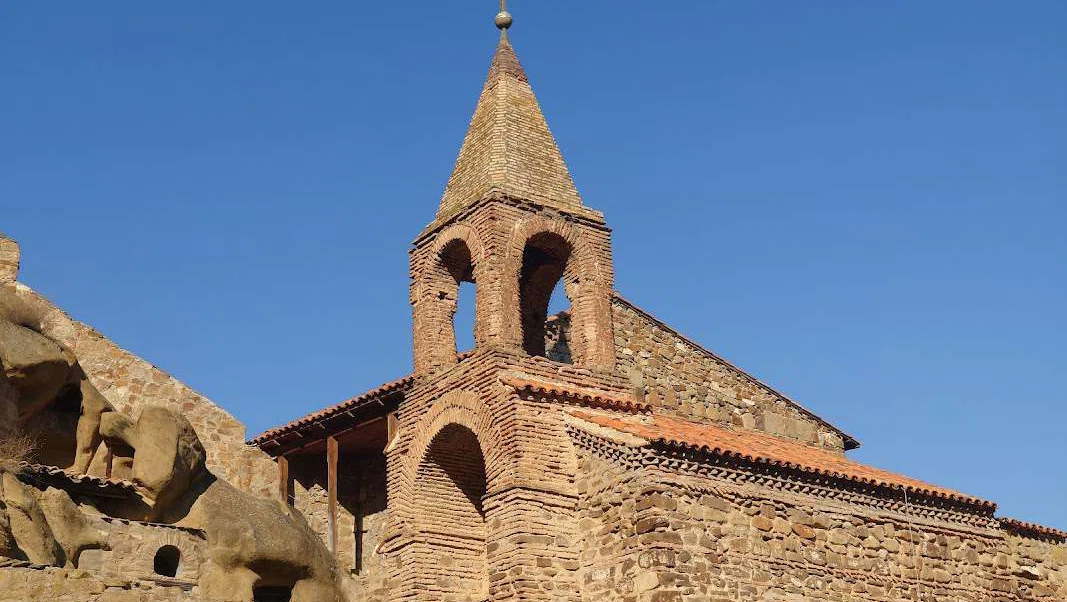

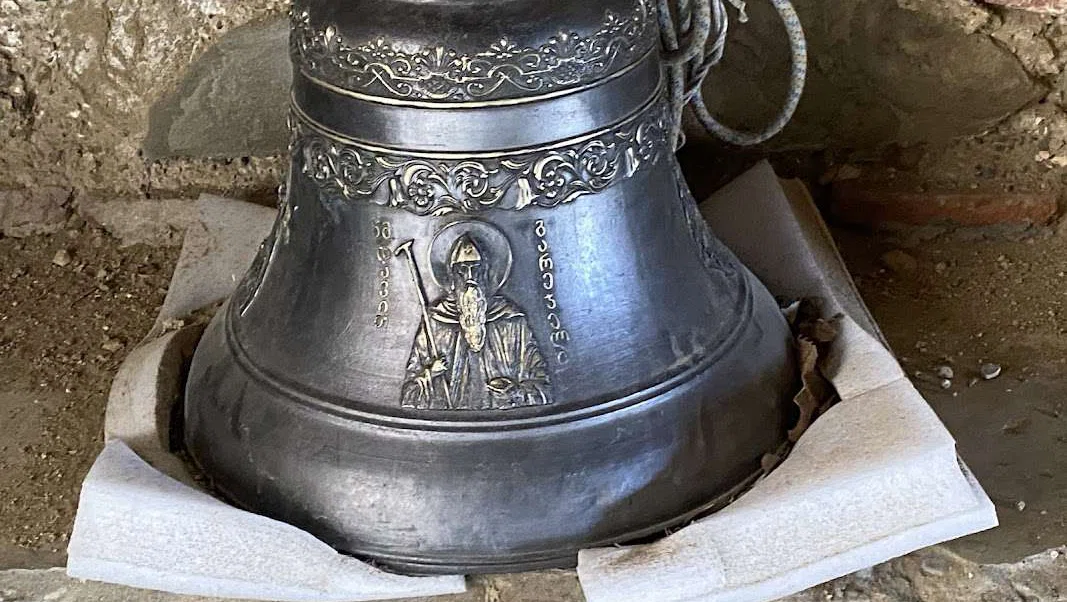
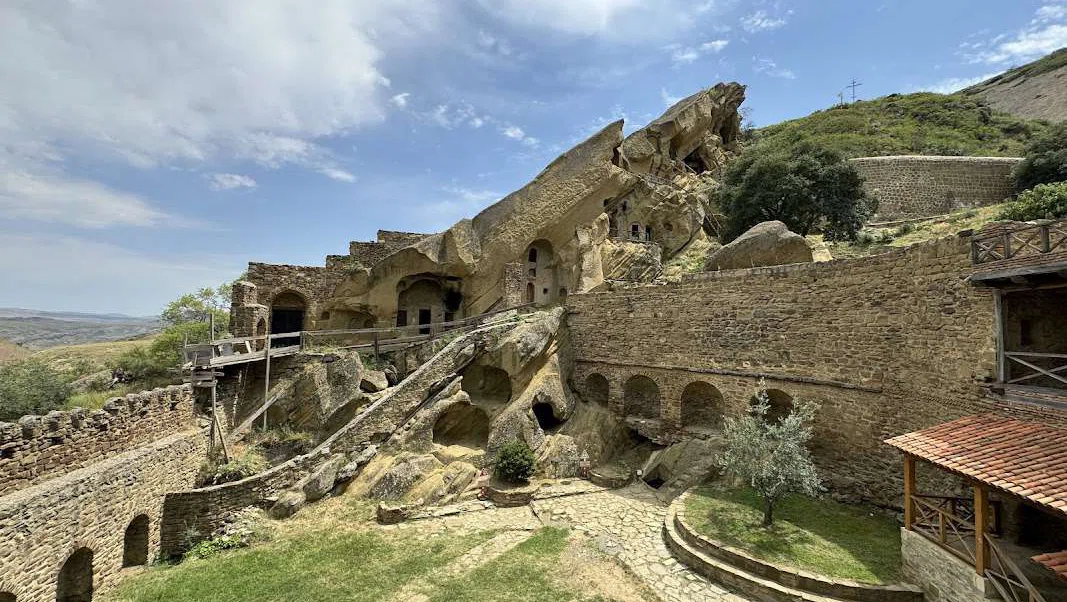

🏞️ What to see in David Gareji?
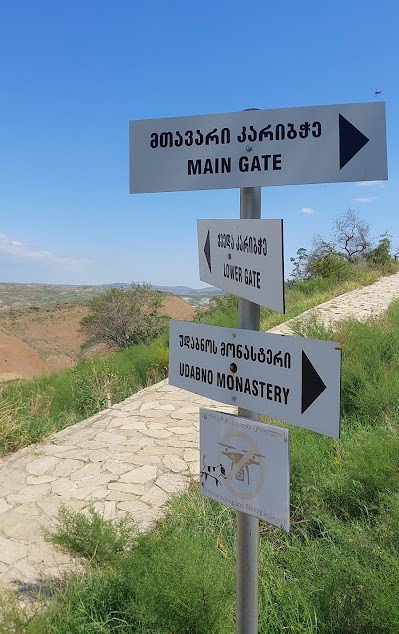
Unique architectural and spiritual gems are concentrated here, including:
⛪ Lavra of David is the heart of the complex
The main and largest monastery, founded by Saint David Gareji himself. 🌟 Among its ancient stone buildings are the holy cave where the saint lived, the monks' living cells, refectories and churches with preserved frescoes from the 9th century. Saint David rests in the Lavra, and in the church you can see a stone from the Holy Land, brought by the ascetic himself. 🪨
The beginning of all routes, offering picturesque views.
🏛️ Tetri-Udabno Monastery - a temple on the top
This cave temple is famous for its unique white stone architecture (the name “Tetri-Udabno” means “White Cave”). Rare frescoes have been preserved here, which, despite time, still amaze with their skill and beauty. 🎨
Tetri-Udabno is located a few kilometers from the Lavra, tourists often include it in the "small circle" of inspection.
🕍 Natlismtsemeli - the lost monastery
An active monastery located in a remote and hard-to-reach area. 🧭 The road to it is accessible only by SUVs, and the last kilometers must be walked along mountain paths.
Includes cave shrines, a tower, and the Church of St. John the Baptist - important places for pilgrims.
🌿 Sabereebi - A Paradise for Trekkers and Nature Lovers
The cave complex, located about 15 km from the Lavra, in the middle of pristine nature, is accessible on foot or by car along a dirt road.
🚶♀️ Hiking, silence, harmony and a sense of connection with eternity are the perfect place for those seeking solitude and inspiration. A great option for lovers of trekking and quiet contemplation of nature. Here you can relax in the fresh air, admiring the unique views and exploring ancient buildings.
🗣️ What tourists say
"A majestic place with a special atmosphere. The hiking trails are breathtaking, and the views of Kakheti are unforgettable!" — Marina, Russia 🇷🇺
"The energy of this complex is incredible! We learned a lot about the spiritual history of Georgia and felt the connection of times." — Alexey, Ukraine 🇺🇦
"I recommend it to all lovers of history and nature. It is best to come in spring or autumn." — Sarah, UK 🇬🇧
🚗 How to get to the David Gareji Museum-Reserve?
📍 Where?
Southeast of Georgia, on the border with Azerbaijan, Udabno village, Kakheti.
🛣️ Distances
- Tbilisi → David Gareji (via Sagarejo): 80 km
- Sighnaghi → David Gareji: 115 km
⏳ Time of visit
- Walking around the area: 1–2 hours
- Round trip by car: 2.5–3 hours
- Total minimum 4–5 hours
From Sighnaghi by car - about 5 hours there and back.
By minibus or hitchhiking - the whole day, plan in advance.
☕ Infrastructure
- Cafe in the village of Udabno, 15 km from the complex.
- On the territory - toilets and a souvenir shop.
🚖 Taxi and transfer from Tbilisi
💸 Cost: from 150 GEL (about $55) round trip.
🕒 Includes gasoline and waiting for the driver.
🏨 The driver can pick you up directly from the hotel and return you back.
🗺️ You can add a visit to Sighnaghi and Bodbe Monastery to the route on the same day.
💡 For a company, renting a car with a driver is often more profitable than renting it yourself with gasoline.
🔗 It is advantageous to book transfers online in advance, but sometimes you can do it a couple of hours before the trip.
🚌 Public transport
🚍 There are no direct minibuses to David Gareji, you will have to travel with transfers.
- From the Samgori metro station in Tbilisi, there are minibuses to Sagarejo (about 40-50 minutes, 3 GEL).
- From Sagarejo, there is 1 minibus per day to the village of Udabno (15 km from the monastery), the schedule varies.
- From the Sagarejo bus station, it is easier to take a taxi (about 70+ GEL round trip with waiting).
🚗 Hitchhiking
- The best time for hitchhiking is after 12:00, when the flow of tourists and excursion cars increases.
- In the off-season (from October to April) there are few cars, and it is more difficult to catch transport.
- During the season, tourists are usually willing to give rides to the complex.
🚙 Tips for traveling by car
🛣️ It is recommended to go via Sagarejo, not via Rustavi - the road there is worse.
🚗 There is an excellent highway to Sagarejo, then 50 km on new asphalt to the complex.
🕐 Approximate travel time:
• Sighnaghi - Sagarejo: 1 hour
• Sagarejo - David Gareji: 50 minutes
• Walking route around the complex: from 1.5 to 3 hours
• David Gareji - Tbilisi: about 1 hour 10 minutes (the way back is faster)
⏳ Total: about 5 hours for everything travel.
🧳 Tips for tourists: what to take with you
- 👟 Be sure to take comfortable shoes - the trails can be rocky and uneven.
- 🧢 Don't forget a hat and sunscreen - the Kakheti desert is very hot.
- 💧 Water is a salvation in the heat, especially in summer.
- 📸 Camera or smartphone - the landscapes and ancient frescoes are worthy of your photos.
- 🗺️ Download an offline map or guidebook, as mobile network coverage is weak in some areas.
- 🎒 Take a light snack - there are few cafes and shops in the desert.
When is the best time to go?
May-June is the ideal time for traveling. During these months, nature blossoms: the slopes are green, covered with giant clover. We were there in June, and even at +30°C on a windy day it was pleasantly cool - the wind resembled a light rain, and the jacket came in handy.
☀️ April is also good, especially in sunny and rainless weather. The main thing is to follow the forecast.
🔥 July-August is a time of harsh heat and burnt grass. The slopes look different - bare and dry. David Gareji is the warmest place in Georgia, here in summer it is often +40°C. In such heat, it is most comfortable to walk early in the morning or after 17:00, when the sun is no longer so hot.
🚶♂️ Remember that exploring the complex requires walking and climbing uphill - this can be difficult in the summer due to the heat.
🏜️ If you want to see the cave city in more comfortable conditions, it is better to choose Uplistsikhe (near Gori) - it is more bearable there.
❄️ Winter gives its own beauty: lunar landscapes and an unusual atmosphere. But you will have to walk carefully in the cold and snow.
🌧️ It is not worth going to David Gareji in rain or snow - this reduces the pleasure and accessibility of many routes.
There are poisonous snakes in the desert - be especially careful in May and summer.
Some parts of the complex are in a disputed area between Georgia and Azerbaijan - access is limited.
Many routes require good physical fitness - consider the climbs and the length of the hikes.
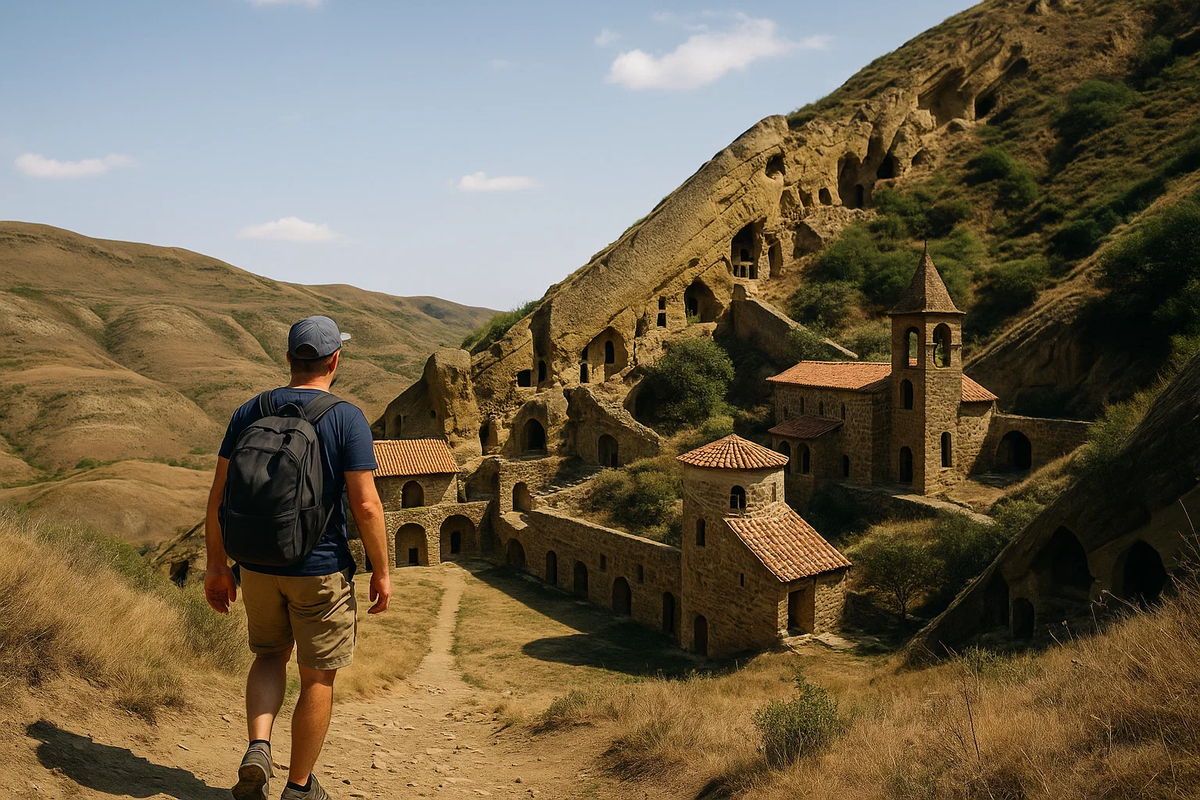
🚶♂️ Overview of excursion routes
- Route 1 — Lavra of David and the main caves
🕒 Length: about 3 km, 2-3 hours
This route goes through the main part of the complex — Lavra of St. David, with a visit to his cave and several ancient temples. A great option for a first acquaintance. - Route 2 — Tetri-Udabno and Sabereebi
🕒 Length: 4-5 km, 3-4 hours
A more difficult route with a pedestrian crossing to cave temples and remote monasteries. Suitable for experienced tourists and trekking enthusiasts. - Route 3 — Natlismtsemeli and Dodo-Rka
🕒 Length: 5+ km, 4-5 hours
The most remote and hard-to-reach shrines of the complex, where you can enjoy solitude and nature. Ideal for those looking for peace and unusual views.
🍴 Where to eat and relax nearby
- In the village of Udabno there are a number of hotels and guesthouses with restaurants where you can try local dishes and the famous monastery wine Saperavi.
- In the desert area there are small cafes and cafe-shops where you can buy souvenirs and icons.
- For nature lovers - tent camping under the stars and early sunrises over the desert.
📝 Travel Tips
- Bring water and light snacks with you, as the cafes are not within walking distance from the complex.
- It is better to plan your meals in advance - especially if you want to spend the whole day on an excursion.
- If you are on a budget, guest houses and local cafes are a great option to get acquainted with real Georgian hospitality.
What else to see in the surrounding area

Monastery and Church of Dodo (Dodo Rka)
The monastery and Dodo Church, part of the David-Gareji monastery complex, are located in…

Chailuri Fortress (Niahura)
The Chailuri Fortress, also known as Niahura, rises on the left bank of the Chailuri Rive…

Bodbe Monastery
The Monastery of St. Nino Bodbe, located in Sighnaghi, is one of the most significant spi…
If you are planning a trip to the David Gareja complex, be sure to include these places in your itinerary - they will help make the trip more intense and vibrant! 🎒📸🍷
💬 Your impressions and feedback
If you have already visited the David Gareji Monastery Complex, please share your impressions!
- Tell us what you liked most - perhaps ancient frescoes, breathtaking views or hiking trails?
- Which places particularly delighted or surprised you?
- Your tips and stories will help other tourists make the right choice and prepare for their trip.
- Leave your comments right here - your opinion is really important to us and all travelers! 📝✨
❓ Frequently asked questions
🕒 What is the best time to visit the complex?
The best time to go is in spring and autumn, when the weather is mild and the scenery is especially beautiful. It can be very hot in summer and cold in winter, which can be difficult to get to.
🚗 How to get to the David Gareja complex?
The best way is by car via Sagarejo. Guided tours are also available, but public transport is infrequent.
🥾 What kind of shoes do you need for walking?
Comfortable, closed shoes with good soles are recommended - the paths are rocky and require stability.
⚠️ Are there any dangers for tourists?
There are poisonous snakes in the desert, especially in the warmer months. Some routes are difficult and require physical fitness.
🍽️ Where can I get a snack?
The nearest cafe is in the village of Udabno, 15 km from the complex. It is recommended to take water and a snack with you.
📱 Is there a connection and internet?
The connection in the area may be weak or absent, it is better to prepare offline maps and stock up on necessary things in advance.


20 comments
Log in to leave a comment