




The Museum of Underground Printing House in Tbilisi is a unique historical place, shrouded in an aura of revolutionary spirit. Opened in 1937, the museum is also known as the Stalin Museum, reflecting his significant contribution to its creation. This museum offers an immersive experience of the era of revolutionary struggle, revealing the history of the underground printing press of the early 20th century.
Opening hours: from 11:00 to 18:00.
Price: Voluntary donations.
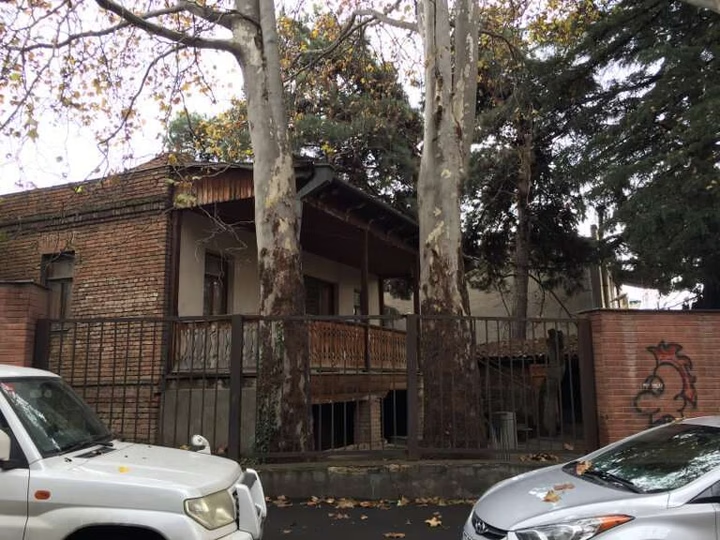
How to get there: The museum is located a five-minute walk from the 300 Aragviytsev metro station. Just follow the directions from the metro to Kaspi Street, where the one-story red brick museum building is located.
Address: st. Kaspi 7, Tbilisi.
The fascinating history of the museum.
Idea and construction: At the suggestion of Lenin, activists of the communist movement in Georgia built an underground printing house in the basement of the house to print proclamations. Secrecy was ensured by a unique design with an entrance through a well.
Printing house operation: The printing house was entered through a secret tunnel, and materials were transferred through a hidden hatch in the floor. The printing house was declassified in 1906 and destroyed, but Stalin recreated the building in 1937 and opened a museum.
Excursions: Conducted by the Deputy Chairman of the United Communist Party of Georgia, Zhiuli Sikmashvili, who is also the director of the museum.
Exhibits: Include documents, photographs, posters, books, medals and even an original printing press.
This museum is not just a place to visit, but also a window into the turbulent history of Georgia, allowing you to feel the spirit of the times and learn about the role of the underground press in shaping modern Georgian history.

