




🐛How can you get rid of fleas in your apartment?🏠
👀 Do you think that dealing with fleas is just a matter of “waiting and cleaning”? Are you absolutely sure that you haven’t left a single viable larva in any hidden corners? This article is your clear and merciless guide to ruthlessly banishing fleas from every nook and cranny of your home.
🐾 The Battle for Comfort: A Lyrical Guide to Driving Fleas Out of Your Home
🐾 Your apartment is like a small oasis, but even here, insidious fleas from the street can “wander” as unexpected guests through pet fur, pockets or shoe soles. These tiny dark acrobats can not only run fast, but also jump to a height worthy of Olympic records!
👀 It’s easy to spot them: take a closer look at the floor and upholstered furniture - there they click their legs, as if dancing.
🛏️ If fleas have taken a fancy to your bed, their presence will be given away by painful bites at any time of the day. Unlike bedbugs, which act secretly under cover of night, fleas will attack at noon as easily as at one in the morning. A sharp prick is followed by an itchy, swollen red “collection” of bites, grouped into several spots. ⚠️ Fleas are not just annoying neighbors, their bites can cause not only itching, but also allergic reactions in you and your furry friends. Fortunately, you can deal with this problem yourself!
📋 In this article, we will tell you how to expel unwanted parasites from every corner of your home step by step - from treating your pet to deep cleaning and using proven products. Join us, and your home will once again sound like a melody of comfort and safety! ✨
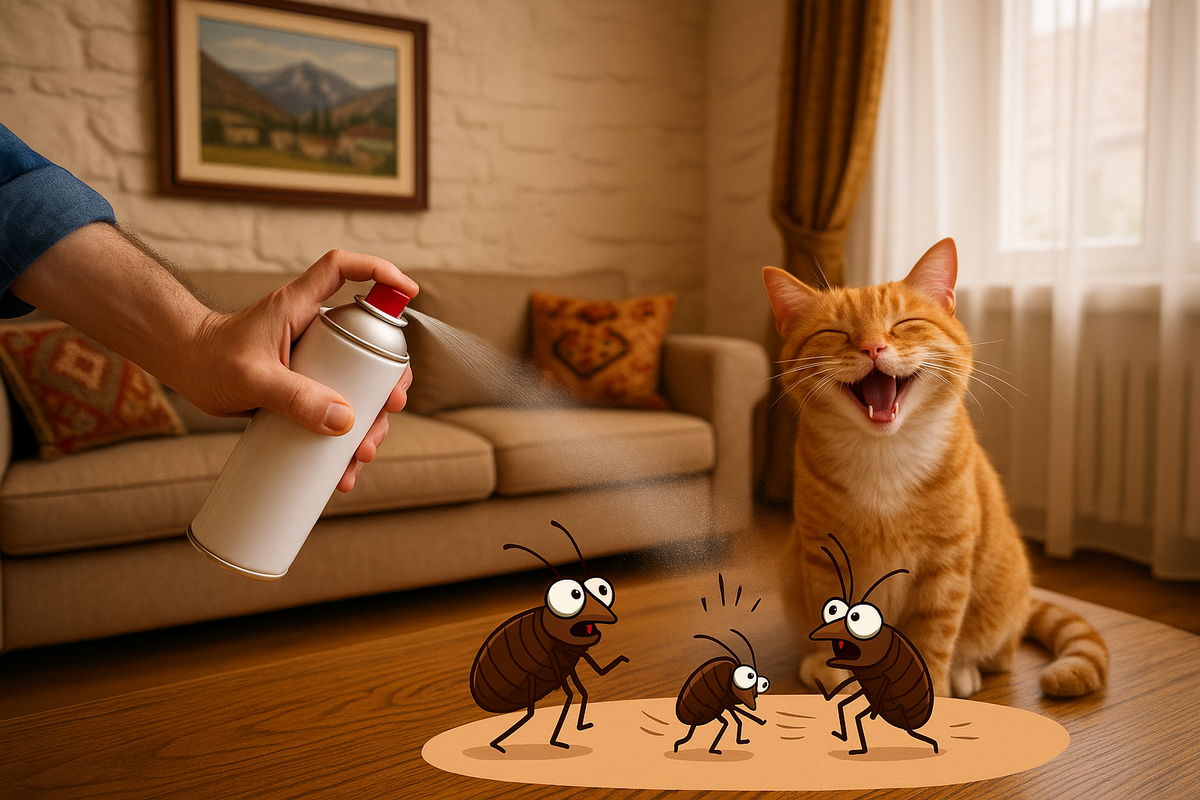
🐶 Step 1: Treating your pet for fleas
Understanding the flea life cycle (egg → larva → pupa → adult) helps attack the enemy at every stage. Leave just one egg — and a new wave of parasites will return in two weeks! That’s why you must begin with strong protection for your pet.
- 🧴 Sprays and powders. Apply to dry, clean fur, avoiding eyes and mucous membranes. Insecticides kill adult fleas quickly, and residual effects provide protection for up to 30 days. Important: consult a vet and test for allergies before use.
- 🌿 Natural remedies. Essential oils like lavender, tea tree, or rosemary have repellent properties. Add a few drops to weekly shampoo or use in a spray for bedding. Natural doesn’t mean harmless — talk to your vet and don’t overdo it.
- 📅 Preventive drops. Monthly spot-on treatments not only eliminate fleas but also protect against ticks and worms. Follow the application schedule strictly.
- 🏠 Cleaning and disinfecting surroundings. While your pet recovers, treat its bedding, toys, and furniture: wash at ≥ 60 °C and clean carpets and soft furnishings with household insecticides.
- 👩⚕️ Work with a veterinarian. A professional will recommend the right medication based on weight and health, and check for other parasites. Regular visits help keep your pet clean and comfortable in the long term.
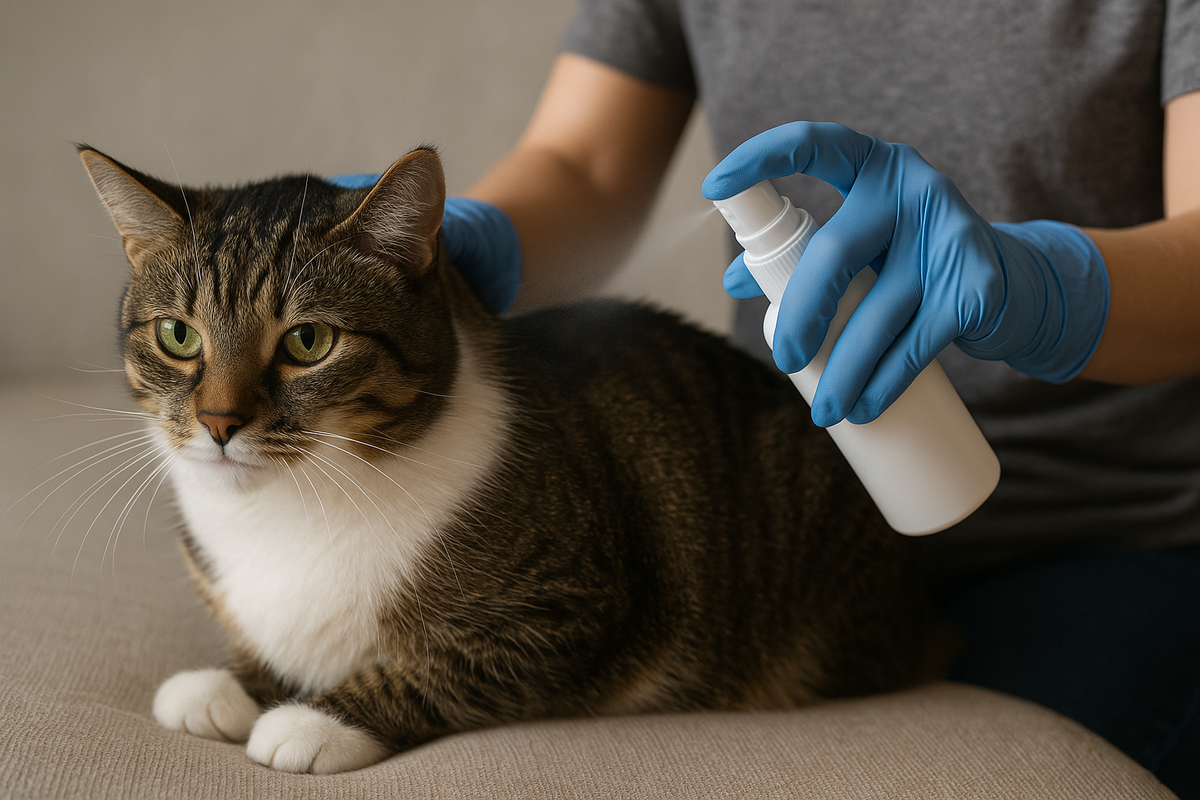
🐾 Additionally:
- After each walk, wipe the paws and the animal with a flea prevention spray.
- Seasonal increase - spring and autumn - requires more frequent treatment.
- Keep the preparations out of the reach of children and animals.
Don't forget: only a comprehensive and regular approach will destroy the entire "collective" of fleas and not give them a chance to restart!
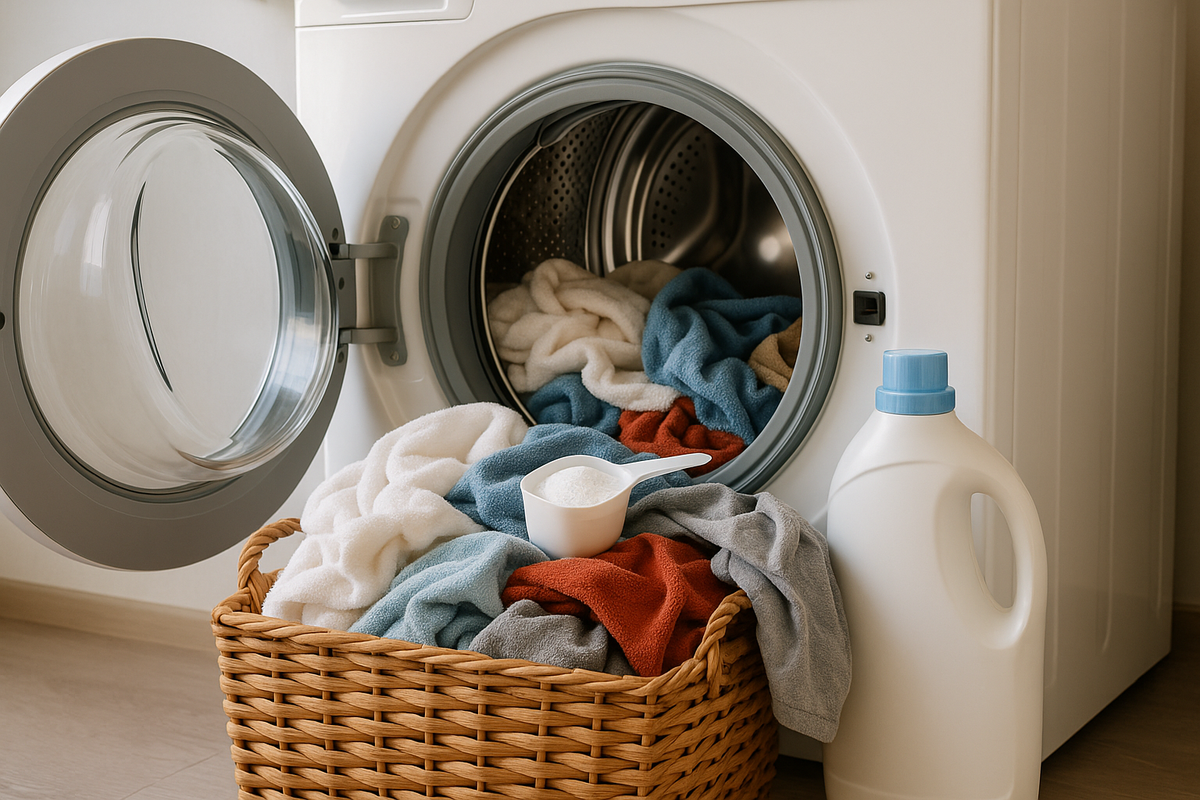
🧺 Step 2: Washing your belongings
Fleas and their eggs hide in various textures — from cotton to synthetics. Only well-organized laundry can eliminate all stages of the parasites.
- 🌡️ Temperature ≥ 60 °C. Hot water is lethal to both eggs and adult fleas. Use this setting for bedding, clothing, covers, and towels.
- 🧐 Check fabric care labels. Wool, silk, and delicate materials require hand-wash or dry-cleaning. Better to preserve the item than ruin it with harsh washing.
- 🧼 Use the right detergent. Choose hypoallergenic or anti-flea detergent — ideally containing baking soda or percarbonate for extra disinfecting power.
- 🧴 Add natural boosters. Half a cup of white vinegar or 2 tablespoons of borax/boric acid in the rinse cycle helps break down the flea egg’s protective shell.
- 🔄 Double-wash cycle. After the main wash, run a short extra cycle with hot water (no laundry inside) to clean the drum and drain from any escaped larvae.
- ☀️ Drying in the sun. High outdoor temperatures and UV rays kill lingering fleas. If drying indoors, choose the “hot dry” setting.
- 👟 Shoes and accessories. Scrub soles with soapy water. Use a special cleaner for suede or nubuck. After treatment, store shoes in sealed bags.
- 📦 Storing clean items. After washing, place clothes and linens in clean containers or vacuum bags — fleas won’t be able to reach them.
- 🧺 Clean the laundry basket. Don’t forget to vacuum and disinfect it after each load — eggs can hide there too.
✨Editor's secret: add a few drops of eucalyptus or lavender essential oil to the drum - the pleasant smell will scare away any remaining "guests".
❗ Important: wash everything that comes into contact with the floor, your pet's fluffy bed or bedding at least once a week, especially during the height of flea season.
🧹 Step 3: Wet cleaning
Wet cleaning is your main hammer against fleas — it removes both adult insects and their tiny eggs from the home. Be methodical and leave no corner untouched.
- 🧴 Special cleaning products. Buy a liquid cleaner suitable for homes with pets. Dilute according to instructions and mop the floors, focusing on corners, baseboards, and under furniture.
- 🧽 Steam cleaning. A steamer with hot water (at least 70 °C) kills larvae and remaining eggs. Use it on floors, tiles, and washable upholstery.
- 🧼 Carpet shampoo. Apply a concentrated anti-flea carpet shampoo, scrub it in with a brush, leave for 10–15 minutes, and vacuum. Repeat daily for 2 weeks.
- 🗑️ Disposable vacuum bags. After each cleaning, discard the vacuum bag entirely. If using reusable ones, empty and wash them thoroughly in hot water.
- 🛋️ Furniture and textiles. Remove covers from sofas, chairs, and cushions; wash at ≥ 60 °C or steam them. Old pillows, ottomans, or unused blankets are better discarded or sent to dry cleaning.
- 📆 Cleaning schedule. Floors and carpets — at least twice a week; everything else — monthly. During peak flea seasons (spring/fall), clean weekly.
- 🌬️ Ventilation. After wet cleaning and treating the room, keep windows open for 30–60 minutes — fresh air speeds up drying and removes chemical residues.
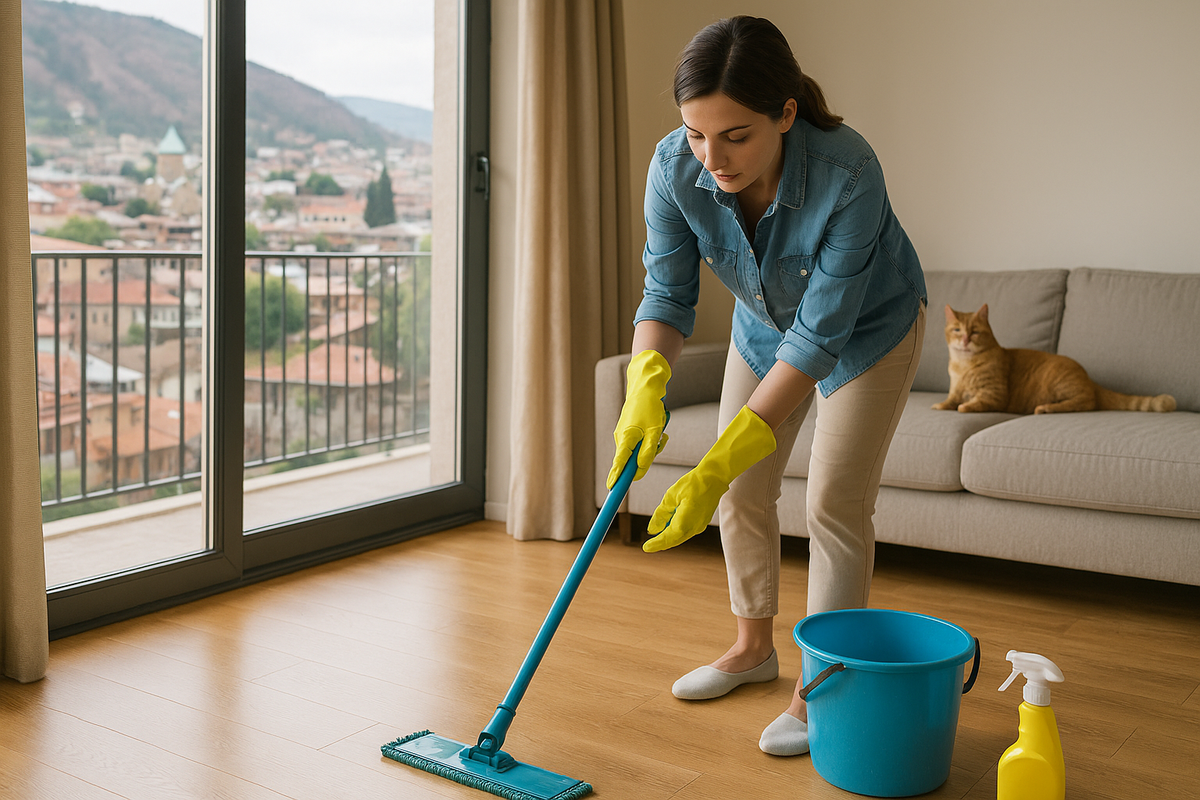
✨ Life hack: add 2-3 drops of eucalyptus oil to the water for washing the floor - the smell will prevent fleas from returning, and the floor will retain its shine.
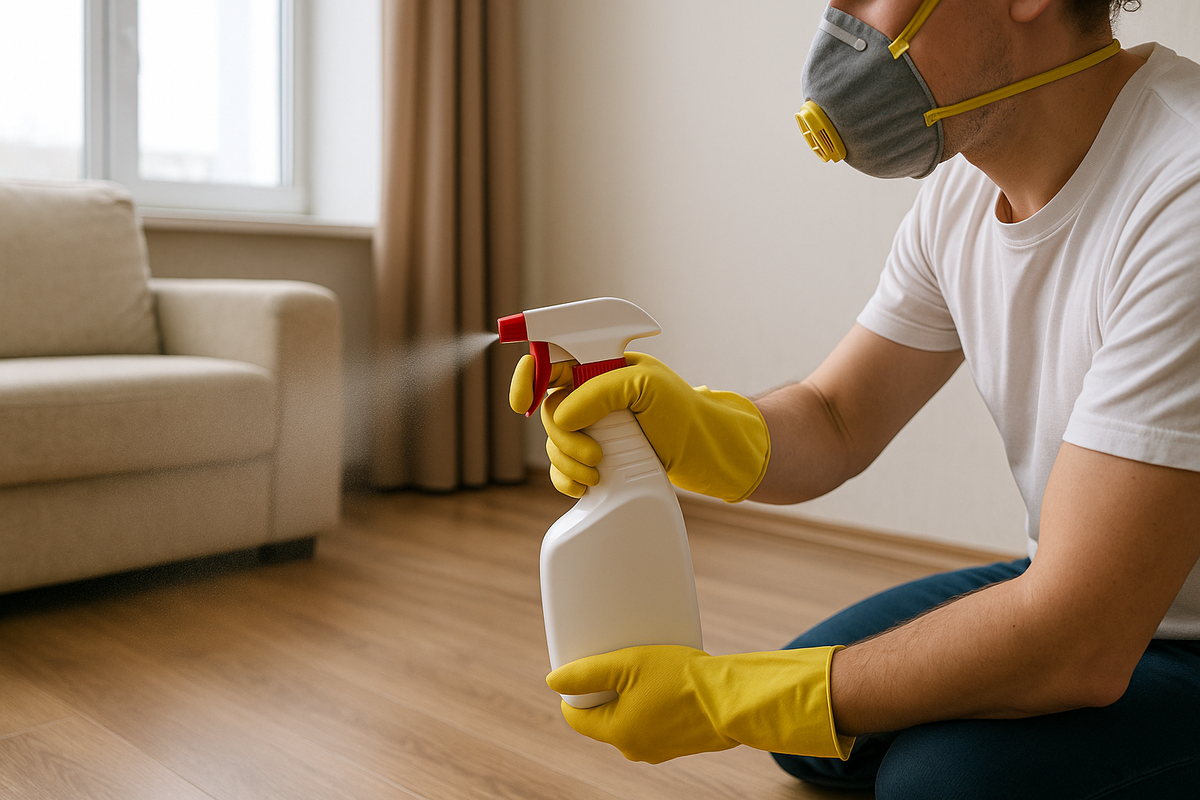
❗ Important: always wear gloves and, if the product contains strong insecticides, a respirator. Protect your skin and respiratory tract.
🏠 Step 4: Treating your home with special products
After cleaning and laundry, it’s time for the "heavy artillery" — sprays, gels, and aerosols. These go deeper than water and shampoo but must be used with caution and care for safety.
- 📦 Choosing the product. Look for treatments containing methoprene or permethrin — they destroy the chitin shell of adult fleas and stop larvae from maturing. Prioritize products made for pet-friendly environments.
- 📝 Read the instructions. Before use, carefully study all sections: application area, exposure time, ventilation requirements, and safety precautions.
- 🧤 Protective gear. Always wear gloves; for concentrates, use a respirator or mask. Protect your eyes with goggles.
- 📦 Preparing the room.
- Remove children, elderly people, and pets from the area.
- Take down curtains, bedding, and textiles; cover dishes and aquariums.
- Move or cover furniture with plastic sheets.
- 🌡️ Application technique.
- Spray: apply evenly along baseboards, corners, under furniture, and up to 1.5 m on the walls.
- Gel: apply in small dots or lines near baseboards, doors, windows, and hidden areas.
- ⏳ Waiting time. Close the room for 2–4 hours (check the label). Don’t rush back in — let the chemicals work effectively.
- 🌬️ Ventilation. After treatment, open all windows for at least an hour to remove residual fumes.
- 🔄 Repeat treatment. Usually required after 7–14 days — newly hatched fleas emerge from pupae later.
✨ Advice from the experts: for walls and ceilings, use a fog generator (ULV sprayer) - it creates a fine-dispersed cloud that reaches hard-to-reach crevices.
❗ Important: do not mix different insecticides - this may reduce effectiveness or cause toxic reactions. Store bottles in a locked cabinet.
🛡️ When home remedies aren't enough
If the previous steps didn’t help and fleas continue to bother you and your pets, it’s time to call in the pros.
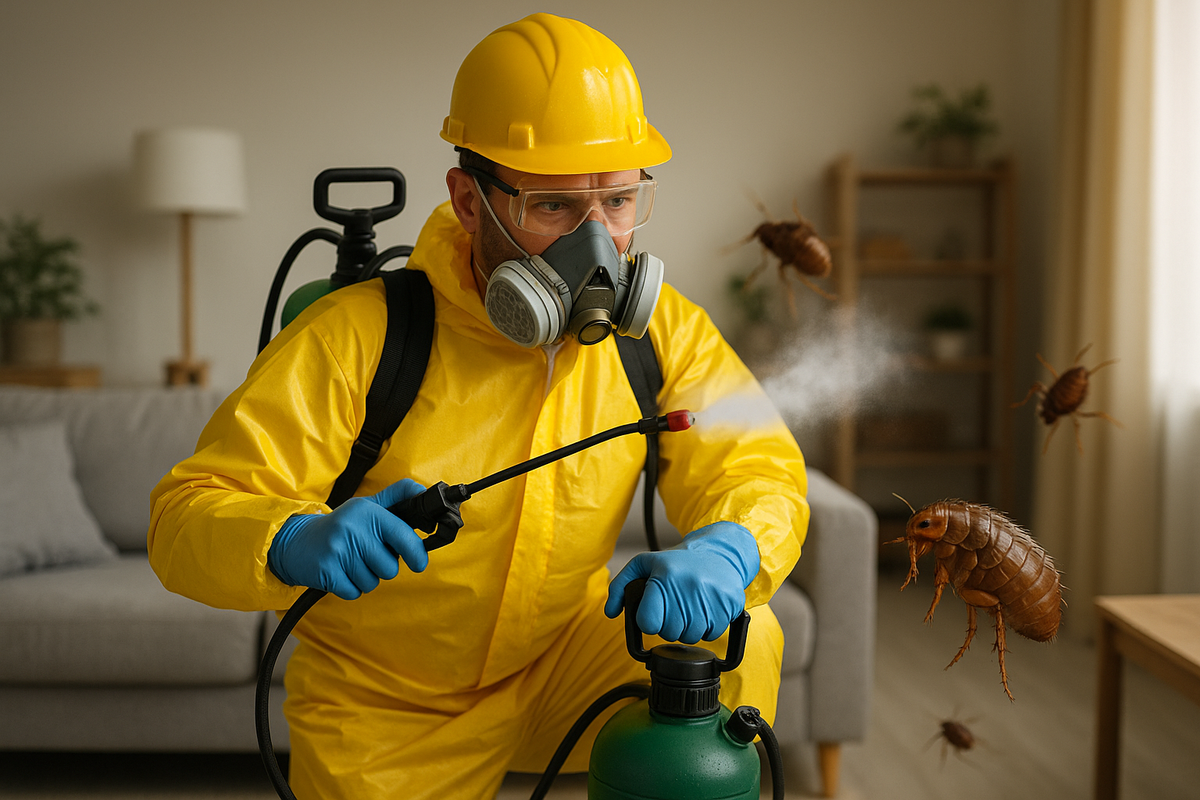
- 👷♂️ Professional pest control. Specialists use powerful equipment and concentrated solutions that reach deep into tiny cracks under furniture and baseboards.
- ⏱️ Treatment time. A typical apartment takes 30–60 minutes to treat. Afterward, avoid entering the space for 2–3 hours to let the chemicals work properly.
- 🧹 Follow-up cleaning. Once back home, do a deep clean: vacuum thoroughly, wipe down surfaces, and wash bedding to remove dead insects and remaining eggs.
- 💵 Service cost. Starts from 40 GEL for a one-room apartment (exact prices may vary depending on the provider).
- 🔄 Repeat treatments. A second or even third session is often necessary 7–14 days later, as pupae are harder to eliminate on the first try.
✨ Tip: Choose licensed professionals who offer guarantees and have good reviews — this helps protect both your home and your wallet.
⚠️ Safety Tips from Madloba.info
✨ The final chord: A house without fleas
Your route has been completed from the first syringe of drops to professional fog in the most secluded crevices. Here's what remains to remember:
- Comprehensive approach - do not skip a single step: pet, washing, cleaning, special means.
- Repeat defense - after 7-14 days, return to all procedures to catch hatched larvae.
- Safety is more important than speed - gloves, mask, ventilation and remote pets will help maintain health.
Let every corner of your home remain free from insidious jumpers, and let comfort and peace reign all year round.
✅ Save the article to return to the step-by-step plan when needed, and may your home always remain clean and safe! ✨
💖 Good luck in your fight for cleanliness and comfort!
❓ Frequently Asked Questions
Watch out for pets scratching constantly, tiny black dots on furniture, and bite marks on your skin. If you notice these signs — it’s time to act!
Thoroughly vacuum carpets, furniture, and corners, then mop the floors with an insecticidal cleaner. Repeat regularly for best results.
Veterinary sprays, shampoos, and spot-on treatments kill fleas and prevent reinfestation. Choose trusted brands and follow the instructions.
Regularly treat pets with drops or sprays, keep their bedding clean, and consult your vet for the best flea control solution.
Yes, they can carry bacteria and parasites that cause allergic reactions and infections. Keeping their population under control is key to safety.
From the first step to follow-up, it takes about 2–3 weeks: initial treatment, cleaning, then a repeat session to eliminate newly hatched larvae.
Natural solutions like vinegar or essential oils can help prevent fleas, but for complete elimination it's best to combine them with professional insecticides.
Try all 4 steps on your own first. If signs of infestation persist after 2 weeks — it’s time to call the pros.
Start with areas where your pet spends the most time: bedrooms, living room, and pet resting spots.
During active seasons (spring/fall) — once a week. In other periods — every two weeks for prevention.

0 comments
Log in to leave a comment